Firni — South Asian Ground Rice Milk Pudding
Authentic firni recipe — silky South Asian ground rice milk pudding slow-cooked with whole milk, fragrant green cardamom, and saffron, then set chilled in traditional clay shikora pots and crowned with crushed pistachios. Includes Mughal history, firni vs kheer guide, regional variations (Kashmiri, mango, jaggery), Ramadan tips, and halal ingredient notes.
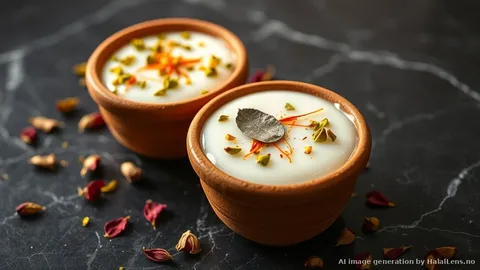
Firni is the most refined dessert in the South Asian canon — an ethereally smooth, set milk pudding made from ground rice and slow-reduced whole milk, perfumed with crushed green cardamom, and crowned with a mosaic of emerald pistachios and edible silver leaf. Unlike its cousin kheer — which uses whole rice grains suspended in creamy milk — firni uses rice that has been soaked and ground to a fine paste, then cooked into the milk until the entire mixture sets into a smooth, trembling custard. Served chilled in small unglazed clay pots called shikoras, firni has graced the tables of Mughal emperors, Ramadan iftars across the subcontinent, and every celebration from Eid to wedding feasts for over five centuries. It is the dessert that forgives nothing and rewards everything: a dish where patience, quality ingredients, and attention to detail produce a result of almost supernatural delicacy.
The History and Cultural Significance of Firni
The word firni (also spelled phirni) derives from the Persian ferni, which itself traces to the Arabic farni — all referring to a preparation of ground grain cooked in milk. This etymology speaks to firni’s deep roots in the medieval Islamic culinary tradition that stretched from Baghdad to Bukhara and eventually to the Mughal courts of the Indian subcontinent. The dish is closely related to the Arab muhallabia (a milk pudding thickened with rice flour or starch), the Turkish sütlaç (rice pudding), and the Persian fereni — all expressions of the same ancient idea: ground grain dissolved in sweetened, spiced milk and allowed to set.
When the Mughal emperors established their court in the Indian subcontinent in the 16th century, they brought with them the refined Persian and Central Asian dessert traditions of their homeland. The rakabdars (royal cooks) of the Mughal court adapted the Persian ferni to local ingredients, replacing the wheat starch with ground rice — more readily available and more deeply aromatic in the South Asian climate — and adding the native spices of the subcontinent: green cardamom, saffron, rose water, and kewra water. The resulting dessert was lighter and more elegant than the dense European milk puddings of the same era, and its cool, silky texture was perfectly suited to the heat of the subcontinent.
The tradition of serving firni in small unglazed clay pots (shikoras) is one of the most distinctive features of the dessert and one of its most brilliant innovations. The porous clay draws moisture from the firni as it chills, creating a slightly drier outer skin while the interior remains luxuriously creamy. The clay also imparts a subtle mineral note — a faint earthiness — that complements the floral sweetness of the firni in a way no ceramic or glass bowl can replicate. In Lahore’s old city, at the famous dessert establishments around the Food Street and Lakshmi Chowk, firni has been served exclusively in shikoras for generations, and any vendor who switched to plastic cups would lose their clientele overnight.
Today, firni remains one of the most beloved desserts across Pakistan, northern India, Bangladesh, and the Kashmiri diaspora worldwide. It is the default Ramadan iftar dessert in millions of households — prepared in the morning, allowed to set and chill throughout the day, and served as the sweet conclusion to the breaking of the fast. Its cool, gentle sweetness is a perfect counterpoint to the richness of biryani and the sharpness of chaat. At weddings, firni is often presented as the centerpiece of the mithai spread, each shikora meticulously garnished and arranged on silver trays. It is simultaneously humble and opulent — a dessert that requires the simplest of ingredients but the most demanding of techniques.
Firni vs. Kheer: Understanding the Key Difference
The distinction between firni and kheer is fundamental, and it matters enormously to the final result. Both are South Asian milk puddings flavoured with cardamom and garnished with nuts, but they differ in texture, technique, and cultural occasion.
Kheer uses whole grains — typically basmati rice — that are cooked whole in the reducing milk. The grains soften and some dissolve, releasing starch that thickens the milk naturally over 40–50 minutes. The result is a flowing, porridge-like pudding with identifiable grains and a variable, rustic texture. Kheer is often served warm, though it can also be served chilled, and it is a year-round dessert as comfortable at a weekday dinner as at a festival.
Firni uses rice that has been soaked in water for several hours and then ground to a smooth paste or slurry. This paste is stirred into already-reduced hot milk and cooked for a shorter time — typically 15–20 minutes — until the starch gelatinizes and the mixture thickens dramatically. The firni is then poured into pots while still liquid and allowed to set firm as it chills. The result is a smooth, trembling, custard-like pudding with no grain texture whatsoever — a single, unified, silky mass that holds its shape when unmoulded. Firni is always served chilled and is considered the more formal, occasion-specific dessert of the two.
The textural difference is stark: kheer flows freely from a spoon; firni holds a clean edge when cut. Kheer is a dessert; firni is almost a confection. This is why firni is the choice for Ramadan, weddings, and formal gatherings — its refined, set texture signals occasion and care in a way that flowing kheer, however delicious, cannot.
Recipe Snapshot
| Servings | 6–8 shikoras or small bowls |
| Prep time | 20 minutes (plus 4+ hours soaking) |
| Cook time | 40 minutes |
| Chill time | 3–4 hours minimum |
| Total time | 8 hours minimum (4 h soak + 1 h active + 3 h chill) |
| Difficulty | Medium |
Ingredients
The Pudding
- 1.5 litres (6 cups) full-fat whole milk
- 6 tablespoons (60g) raw long-grain or basmati rice, soaked in cold water for 4–6 hours
- ½ cup (100g) granulated sugar (adjust to taste)
- 6–8 green cardamom pods, seeds extracted and finely crushed
- ¼ teaspoon saffron threads, soaked in 2 tablespoons warm milk for 15 minutes
- 1 tablespoon rose water
Garnish
- 3 tablespoons pistachios, blanched, peeled, and finely slivered or crushed
- 1 tablespoon slivered almonds
- Extra saffron strands for decoration
- Dried rose petals (optional)
- Edible silver leaf — varak (optional, for special occasions)
Method
Step 1 — Soak and Grind the Rice
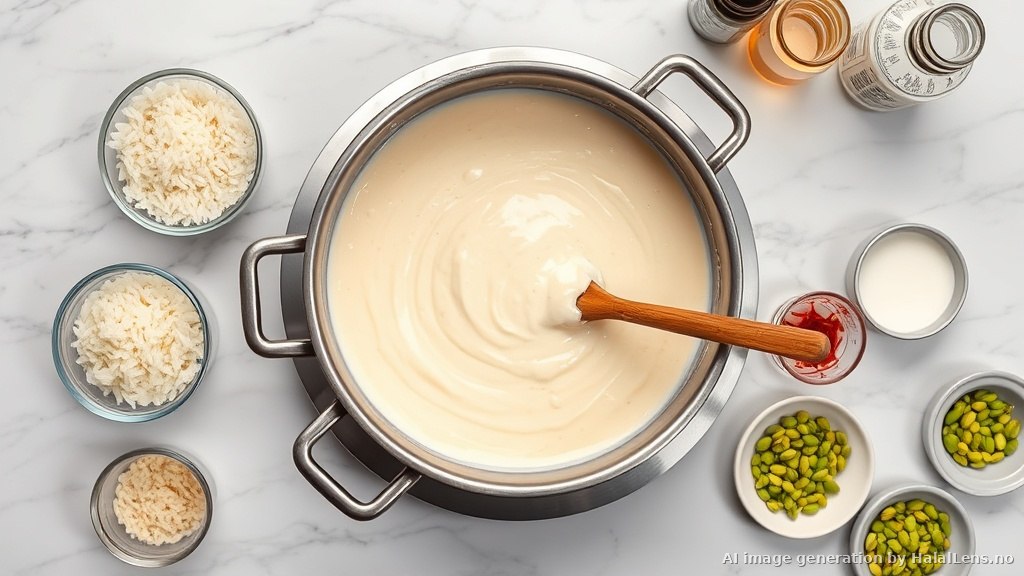
Rinse the basmati rice thoroughly, then cover with cold water and soak for at least 4 hours, ideally 6. The extended soaking is not optional: it allows the rice grains to fully hydrate and soften, which is essential for achieving a completely smooth, lump-free paste. Under-soaked rice will resist grinding and produce a grainy firni with an unpleasant mouth feel. After soaking, drain the rice completely. Transfer to a blender and add 4–5 tablespoons of fresh whole milk. Blend on high speed for 2–3 minutes until the mixture is completely smooth with no visible grain. Pass through a fine-mesh sieve into a bowl, pressing with the back of a spoon to extract all the liquid. Discard any residual coarse particles. The resulting paste should have the consistency of thin cream and flow freely.
Step 2 — Reduce the Milk
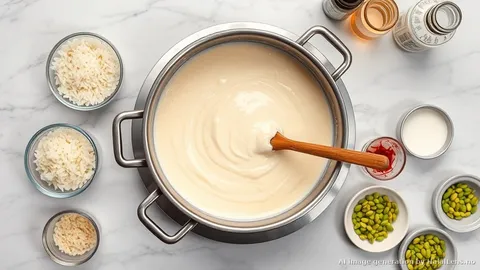
Pour the remaining whole milk into a heavy-bottomed pot — ideally a thick-bottomed stainless steel or enameled pot that distributes heat evenly. Bring to a gentle boil over medium heat, stirring frequently to prevent the milk from scorching on the bottom. Once boiling, reduce the heat to low and simmer for 20–25 minutes, scraping the bottom and sides of the pot every few minutes and incorporating any milk skin that forms. The milk should reduce by roughly one-quarter — from about 1.4 litres to approximately 1 litre. This reduction concentrates the milk’s fat, protein, and natural sugars, giving the firni a richness and depth that cannot be achieved by simply cooking the rice paste in fresh milk. The reduced milk will be noticeably thicker and have a slightly ivory hue.
Step 3 — Add the Rice Paste
With the reduced milk at a gentle simmer, stir the ground rice paste thoroughly with a spoon to re-emulsify it (the starch settles quickly). Pour it into the simmering milk in a thin, steady stream, stirring continuously and vigorously with a whisk or wooden spoon as you pour. Adding the paste too fast or failing to stir will cause lumps to form. Continue to cook the mixture over low to medium-low heat, stirring constantly and scraping the bottom of the pot in circular motions. The firni will begin to thicken noticeably after 5–7 minutes. Keep stirring — stopping even briefly risks the paste scorching on the bottom, which will ruin the entire batch with a bitter, burnt flavour.
Step 4 — Sweeten and Perfume
After 12–15 minutes of cooking, once the firni has thickened to the consistency of a thick, flowing batter — it should coat the back of a spoon thickly and flow slowly when the pot is tilted — add the sugar and stir until completely dissolved. Add the crushed cardamom and the saffron-soaked milk, watching the golden colour bloom through the white pudding. Taste and adjust sweetness. Cook for 3–5 more minutes, stirring, until the firni is thick enough that it holds a trail briefly when you draw a spoon through it. Do not over-thicken at this stage: firni continues to set considerably as it cools. A firni that looks “just right” on the stove will set too firm in the refrigerator.
Step 5 — Add Rose Water and Pour into Moulds
Remove the pot from the heat. Stir in the rose water — its delicate floral fragrance will bloom immediately in the hot mixture. Stir once more and allow to cool slightly for 2–3 minutes, just until the vigorous steam subsides. Pour the firni carefully into shikoras (clay pots), small ceramic bowls, or ramekins. Tap each container gently on the counter to level the surface and release any air bubbles. Allow to cool to room temperature (about 30 minutes) before covering with cling wrap and transferring to the refrigerator.
Step 6 — Chill and Garnish
Refrigerate for a minimum of 3 hours, though 4–6 hours is ideal. The firni will set into a smooth, firm-but-yielding custard. Just before serving, scatter the finely crushed pistachios over the surface in a generous, decorative layer. Add the slivered almonds and a few extra saffron strands. For special occasions, gently place a small piece of edible silver leaf (varak) over the centre of each firni just before it reaches the table. Serve directly in the shikoras or bowls — firni is always eaten chilled.
Tips for Perfect Firni Every Time
- Soak the rice long enough: This cannot be emphasized enough. Under-soaked rice, no matter how long you blend it, will leave micro-particles in the paste that survive cooking and produce a sandy, grainy texture in the finished firni. If time permits, soak for 6–8 hours or even overnight in the refrigerator.
- Strain the paste: Even after thorough blending, pass the rice paste through a fine-mesh sieve. This removes any remaining coarse particles and guarantees the silk-smooth texture that defines authentic firni.
- Stir continuously when adding paste: The window between “lumpy” and “smooth” firni is narrow and unforgiving. Add the paste slowly in a thin stream and never stop stirring. A whisk is better than a wooden spoon for this step, as it breaks up any nascent lumps immediately.
- Undercook slightly on the stove: Firni thickens significantly as it cools. Aim for a texture that is slightly looser than your desired final result when you pour it into the moulds. A firni that is “perfectly thick” on the stove will be rubbery and over-set from the refrigerator.
- Full-fat milk only: Low-fat milk produces a thin, watery firni that refuses to set properly and lacks the creamy depth of the real thing. The fat in whole milk is essential for both flavour and texture.
- Rose water goes in last: Rose water is highly volatile — its delicate floral compounds evaporate within seconds of heat exposure. Always add it after removing the pot from the heat, never during cooking.
- Garnish only just before serving: Pistachio slivers lose their colour and crunch if placed on the firni too far in advance. Garnish immediately before the firni reaches the table for maximum visual impact and textural contrast.
- Clay pots make a real difference: If you can find unglazed terracotta shikoras at a South Asian grocery store, use them. The clay absorbs a small amount of moisture, creating a firmer outer surface and a mineral quality to the flavour that is genuinely distinctive. If unavailable, small ceramic ramekins or glass bowls work well.
Firni Variations Across South Asia
Firni’s fundamental technique — ground grain cooked in reduced milk until set — is infinitely adaptable, and cooks across the subcontinent have developed numerous regional variations.
- Kashmiri Firni: The Kashmiri tradition produces perhaps the most refined firni in the subcontinent. Coarser ground rice is used, resulting in a slightly more textured set. Saffron from the famous Pampore fields of Kashmir is used in generous quantities, giving the firni a deep golden colour and an intensely floral fragrance. Crushed dried rose petals are added as a flavouring agent, not merely as garnish. Kashmiri firni is served on every important occasion and is closely associated with Kashmiri Wazwan feasts.
- Mango Firni: A popular modern variation across Pakistan and India, particularly during the summer mango season. Alphonso or chaunsa mango pulp is folded into the cooled firni just before pouring into moulds, or swirled through the top for a marbled effect. The natural sweetness of the mango reduces the need for added sugar, and the combination of cardamom and mango is spectacularly good.
- Strawberry Firni: A Pakistani-restaurant favourite, where fresh strawberry puree is incorporated into the firni base or used as a topping. The bright acidity of the strawberry cuts through the richness of the milk, creating a lighter dessert well suited to the summer months.
- Elaichi Firni (Extra Cardamom Firni): A Pakistani home cooking tradition where double the quantity of cardamom is used — sometimes combined with a small amount of kewra (screwpine) water — for an intensely aromatic pudding that fills the room with fragrance when the shikoras are first opened.
- Jaggery Firni: Common in rural Punjab and Sindh, where white sugar is replaced with unrefined jaggery (gur). The jaggery gives the firni a warm caramel-molasses note that is less refined than white sugar firni but deeply satisfying — particularly in winter when jaggery is at its most fragrant and fresh.
- Condensed Milk Firni: A shortcut variation that replaces part of the sugar with sweetened condensed milk. The condensed milk adds richness and a distinctive caramelized sweetness while reducing the cooking time slightly, as the milk is already concentrated.
Firni for Ramadan
Firni holds a uniquely important place in Ramadan food culture across South Asia, the Gulf, and wherever South Asian Muslim communities have settled. Its suitability for Ramadan is both practical and ceremonial.
On the practical side, firni is the ideal Ramadan dessert because it must be prepared well in advance. A batch made in the morning, set in shikoras, and refrigerated throughout the day is perfectly chilled and ready to serve the moment iftar begins. There is nothing to prepare at the last minute, no stress during the hectic iftar hour, and no risk of a warm dessert when everyone wants something cooling and refreshing after a day of fasting. The cool, smooth sweetness of firni after the warmth of dates and the saltiness of samosas is almost medicinal in its effect — grounding and comforting.
On the ceremonial side, firni’s visual elegance — the white pudding, the emerald pistachios, the gold of saffron, the silver of varak — gives it a festive quality that ordinary desserts cannot match. In Pakistan, many families consider Ramadan incomplete without firni at least once a week during the holy month. In Lahore and Karachi, specialty firni shops see their busiest season during Ramadan, with orders placed days in advance and queues forming in the hour before iftar.
For suhoor (the pre-dawn meal before fasting begins), firni is equally appreciated: its combination of slow-digesting rice starch and protein-rich milk provides sustained energy that helps ease the coming hours of fast. Eaten quietly at 4 AM after suhoor, a small pot of chilled firni is one of the most peaceful pleasures of Ramadan life.
Halal Considerations for Firni
Firni is one of the most naturally halal desserts in any cuisine. Its core ingredients — rice, milk, sugar, cardamom, and rose water — are unambiguously halal in their basic forms. However, several considerations are worth noting for particularly conscientious consumers:
- Whole milk: Plain whole milk from any reputable dairy is halal. Be aware that some flavoured or vitamin-fortified milks may contain additives whose sourcing is not always transparent. Plain, unflavoured whole milk from any supermarket is always the safe choice.
- Rose water: Food-grade rose water is halal — it is produced by steam distillation of rose petals and contains no alcohol. Cosmetic-grade rose water may contain added ethanol as a preservative. Always use culinary rose water explicitly labeled for food use. Leading brands such as Cortas, Al Wadi, and Nielsen-Massey produce halal-certified rose water that is widely available.
- Saffron: Pure saffron stigmas are halal. Be cautious of counterfeit saffron products — a significant portion of commercially sold saffron is adulterated with coloured plant material or chemical dyes. Purchase from reputable specialty stores or South Asian grocery shops.
- Silver leaf (varak): Traditional edible silver leaf was historically hammered between layers of ox intestine, raising halal concerns about contamination. Modern food-grade silver leaf produced in Europe and North America is generally manufactured using synthetic or plant-based separators. If you use varak for special occasions, choose brands that specifically state “vegan” or “no animal-derived processing” on the label.
- Condensed milk: Most condensed milk products contain only milk and sugar. However, some brands add emulsifiers (such as E471) that can be derived from animal fats. Check the label or choose halal-certified brands.
Use HalalLens to scan the ingredient labels of any packaged products you use — packaged milks, condensed milk, and pre-packaged saffron vary considerably in their additive profiles across brands and countries of origin.
Storing Firni
Firni stores well in the refrigerator for up to 3 days, though it is at its absolute best within 24 hours of preparation, when the texture is at its most delicate and the flavours are freshest. Keep it covered with cling wrap pressed directly onto the surface to prevent a skin from forming. Do not freeze firni — the starch structure that gives it its smooth, set texture breaks down irreversibly on freezing, and the thawed result will be grainy and watery.
When storing in shikoras, note that the clay continues to draw moisture from the firni over time. After 24 hours, the outer millimetre or two of the pudding will be noticeably firmer and drier than when freshly set. This is considered desirable by many — the contrast between the firmer outer layer and the creamy interior is part of the shikora experience. After 48–72 hours, however, the firni may become too dry throughout. Glass or ceramic bowls, which do not absorb moisture, maintain the firni’s original texture longer.
AI disclosure: This recipe article was written with AI assistance and reviewed for accuracy. Ingredient halal statuses are verified through the HalalLens database. Always check product labels for regional variations in formulation and certification.