Halal Miso Soup — Authentic Japanese Comfort Soup with Tofu and Wakame
Is miso halal? Learn about miso fermentation and halal concerns, then make this authentic Japanese miso soup with kombu dashi, silken tofu, and wakame — entirely plant-based and ready in 20 minutes.
Is miso halal? In its pure form — yes. Miso is a fermented soybean paste made from soybeans, salt, and koji (a beneficial mold culture), all of which are plant-based. However, some miso products contain added dashi made with bonito (fish flakes from a non-halal source) or residual alcohol from fermentation. This authentic halal miso soup recipe uses pure miso paste with a kombu (seaweed) dashi base, keeping every ingredient entirely plant-based and halal-compliant. Ready in just 20 minutes, it delivers the same umami-rich warmth found in traditional Japanese kitchens.
Is Miso Halal? Understanding Fermented Soybean Paste
Miso is one of Japan’s oldest and most versatile seasonings, with a history spanning over 1,300 years. At its core, miso paste is a fermented food made by combining soybeans with salt and a koji culture (Aspergillus oryzae), a beneficial mold that breaks down proteins and starches into complex flavors. The fermentation process is entirely biological — no alcohol is added as an ingredient.
There are several main varieties of miso, and their halal status depends on what goes into them:
- White miso (shiro miso) — Made from soybeans and rice koji. Fermented for a shorter period (weeks to months), giving it a mild, sweet flavor. Generally halal when made with only soybeans, rice, salt, and koji.
- Red miso (aka miso) — Made from soybeans and barley or soybean koji. Fermented for one to three years, producing a deeper, saltier, more complex flavor. Also generally halal when pure.
- Mixed miso (awase miso) — A blend of white and red miso. Halal status depends on the individual components.
The key concerns for Muslims regarding miso are:
- Pre-mixed dashi — Some commercial miso products come with dashi granules already blended in. If that dashi contains bonito (dried skipjack tuna flakes), the miso itself remains halal, but the bonito must be verified to come from a halal-slaughtered source. Many bonito products are not halal-certified.
- Residual alcohol from fermentation — Like all fermented foods (yogurt, bread, vinegar, soy sauce), miso naturally produces trace amounts of alcohol during fermentation. The consensus among Islamic scholars, including the European Council for Fatwa and Research, is that naturally occurring trace alcohol in fermented foods is permissible because it is not intoxicating and not added as an ingredient. This is the same principle that applies to soy sauce and vinegar.
- Added alcohol — Some miso brands add ethanol as a preservative to stop fermentation. Check ingredient labels and choose brands that do not list alcohol or ethanol.
For this recipe, we recommend using pure white or yellow miso paste that lists only soybeans, rice (or barley), salt, and koji culture. Brands like Marukome, Hikari, and Miso Master offer varieties without added alcohol or dashi. Always check the ingredient label.
Japanese Food Culture and Halal Dining
Miso soup (misoshiru) is perhaps the most fundamental dish in Japanese cuisine. It appears at nearly every meal — breakfast, lunch, and dinner — alongside rice. In traditional Japanese cooking, the soup base is typically made with dashi, a stock that can be derived from several sources:
- Kombu dashi — Made from kombu (dried kelp seaweed) simmered in water. Entirely plant-based and halal.
- Katsuo dashi — Made from bonito flakes (dried fish). Requires halal-certified fish sourcing.
- Iriko dashi — Made from dried sardines. Same fish-sourcing considerations.
- Shiitake dashi — Made from dried shiitake mushrooms. Entirely plant-based and halal.
This recipe uses kombu dashi exclusively — a rich, naturally umami seaweed stock that is 100% plant-based. Kombu contains high levels of natural glutamic acid, the same compound responsible for the savory flavor in aged cheeses and tomatoes. You lose nothing in flavor by choosing kombu over bonito; in fact, many Japanese Buddhist temple kitchens (shojin ryori) have used kombu-only dashi for centuries.
Recipe: Halal Miso Soup
- Servings: 4
- Prep time: 5 minutes
- Cook time: 15 minutes
- Total time: 20 minutes
- Difficulty: Easy
- Halal status: All ingredients verified halal
Ingredients
- 4 cups (960 ml) water
- 1 piece (10 cm / 4 inch) dried kombu seaweed
- 3 tablespoons white miso paste (shiro miso — check label for no added alcohol or dashi)
- 150 g (5 oz) silken tofu, cut into 1.5 cm cubes
- 2 tablespoons dried wakame seaweed
- 2 scallions (green onions), thinly sliced
- 1 teaspoon sesame oil (optional, for finishing)
Method
- Make the kombu dashi. Place the kombu in a pot with 4 cups of cold water. Let it soak for at least 10 minutes (or up to 30 minutes for a richer stock). Place over medium heat and bring to just below a boil — when you see small bubbles forming at the edges and the kombu starts to float, remove the kombu immediately. Do not let it boil, or the dashi will become slimy and bitter.
- Prepare the wakame. While the dashi heats, place the dried wakame in a small bowl of room-temperature water. It will rehydrate and expand in about 5 minutes. Drain and gently squeeze out excess water. Set aside.
- Add the tofu. Once the kombu is removed and the dashi is gently simmering, carefully add the silken tofu cubes. Let them warm through for 2 minutes without stirring vigorously (silken tofu breaks easily).
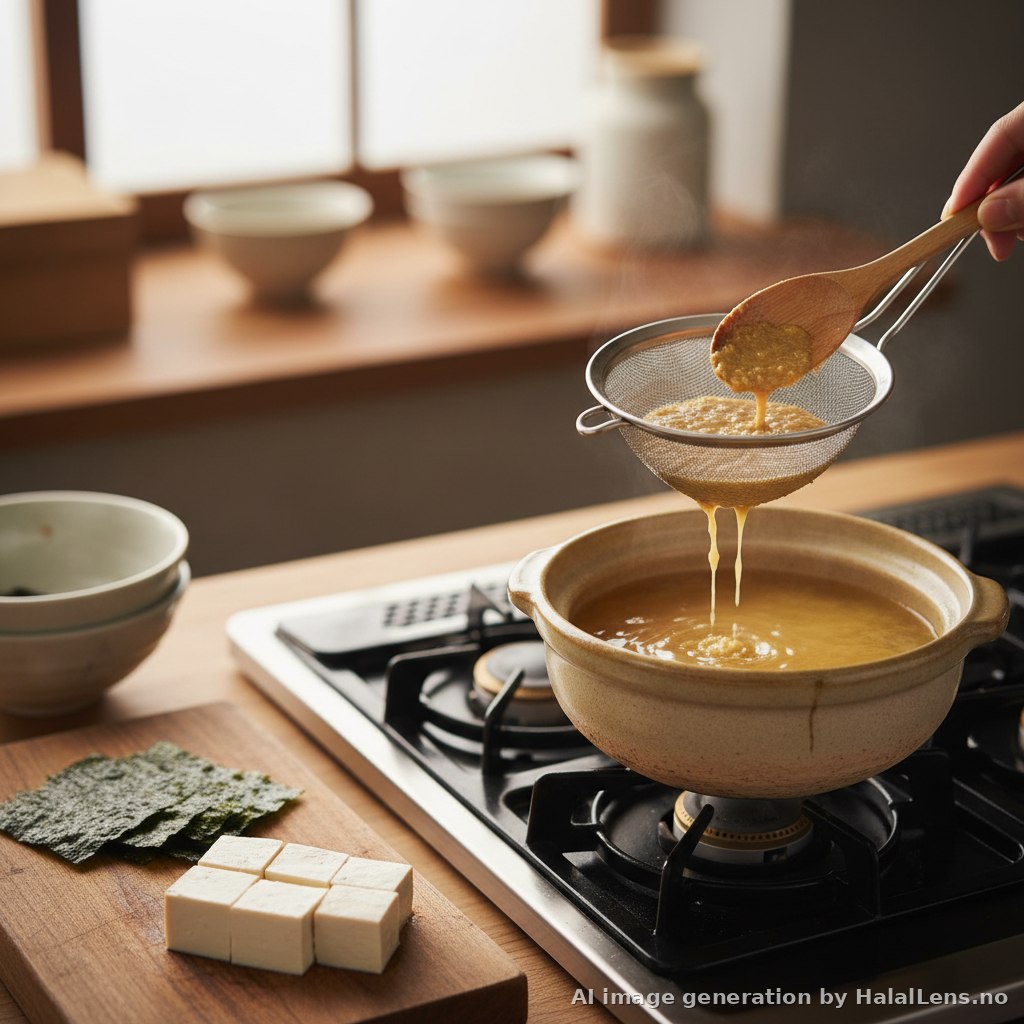
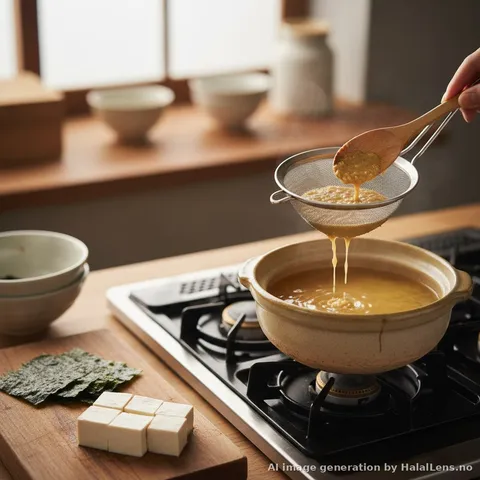
- Dissolve the miso. Reduce the heat to low — the broth should not be boiling. Place the miso paste in a small fine-mesh strainer or ladle held over the pot. Using chopsticks or a spoon, gradually stir the miso into the broth through the strainer. This prevents lumps and ensures a silky-smooth soup. Never boil miso, as high heat destroys the beneficial probiotics and dulls the flavor.
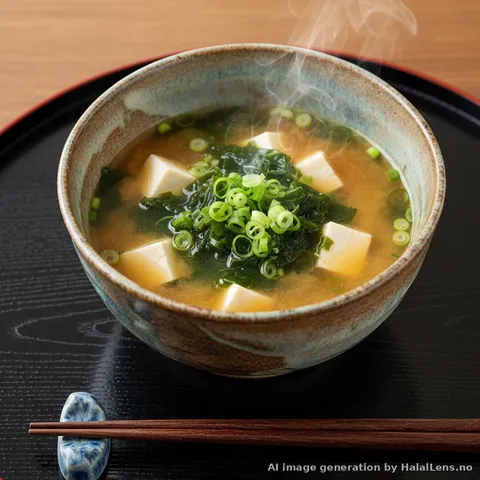
- Add the wakame and serve. Add the rehydrated wakame to the pot and stir gently. Ladle the soup into individual bowls. Top each bowl with sliced scallions and a few drops of sesame oil if desired. Serve immediately.
Tips and Variations
- For a richer umami dashi: Add 2-3 dried shiitake mushrooms alongside the kombu during the soaking step. Remove them with the kombu and slice them thinly to add back to the soup.
- Protein boost: Add cooked halal chicken strips, shrimp, or a poached egg for a heartier version.
- Storage: Miso soup is best served fresh. If you must store it, keep the broth and miso separate — reheat the broth gently and dissolve fresh miso just before serving.
- Adjusting saltiness: Miso paste is salty. Start with 2 tablespoons and taste before adding the third. White miso is milder; red miso is saltier and more intense.
- Kombu reuse: The used kombu strip can be sliced thinly and added to stir-fries, salads, or rice for extra minerals and fiber.
Nutritional Highlights
Miso soup is remarkably nutritious for such a simple dish. Miso paste is a source of complete protein, B vitamins, and beneficial probiotics from fermentation. Silken tofu adds plant-based protein and calcium. Wakame seaweed is rich in iodine, magnesium, and omega-3 fatty acids. Kombu provides natural minerals including potassium and iron. Together, a single serving of this soup delivers warmth, nutrition, and deep umami satisfaction in under 50 calories.
This recipe was developed with AI assistance and verified for halal compliance by the HalalLens team. Ingredient halal statuses are based on the HalalLens Ingredients Database. Always verify specific product labels, as formulations may vary by brand and region.