Fårikål Recipe: How to Make Norway's National Dish (Halal)
Learn how to make authentic Fårikål, Norway's national dish — a simple slow-cooked stew of halal bone-in lamb, white cabbage, and whole black peppercorns. Ready in under 3 hours.
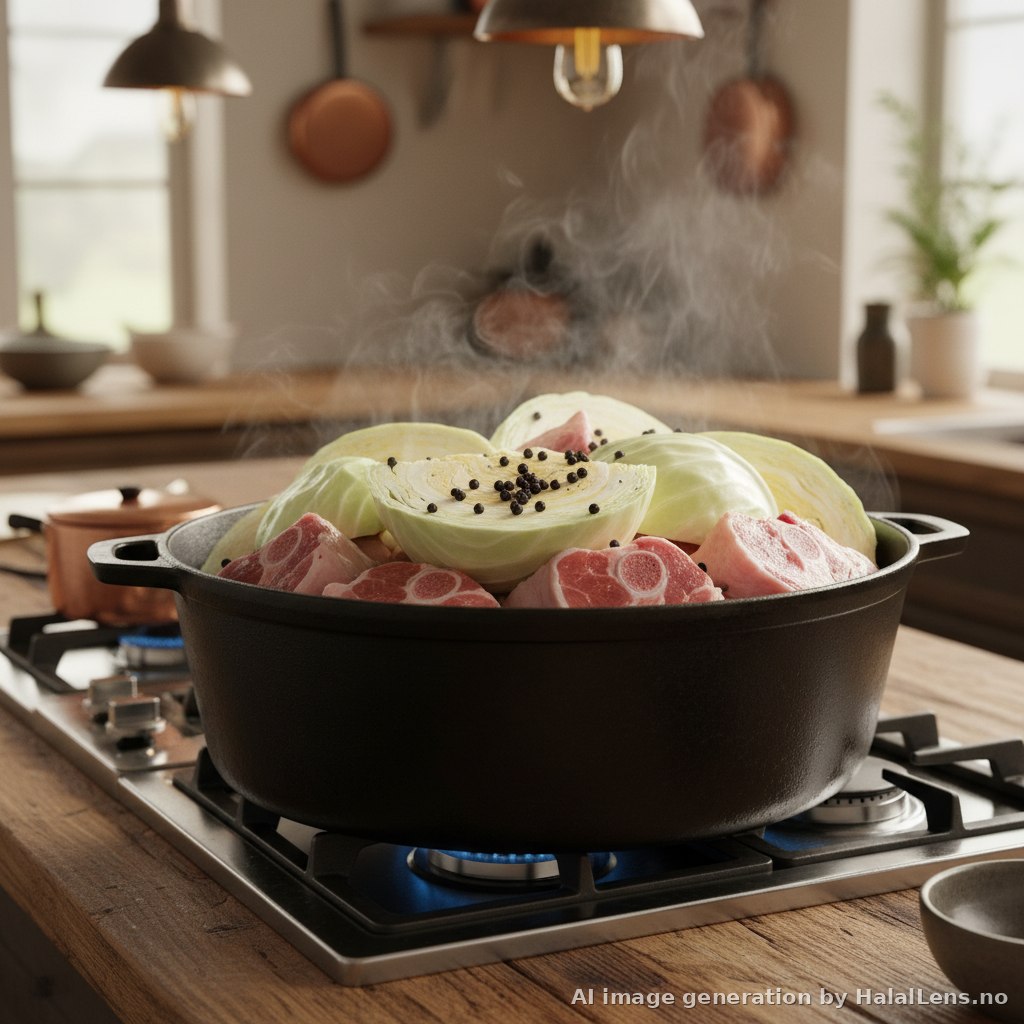
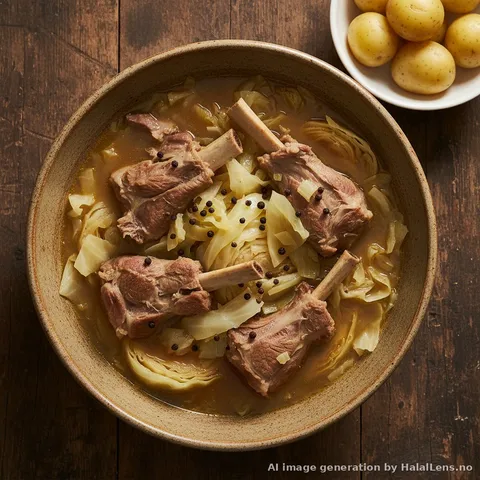
Fårikål — pronounced "faw-ree-kawl" and literally meaning "lamb in cabbage" — is Norway's official national dish: a humble, deeply satisfying stew of bone-in lamb, white cabbage, whole black peppercorns, and salt, slow-cooked until the meat falls from the bone and the broth turns rich and golden. Celebrated every last Thursday of September on Fårikålens Festdag (Fårikål Feast Day), this dish captures the soul of Norwegian autumn cooking — seasonal, unfussy, and nourishing to its core.
Few dishes in the world achieve national dish status through such radical simplicity. Fårikål contains just four traditional ingredients: lamb on the bone, white cabbage, black peppercorns, and salt. There are no aromatics, no thickening agents, no tomatoes or wine — just the clean, slow alchemy of meat, vegetable, and time. The result is a broth of extraordinary depth, infused with the fat rendered from lamb bones and the natural sweetness of long-cooked cabbage. According to Visit Norway, Fårikål has maintained its position as the country's most beloved dish for decades, receiving 45% of the national vote in 2014 when Norwegians were last polled on the matter.
The dish's origins trace back to peasant cooking traditions of the 18th and 19th centuries, when Norwegian farming families slaughtered sheep in early autumn just as the cabbage harvest came in. The timing was not coincidental — it was a matter of survival and practicality. Lamb and cabbage were both at their seasonal peak simultaneously, and slow-cooking tough, bone-in cuts over low heat was the most economical way to feed a family. Culinary historians note that similar lamb-and-cabbage preparations appear in German cookbooks from the 18th century and spread northward through Scandinavia, eventually becoming firmly embedded in Norwegian food culture by the early 20th century, as documented by North Wild Kitchen.
The National Dish of Norway: History and Cultural Meaning
Norway officially designated Fårikål as its national dish in 1972, but the dish had already been a household staple for generations before that formal recognition. The name itself — får i kål, "sheep in cabbage" — reflects a direct, unembellished Norwegian approach to food that values honesty of ingredient over culinary elaboration. In a country with a strong tradition of coastal and mountain farming, where the growing season is short and winters are long, the ability to transform a few humble ingredients into something deeply comforting represents a form of cultural intelligence that Norwegians have always prized.
Fårikålens Festdag, held on the last Thursday of September each year, is a nationwide celebration where families, restaurants, and community groups gather specifically to cook and eat this dish together. The timing aligns precisely with the traditional autumn slaughter season, known as "slaktetid," when lambs that have spent the summer grazing on mountain pastures are brought down and harvested. Norwegian mountain lamb — particularly from regions like Valdres, Numedal, and Hardangervidda — is prized for its intense flavor, developed through a summer of foraging on wild herbs, heather, and mountain grasses. This terroir-driven quality of the meat is one reason Fårikål tastes so distinctly Norwegian, even though its technique is basic. As Scandinavian Cookbook notes, the dish is simultaneously one of Norway's oldest and most continuously relevant culinary traditions.
The whole black peppercorns used in Fårikål are not merely a seasoning — they are structural and cultural. Traditional Norwegian home cooks use them whole and abundantly, scattered between the layers of lamb and cabbage as the pot is assembled. Some families bite into them intentionally as part of the eating experience; others push them aside. Either way, they infuse the broth with a warm, lingering heat that balances the sweetness of the slow-cooked cabbage. There is even a folk belief, recorded in Norwegian culinary tradition, that peppercorns aid digestion of the fatty lamb — a piece of practical wisdom dressed as superstition. The layering method is equally important: alternating layers of cabbage and lamb, built from the bottom of the pot upward, allow the fat from the meat to baste the vegetables as everything cooks down, creating a natural self-basting system without any added oil or fat.
Halal Adaptation Notes
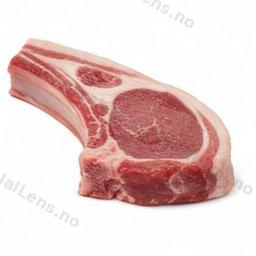
Fårikål is one of the most naturally halal-compatible national dishes in the world. The traditional recipe contains no alcohol, no pork products, and no non-halal additives — just lamb, cabbage, peppercorns, salt, and water. The single adaptation required for a certified halal version is sourcing lamb that has been slaughtered according to halal dhabiha standards. In Norway, halal-certified lamb is widely available at butchers serving Muslim communities, particularly in Oslo, Bergen, and Trondheim. When purchasing from a conventional Norwegian butcher, look for bone-in shoulder, neck, or breast cuts — the fattier, bone-in cuts are essential for developing the rich broth that defines authentic Fårikål. Avoid lean boneless cuts, which will not produce the correct texture or flavor. The dish is served with boiled potatoes on the side — a wholly halal accompaniment that rounds out the meal.
Recipe Snapshot
| Yield | 4–6 servings |
|---|---|
| Prep time | 15 minutes |
| Cook time | 2 hours 30 minutes |
| Total time | 2 hours 45 minutes |
| Cuisine | Norwegian |
Ingredients
Traditional Fårikål uses only four ingredients in the stew itself — lamb, cabbage, black peppercorns, and salt — plus potatoes served alongside. Use bone-in cuts from the shoulder, neck, or breast for the authentic, gelatinous broth.
The Stew
|
Halal Lamb (bone-in shoulder, neck, or breast)
1.5 kg (about 3.3 lbs), cut into large chunks
|
MUSHBOOH |
|
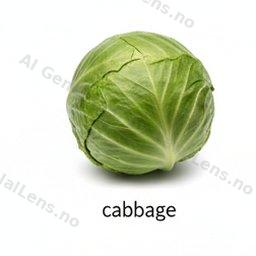
White Cabbage
1 medium head (about 1 kg / 2.2 lbs), cut into thick wedges
|
HALAL |
|
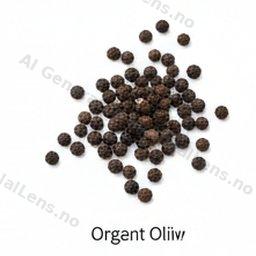
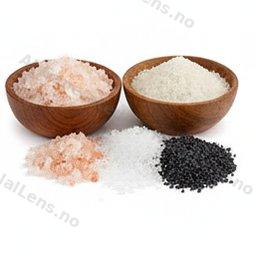
Black Peppercorns
2–3 tablespoons, whole
|
HALAL |
|
Salt
1–2 teaspoons, to taste
|
HALAL |
|
Water
200–300 ml (about 1 cup), to start
|
HALAL |
To Serve
|
Potatoes
800 g, peeled and boiled separately
|
HALAL |
Method
- Prepare the cabbage. Remove the outer leaves from the cabbage and cut it into 6–8 thick wedges through the core. Keeping the core intact helps the wedges hold together during the long cook.
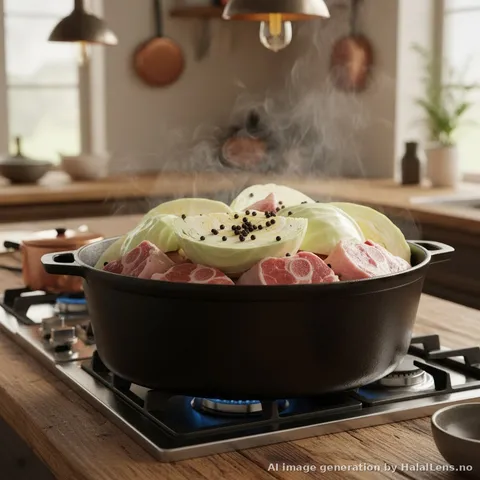
- Layer the pot. In a large, heavy-bottomed pot or Dutch oven, place a layer of lamb pieces on the bottom. Season with a pinch of salt and scatter over some of the black peppercorns. Add a layer of cabbage wedges on top. Repeat the layering — lamb, salt, peppercorns, cabbage — until all the ingredients are used, finishing with a layer of cabbage on top.
- Add water. Pour 200–300 ml of cold water around the sides of the pot. You do not need to fully submerge the ingredients — the cabbage will release a great deal of liquid as it cooks, and the lamb will render its fat, creating the broth naturally.
- Bring to a simmer. Place the pot over medium heat and bring to a gentle simmer. As it heats, some foam may rise to the surface from the lamb — skim this off with a spoon if desired, though many traditional cooks leave it.
- Slow cook. Reduce heat to very low, cover tightly with a lid, and cook for 2 to 2½ hours. The stew should maintain a very gentle simmer throughout — almost a murmur. Do not boil vigorously, as this toughens the meat. After 1.5 hours, check the liquid level and add a small splash of water if it seems dry, though this is rarely needed.
- Test for doneness. The lamb is ready when it is completely tender and beginning to fall from the bone. The cabbage should be fully soft and the broth a rich, golden-brown color with visible fat droplets on the surface.
- Boil the potatoes. About 30 minutes before the stew finishes, peel and boil the potatoes in well-salted water until tender. Drain and serve alongside.
- Adjust seasoning and serve. Taste the broth and adjust salt if needed. Ladle the stew into deep bowls with plenty of broth, and serve the boiled potatoes on the side. Provide extra napkins — eating around the bones is part of the tradition.
Tips & Variations
- Mutton vs. lamb: Traditionally, Fårikål is made with mutton (older sheep) rather than young lamb, which gives a deeper, more intense flavor. If you can source halal-certified mutton, use it — the dish becomes even more complex, though it may require 30–45 minutes of additional cooking time.
- Bone-in is non-negotiable: The rich broth comes entirely from the gelatin and fat rendered from the bones. Boneless cuts will not produce the same result. Shoulder, neck, and breast are the traditional choices; shank also works well.
- Don't rush it: Low and slow is the only way. A higher heat will tighten the muscle fibers in the lamb and produce a dry, chewy result. The broth should barely tremble throughout cooking.
- Peppercorn generosity: Authentic Norwegian recipes use a surprising quantity of whole peppercorns — 2 to 3 full tablespoons. Don't be timid. They deliver warmth without sharpness after the long cook.
- Next-day flavor: Like many stews, Fårikål improves significantly after resting overnight. Reheat gently the following day and the flavors will have melded into something even deeper.
- Serving tradition: In Norway, Fårikål is always served with plain boiled potatoes — never mashed, never roasted. A slice of crusty bread to mop up the broth is a welcome addition.
AI disclosure: This recipe article was drafted with AI assistance and reviewed by HalalLens for accuracy and halal compliance.