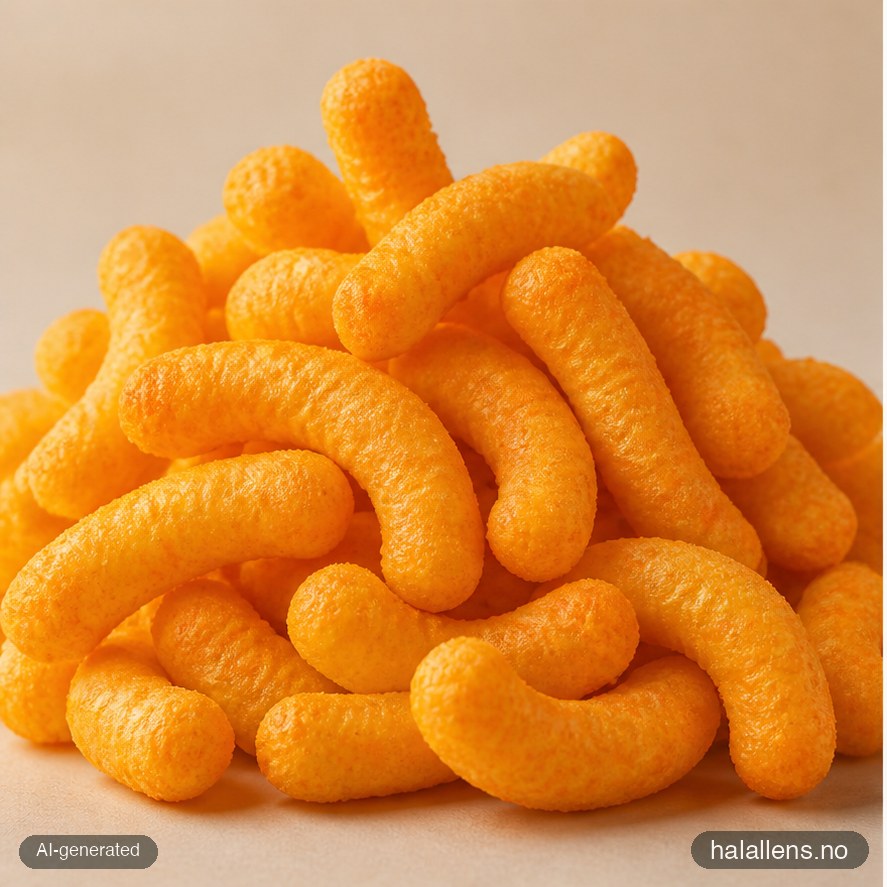
Cheetos are not one global recipe. A bag bought in the United States, a Cheetos Twisted bag from a British supermarket, and a locally made Gulf pack can have different cheese systems, flavourings, and certification. For Muslim shoppers, the decisive question is the source of the seasoning enzymes, followed by the country of manufacture and the halal mark on the actual packet.
Quick answer: Cheetos are market-specific. Current US cheese-flavoured Cheetos list cheese and enzymes, and Frito-Lay says many cheese seasonings use animal enzymes, so Crunchy, Puffs, and Flamin’ Hot are MUSHBOOH unless the exact pack gives a halal-approved source. UK Cheetos Twisted recipes are vegetarian but not halal-certified. Locally certified Gulf or Malaysian packs are HALAL when the logo and origin match.
The enzyme issue in US cheese seasoning
The central problem is not the corn puff. It is the cheese seasoning. The current Frito-Lay consumer FAQ says that many cheeses used in its seasonings are made with animal enzymes. It advises people who want to avoid animal enzymes to avoid snacks that list “cheese” as an ingredient. That is a manufacturer warning, not a halal certification.
The same FAQ says only a few snacks have animal flavours and that those flavours appear in the ingredient statement. Cheetos cheese products instead declare dairy ingredients such as cheddar cheese, whey, and cheese cultures, followed by “enzymes.” An ingredient declaration that does not identify the enzyme source does not establish halal origin. Under HalalLens’s verification rule, an unspecified animal enzyme is MUSHBOOH.
Frito-Lay also publishes a document titled “U.S. Products Made Without Pork (Porcine) Enzymes.” The January 8, 2025 version explains that the list is for products made and distributed in the United States and that recipes in other countries may differ. It is useful for excluding known porcine enzymes, but being on a no-pork list would still not be the same as a halal certificate: a non-pork animal enzyme may have an unverified source.
US Cheetos product by product
The current US Cheetos range includes Crunchy, Puffs, baked products, popcorn, and several Flamin’ Hot versions. The Cheetos website directs shoppers to PepsiCo Product Facts for the label attached to a particular product and warns that product information can vary by version. Frito-Lay’s current SmartLabel entry for Cheetos Crunchy Flamin’ Hot likewise says that package information is the most accurate reference if a scanned label differs.
The US Crunchy, Puffs, and Flamin’ Hot families are not halal-certified. Their cheese-flavoured labels list cheese or cheddar cheese and “enzymes,” while Frito-Lay confirms that animal enzymes are used in some cheese seasonings. The label does not give a halal-approved source for those enzymes. That makes the products MUSHBOOH for a shopper who requires verified halal sourcing, even when the word “pork” is absent.
Some older online lists describe particular Cheetos varieties as free from porcine enzymes. Do not treat a copied list, a social-media answer, or an old package as proof for a current bag. Frito-Lay says its information applies to a specific distribution market and asks shoppers to contact Consumer Relations if a product is not covered. The date, country, and current ingredient panel matter.
Flamin’ Hot: the colour is not the enzyme
US Cheetos Crunchy Flamin’ Hot combines a spicy seasoning with cheddar cheese, whey, buttermilk, natural flavour, and enzymes. Imported US labels commonly show colour additives in the red and yellow family, including Allura Red, known in European-style labelling as E129, along with other colours. E129 itself is a colouring issue rather than the reason the cheese seasoning is uncertain. The enzyme source remains the deciding ingredient question.
The recipe can change. PepsiCo announced a newer Simply NKD range in late 2025 that removes artificial colours and flavours from selected Cheetos products while keeping the original products on sale. A colour change does not automatically change the cheese enzyme source. Read the current bag, especially when buying imported Flamin’ Hot products from a specialist shop.
The additive codes also deserve proportionate attention. US and imported labels may show monosodium glutamate and disodium inosinate, which correspond to E621 and E631. Their halal status depends on source and certification, but the cheese enzyme question comes first. Maltodextrin is commonly used as a carrier in powdered seasoning and is generally made from starch; the crop and processing details still belong to the label.
UK Walkers versions are different
British Cheetos are not simply US Cheetos in a smaller bag. Current UK retail listings show Cheetos Twisted Sweet & Spicy Flamin’ Hot as a maize-and-rapeseed-oil snack with a spice blend, hydrolysed soya protein, flavour enhancers, and paprika extract or caramel colouring. The listing says “suitable for vegetarians.” It does not list cheddar cheese or animal enzymes in that recipe.
The current Cheetos Twisted Fiery Jalapeño & Cheese listing is also marked suitable for vegetarians. Its seasoning includes flavouring, whey permeate, buttermilk powder, cheese powder, and skimmed milk powder. The public ingredient declaration does not name the rennet or enzyme technology used to make the cheese powder. Vegetarian labelling is useful evidence that the finished seasoning is intended to exclude meat-derived ingredients, but it is not a halal certificate and does not identify every processing aid.
For strict halal shoppers, the practical UK verdict is therefore more precise than “all UK Cheetos are halal.” A vegetarian Twisted recipe without a named haram ingredient may be acceptable to some consumers, but the absence of halal certification and the unreported source of any cheese-processing aid leave it MUSHBOOH or Check label under the standard being applied. Imported US Crunchy bags should be treated as the US formulation, not the UK Twisted recipe.
Halal-certified markets: follow the pack
PepsiCo Middle East confirms that its Dammam plant produces Cheetos along with other snack brands and exports products to several Gulf markets. A regional manufacturing base does not, by itself, prove certification for every flavour. A halal verdict applies to the product, recipe, facility, and certification scope shown on the packet.
HalalCodeCheck reports halal-certified Cheetos routes for Saudi Arabia and the Gulf, and reports JAKIM-certified Cheetos in Malaysia. The Malaysian government’s JAKIM portal is the correct place to check Malaysian certification records, while the Saudi and UAE systems rely on approved local conformity or halal-certification bodies. I did not find a public product-specific Turkish Cheetos certificate in the records checked, so a Turkey-market bag should be verified from its own halal mark and certification details.
This distinction matters for imported snacks. A bag made in Saudi Arabia or Malaysia may use a certified local recipe, while an American bag with the same flavour name can use a different cheese supplier and additive system. The halal logo, certifier reference, and “made in” line work together. Do not transfer a local certificate to every Cheetos product sold under the same brand.
Cheetos verdict by product and market
| Product | Market | Verdict | Deciding factor |
|---|---|---|---|
| Cheetos Crunchy Cheese | United States | MUSHBOOH | Cheese and unspecified enzymes; no halal certification. |
| Cheetos Puffs Cheese | United States | MUSHBOOH | Dairy seasoning and enzyme source are not halal-verified on the label. |
| Cheetos Crunchy Flamin’ Hot | United States | MUSHBOOH | Cheddar, whey, “enzymes,” and colour additives; no halal mark. |
| Cheetos Twisted Sweet & Spicy Flamin’ Hot | United Kingdom | Check label | Vegetarian maize recipe, but no halal certification and recipes can change. |
| Cheetos Twisted Fiery Jalapeño & Cheese | United Kingdom | MUSHBOOH | Vegetarian label, dairy cheese powder, and no named halal enzyme source. |
| Cheetos Crunchy imported from the US | UK/import shops | MUSHBOOH | US cheese formulation; do not use the UK Twisted verdict. |
| Cheetos with a valid local halal logo | Saudi Arabia/Gulf or Malaysia | HALAL | Certification applies to the identified local product and pack. |
| Plain salted corn puff | Any market | Check label | Corn, oil, and salt are simple, but the exact product still controls. |
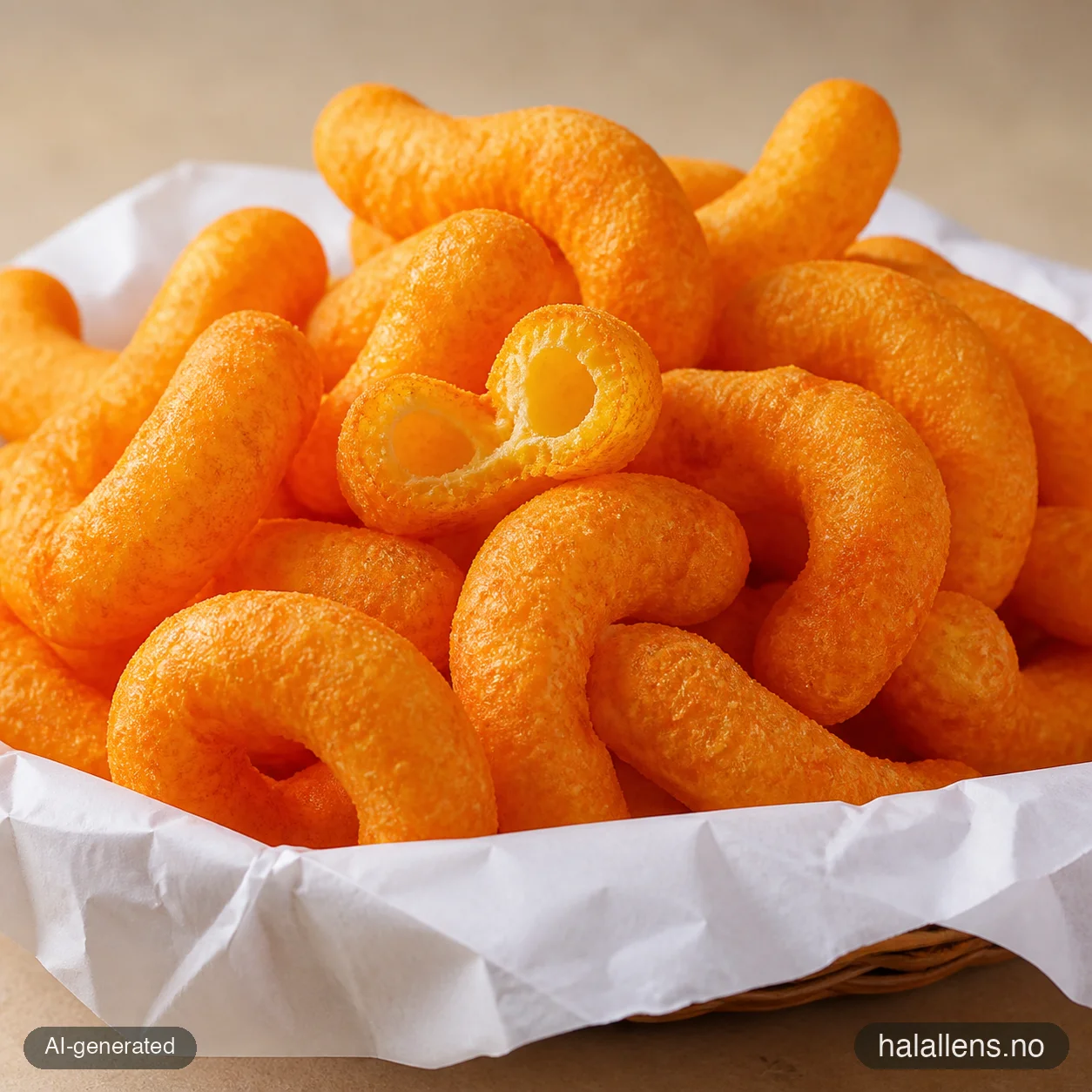
Holding a Cheetos bag in the shop? Scan it with the free HalalLens scanner to check the complete ingredient list, additives, and country-specific verdict.
Colours, cheese powders, and minor ingredients
Flamin’ Hot colours vary by country and product generation. Imported US-style labels may show Allura Red, Sunset Yellow, or Tartrazine, while UK Twisted labels currently show paprika extract and caramel colouring in the sweet-and-spicy recipe. If a local label lists E129, review the E129 ingredient record; the colour does not answer the separate question of whether the cheese enzymes are halal.
The current US ingredient panels also use dairy components such as whey, whey protein concentrate, buttermilk, and cheddar. Milk itself is halal-neutral. The processing of cheese is where rennet or other enzymes enter the analysis. E631 and E621 may appear as flavour enhancers, and E471 can appear in some regional seasoning systems even when it is absent from a particular US panel. Their origin must be checked when they are listed without a certification mark.
“Natural flavour” is not automatically haram, but it is not a complete sourcing statement either. The Frito-Lay FAQ says animal flavours are declared rather than hidden under “natural flavors”; that answers one concern, not every question about processing aids. If the pack lists a specific meat, animal enzyme, or a source that you cannot verify, do not upgrade the product to HALAL based on a generic ingredient name.
How to check your bag
Start with the front and back of the packet. Find the country of manufacture or the “made in” statement, then look for the halal logo and any certifier or registration reference. A product imported from a Muslim-majority market is not automatically certified, and a halal-looking flavour name is not evidence of certification.
Next, read the seasoning sub-list rather than stopping at “cheese flavour.” Look for cheese, cheddar, whey, buttermilk, enzymes, rennet, E631, E627, and E635 where listed. The US product panel may use the word “enzymes” without naming an animal source. The UK vegetarian flag helps distinguish UK recipes from US recipes, but it should not be used as a substitute for a halal mark.
Finally, match the scan to the pack in your hand. PepsiCo and Cheetos both direct consumers to current product facts because formulations and packaging change. If the product is not certified and the enzyme source is unspecified, the honest answer is MUSHBOOH. If a local certifier confirms the exact product, the verdict can be HALAL. If the label explicitly names porcine enzymes, it is HARAM.
Frequently asked questions
Are Cheetos halal?
Cheetos do not have one global halal status. US cheese-flavoured Cheetos are MUSHBOOH because the labels list unspecified enzymes and Frito-Lay says many cheese seasonings use animal enzymes. Locally produced packs with a valid halal certification mark can be HALAL.
Do Cheetos contain pork enzymes?
Frito-Lay says animal enzymes, including porcine enzymes, are used in some cheese seasonings, but the current Cheetos labels I checked generally state “enzymes” without identifying the source. That makes the US products MUSHBOOH under a strict verification rule unless the current product record or certifier confirms the source. An explicit porcine enzyme declaration would make a product HARAM.
Are Flamin’ Hot Cheetos halal?
US Flamin’ Hot Cheetos are MUSHBOOH because the seasoning includes cheddar, dairy ingredients, and unspecified enzymes, with no halal certification. UK Twisted Flamin’ Hot is a different vegetarian recipe, but it is still not halal-certified. A local Gulf or Malaysian pack is HALAL only when its own halal logo and product details are valid.
Are UK Cheetos vegetarian?
Current UK retail listings mark Cheetos Twisted Sweet & Spicy and Fiery Jalapeño & Cheese as suitable for vegetarians. Their recipes differ: the sweet-and-spicy version is built around corn and a spice blend, while the cheese version lists dairy cheese powders. Vegetarian status does not equal halal certification, so check the label and any halal mark.
Where are halal Cheetos made?
PepsiCo confirms that its Saudi Dammam operation produces Cheetos for Saudi demand and exports to Gulf markets. HalalCodeCheck reports certified local routes in the Gulf and Malaysia, but the certificate belongs to the specific product and facility. Confirm the country of manufacture and the halal logo on the packet rather than assuming every Cheetos bag is covered.
This analysis was AI-assisted and reviewed against manufacturer statements, current product labels, retailer ingredient records, and halal certification references. Last verified: August 2026.
Want a second check before you open the bag? Use the free HalalLens scanner for an ingredient-by-ingredient verdict based on the exact packaging you have.