Trolli is not one single halal verdict. A standard German gummy, a Trolli product made for the halal range, a vegan EU sweet and a US Ferrara pack can use different recipes and different manufacturing evidence. The deciding ingredient is usually gelatine, so the logo, source and exact market must be checked before the bag goes into the shopping basket.
Quick answer: Standard Trolli gummies are HARAM under HalalLens’s rule because Trolli’s German FAQ identifies pork-derived gelatine, while Ferrara’s US FAQ confirms gelatine but leaves its source unspecified. Trolli also has a certified halal range using halal-certified beef gelatine. A published HFQ certificate covers Spanish-made Peach Rings and Classic Bears; vegan lines avoid gelatine but still need the exact pack checked.
The gelatine default
The ordinary Trolli gummy recipe is built around gelatine. Trolli’s German FAQ says its fruit gums use high-quality gelatine from selected pork rind. The company’s English FAQ describes the general supply as gelatine from selected pork and cowhide. That wording is not a halal certification, and it does not turn a normal gummy into a halal product.
For a standard gelatine-containing Trolli bag, the practical answer is HARAM under HalalLens’s verification rule when pork is identified or the animal source is not specified. Only certified-halal gelatine passes this rule. If the ingredient declaration simply says “gelatine” and the bag has no valid halal mark, the product does not qualify as safe merely because it was bought in Germany, Spain, a Muslim-majority market or a halal grocery.
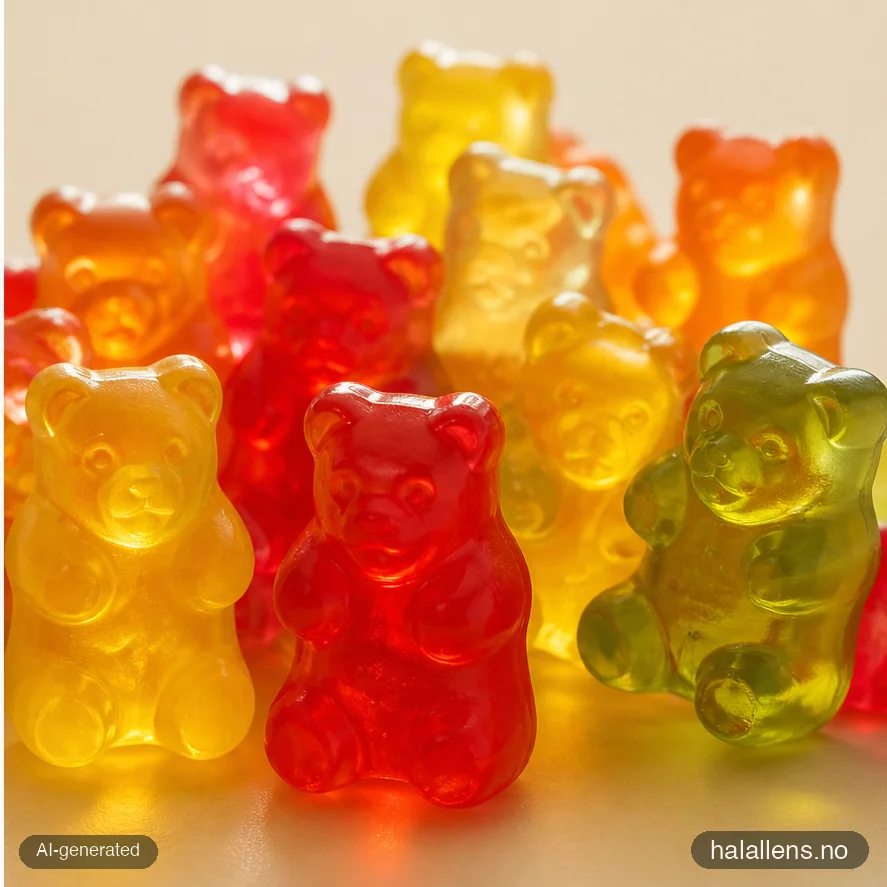
The ingredient itself can also be easy to miss in a small imported pack. The word may appear as gelatine, gelatin, Gelatine or E441, depending on the language and label format. HalalLens’s gelatine reference explains why an unspecified or pork-derived source is not accepted here. A clearly certified bovine source is a different case from an ordinary “gelatine” declaration.
The certified Trolli halal range
There is good news for shoppers who want Trolli specifically. Trolli’s official German, English and Spanish FAQs say the company offers a halal range made with halal-certified beef gelatine. The same answer says the range is controlled with raw-material suppliers and that its flavours and fruit extracts contain no alcohol. Trolli says shoppers can recognize these products by the Trolli Halal logo.
The product-level evidence is a Halal Food & Quality certificate, number HFQ-319/24/V. The published three-year certificate identifies TROLLI IBÉRICA, S.A.’s audited plant at C/Bombers 22, Paterna, Valencia, Spain. Its annex lists HALAL PEACH RINGS and HALAL CLASSIC BEARS in several pack formats, as well as a halal assortment. The document gives an expiry date of 14 July 2027, but says validity depends on the scheduled follow-up audits being completed.
That is enough to support a product-specific HALAL verdict when the pack carries the Trolli Halal logo and matches the certified product family. It is not evidence that every Trolli sweet from Spain, Germany or another plant is halal. I found a certificate naming an audited plant and covered products, not a current public statement proving that every halal SKU is manufactured in a completely separate dedicated facility. Read the logo, product name and current certification information together.
US versus EU differences
Trolli products sold in the United States are handled by Ferrara. Current official Ferrara and Trolli US pages for Sour Brite Crawlers, Peachie O’s and Gummi Creations list gelatine in the ingredients. Ferrara’s own FAQ confirms that it manufactures candies containing gelatine, but says it does not publish a list of gelatine types because formulations and packaging environments can change. It directs consumers to contact Ferrara for product-specific information.
That lack of source disclosure is decisive under the stated rule. A US bag with “gelatin” but no certified halal logo is HARAM for this guide because the source is unspecified. A US ingredient list also cannot be used to decide a German or Spanish pack. Ferrara’s current product pages use US colour names such as Red 40, Yellow 5, Yellow 6 and Blue 1, while EU labels may use E-numbers or different colouring terms.
The same caution applies to products sold in the UK, the Middle East and imported-food shops. A character, flavour or bag size can look identical while the manufacturer, gelatine supplier and certification status differ. Ferrara’s current FAQ says the packaging carries the most current ingredient and allergen statement. For a US Sour Brite Crawler or related product, the ingredient list and any certification mark on that exact pack are the evidence that counts.
Gelatine-free and vegan Trolli products
Trolli’s European Vegetarian Union vegan label is useful because the company says every product carrying that label contains no gelatine or other animal products. Trolli explains that starch or pectin replaces gelatine in these recipes. Vegetarian is not the same as vegan: Trolli says vegetarian products can contain beeswax or milk components, so the vegan symbol matters.
Current German and Spanish product pages provide two clear examples. Trolli Dinorex is described as 100% vegan and its listed ingredients use modified corn starch, acids, flavourings and colouring foods rather than gelatine. Trolli Sour Strawbies is also described as suitable for vegetarians and vegans; its current declaration lists modified starch and colouring foods, with no gelatine. The official pages warn that recipes can vary by format and during product optimization, so check the bag before buying.
A vegan Trolli product can be a strong ingredient-based choice for a Muslim shopper, but it is not automatically certified HALAL. Under HalalLens’s verification rule, the absence of animal products and alcohol supports a MUSHBOOH verdict when there is no halal mark. The difference matters to shoppers who require certification rather than an ingredient-based assessment.
Carmine, acids and other label details
Carmine is a separate issue from gelatine, and it does appear in current EU Trolli declarations. The official German pages for Sour Glowworms, The Original Hits, Multi Mix, Tarantula, Kiss and Halloween Sweet & Sour list carmine among the colours. That means a red gummy can contain carmine even when the front of the bag says only “fruit” or “berry”. See HalalLens’s carmine reference and check the exact declaration rather than judging by colour.
Trolli also publishes vegan recipes that use colouring foods, curcumin and brilliant blue FCF instead of carmine. Dinorex, for example, lists blackcurrant and carrot colouring foods, curcumin and brilliant blue FCF. This is useful evidence for that recipe, not a universal promise about all red or purple Trolli sweets. Ingredient lists can change when a product is reformulated.
Citric acid is commonly listed as an acidifier in gummy products and appears as E330 in some European declarations. It is not the gelatine decision, but a label scanner may show it as a separate ingredient. HalalLens’s E330 reference explains that distinction. Similarly, E129 is the European code for Allura Red AC; US packs may use the name Red 40 instead. Do not transfer a colour assessment from one market to another.
Trolli’s official FAQ also says its E471 emulsifier has vegetable origin. That is helpful when E471 appears in a recipe, but it still does not override an animal gelatine ingredient. A full verdict must consider gelatine, the halal logo, animal-source disclosures, colours and the current market-specific recipe as a whole.
Product-by-product verdict
The table separates certified products from ordinary gelatine gummies and vegan recipes. HALAL applies to the covered Trolli Halal product family when the pack matches the published certificate and carries the halal mark. HARAM applies to standard products where pork gelatine is identified or where Ferrara leaves the gelatine source unspecified. Vegan products are marked MUSHBOOH because they have ingredient evidence but no certification in the reviewed source.
| Product line | Verdict | Deciding factor |
|---|---|---|
| Trolli Halal Peach Rings, certified Spanish range | HALAL | Listed in HFQ certificate HFQ-319/24/V; halal-certified beef gelatine and Trolli Halal logo required. |
| Trolli Halal Classic Bears, certified Spanish range | HALAL | Listed in the published HFQ annex for the Paterna, Valencia audited plant; match pack and logo. |
| German Trolli Sour Glowworms | HARAM | Current German product page lists gelatine and carmine; Trolli’s German FAQ identifies pork rind in standard fruit gums. |
| Trolli Wurrli | HARAM | Current German declaration lists gelatine and beeswax; it is not the certified halal product line. |
| Trolli The Original Hits or Multi Mix | HARAM | Current EU declarations list gelatine and carmine; standard gelatine is not certified halal. |
| Trolli Dinorex, EU vegan recipe | MUSHBOOH | Official page describes it as 100% vegan with starch-based texture; no halal certification shown. |
| Trolli Sour Strawbies, EU vegan recipe | MUSHBOOH | Current declaration lists modified starch and no gelatine; verify the vegan label and local pack. |
| Trolli Sour Brite Crawlers, US Ferrara | HARAM | US page lists gelatin, while Ferrara does not disclose the type; unspecified gelatine fails the rule. |
| Any imported Trolli bag with gelatine and no halal logo | Check label | Country, format and certification may differ; do not infer status from the product name alone. |
Holding a Trolli bag in the shop? Scan it with the free HalalLens scanner to identify gelatine, colours and the product’s ingredient-level verdict.
How to spot the halal line in stores
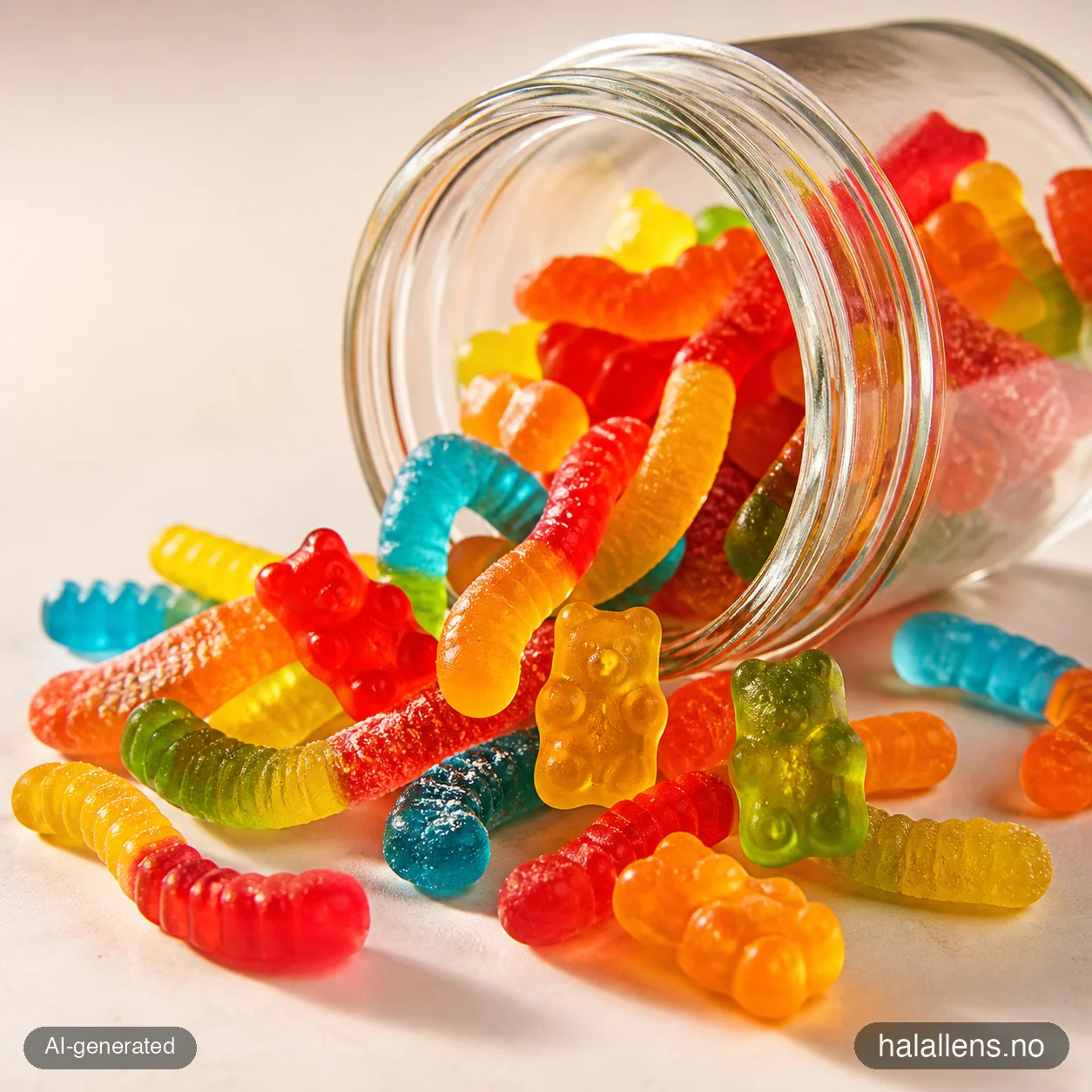
Look at the front of the bag first, but do not stop at a green colour, a picture of a cow or a retailer’s product title. The certified range should carry the Trolli Halal logo and match the product family named in the current certificate. The published HFQ annex identifies Peach Rings and Classic Bears, along with specified pack formats and a halal assortment. A standard Trolli Peach Rings bag is not interchangeable with the certified product just because the shape is the same.
Turn the bag over and identify the manufacturing or market information. The current certificate names Trolli Ibérica in Paterna, Valencia, Spain, but a product sold in a shop may have been imported, repacked or made under a different recipe. Check the logo, product name, language, batch details and ingredient list together. If the certificate or logo cannot be matched, use Check label rather than guessing.
Next, find gelatine. A standard bag that says pork gelatine is HARAM. A bag that says only gelatine is also HARAM under HalalLens’s rule unless the pack carries valid certification that identifies the source. Certified halal beef gelatine is acceptable only when the certification applies to that product. Vegan starch or pectin recipes avoid the gelatine question, but they remain separate from certified halal products.
Finally, review carmine, E-numbers and flavourings. Trolli says its halal products use flavours and fruit extracts without alcohol. Ordinary gummies can list carmine, beeswax, pectin or E471, and a vegan label can change the whole recipe. If the product is imported or the wording is difficult to read, take a clear photograph and check the exact ingredients before serving it to family or guests.
Frequently asked questions
Is Trolli halal?
Some Trolli products are certified halal, but the standard range is not automatically halal. Trolli’s official FAQs describe a halal range made with halal-certified beef gelatine and identified by the Trolli Halal logo. Ordinary gelatine gummies must be checked by product and market.
Does Trolli use pork gelatine?
Trolli’s German FAQ says standard fruit gums use gelatine from selected pork rind, while the English FAQ refers to selected pork and cowhide. Its halal range uses certified halal beef gelatine. A bag that only says gelatine has an unspecified source and does not pass HalalLens’s rule.
Where is halal Trolli made?
The published Halal Food & Quality certificate identifies Trolli Ibérica’s audited plant in Paterna, Valencia, Spain. It lists halal Peach Rings and Classic Bears among the covered products. The certificate says its validity depends on follow-up audits, so match the current pack and certification mark before buying.
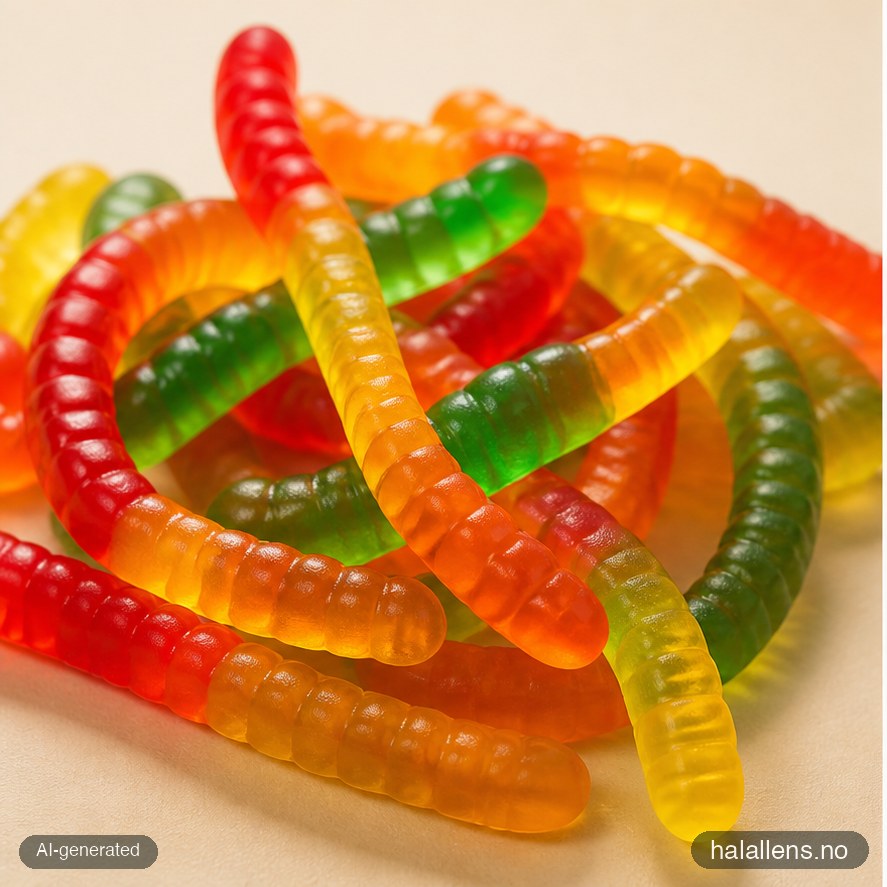
Are Trolli worms halal in the US?
Ferrara’s US Trolli pages list gelatin in products such as Sour Brite Crawlers, and Ferrara’s FAQ does not disclose the gelatine type on its website. Under HalalLens’s rule, that unspecified source is HARAM unless the exact pack provides valid halal certification.
Which Trolli products are vegan?
Current EU product pages describe Dinorex and Sour Strawbies as vegan, with starch-based or modified-starch recipes and no gelatine in the listed ingredients. Trolli says products carrying the European Vegetarian Union vegan label contain no gelatine or other animal products. Check the symbol and current local declaration because recipes can vary by format.
This analysis was AI-assisted and reviewed against manufacturer statements and halal certification-body records. Last verified: August 2026.
Want a faster answer at the shelf? Scan the exact Trolli pack with the free HalalLens scanner and get a clear ingredient-by-ingredient verdict before you buy.