Smarties are easy to recognise and surprisingly easy to misidentify. In the UK and much of Europe, the name means small chocolate lentils with a coloured sugar shell. In the United States, it usually means a completely different pressed tablet candy. For Muslim shoppers, the answer depends on that distinction, the country of manufacture, and the glazing agents printed on the pack.
Quick answer: UK/EU Nestlé Smarties are vegetarian and current labels show no gelatine or carmine. Their colours come from plant and natural extracts, while the shell uses carnauba wax and white beeswax rather than listed shellac. Nestlé’s UK pages do not provide a halal certificate, so HalalLens classifies them MUSHBOOH. US Smarties are a separate vegan tablet candy; check every pack.
The two different Smarties
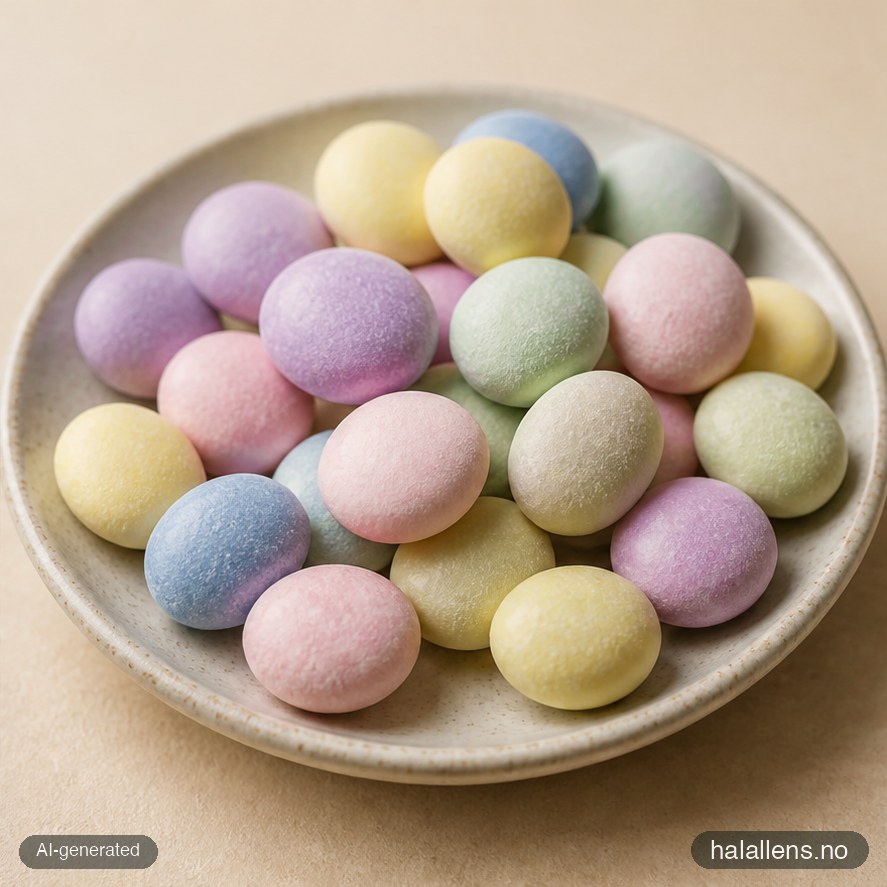
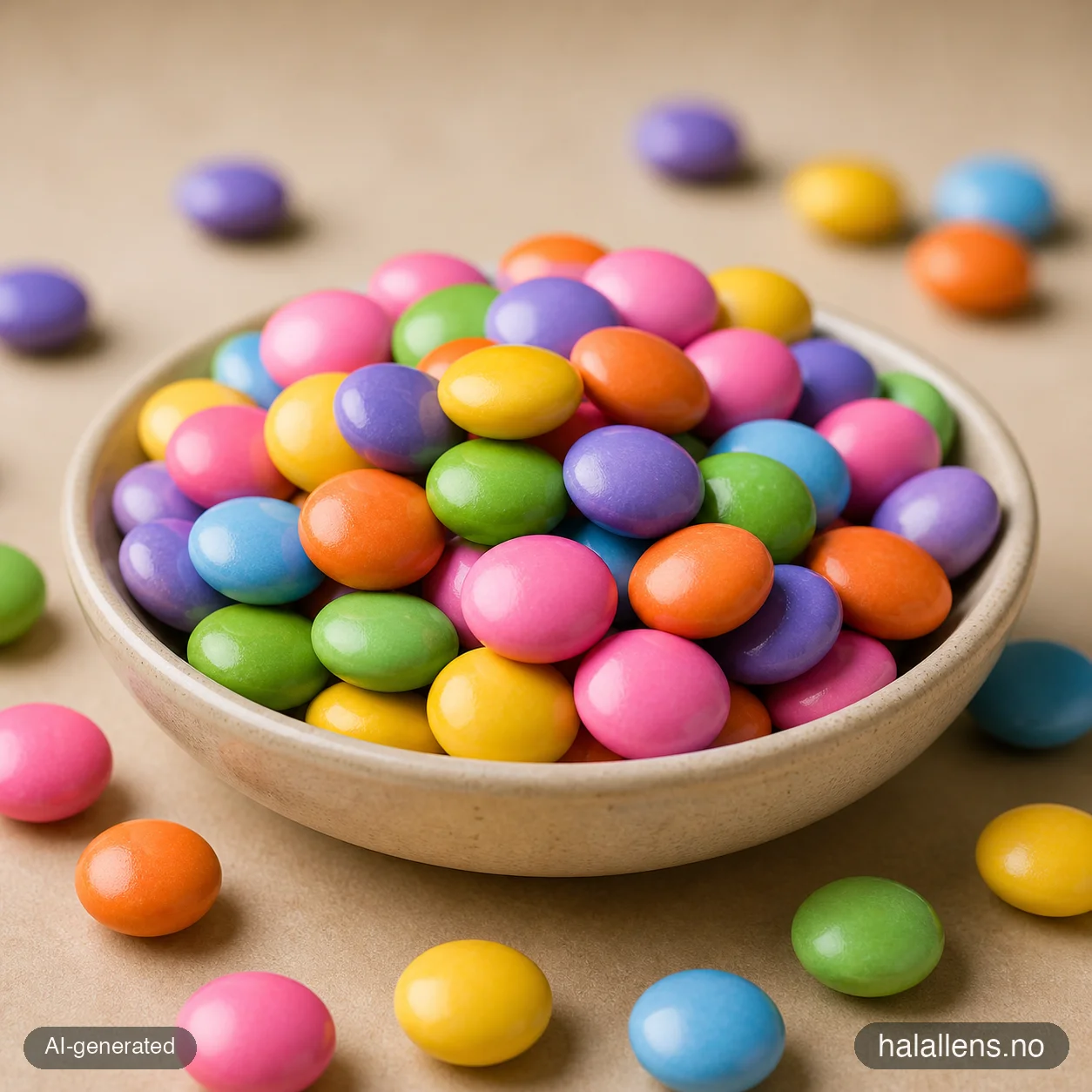
Nestlé Smarties are the chocolate product sold in the UK, most European markets, Australia and Canada. They contain a chocolate centre covered by a thin coloured shell. The exact recipe, factory and permitted additives can change between those markets, so the name alone is not enough to identify the halal position.
In the United States, Smarties Candy Company makes small, chalky tablet sweets. They contain no chocolate centre and are unrelated to Nestlé’s candy-shelled chocolates. Smarties Candy Company says its own Smarties candy is vegan and contains no animal products. Its FAQ lists dextrose, citric acid, calcium stearate, natural and artificial flavour, and colour additives for the original tablets. Canada uses the name Rockets for this tablet candy, which helps distinguish it from Nestlé’s chocolate Smarties.
The shell glazing question
The shell is where many online answers become too broad. Nestlé’s current UK Smarties Sharing Bag page lists the glazing agents as carnauba wax and white beeswax. A current Nestlé Family Smarties ingredient panel likewise names carnauba wax and beeswax, alongside sunflower lecithin and natural flavouring. Those panels do not list shellac.
Shellac is a separate glazing material that may appear as shellac or E904 on some imported confectionery labels. HalalLens treats shellac as MUSHBOOH because its source and processing need to be assessed rather than assumed. The current UK panels checked do not show shellac or E904, but a different country recipe can use a different glaze. Read the actual pack in your hand.
Beeswax is identified by name on the UK label and can also be referred to by the additive number E901. It is not gelatine, and the presence of beeswax does not by itself establish a halal certificate. If a local label lists E901 or another glazing agent instead of the UK wording, scan that version separately.
Natural colours and the carmine check
Nestlé’s UK reformulation story dates to a 2005 pledge to remove artificial colourings. The company explains that blue Smarties disappeared in 2006 because it had not yet found a natural alternative, then returned when spirulina provided a suitable blue. Nestlé’s current Smarties Colours and Flavours page describes the colours as derived from natural ingredients and identifies spirulina as the blue source.
The current UK sharing-bag declaration names colour sources including spirulina, red radish, safflower, red beet, curcumin, beta carotene and malt barley. The current panels checked do not list carmine or cochineal for the red and pink shades. That is the relevant evidence for UK shoppers, and it is why a current Smarties label should not be judged by older internet discussions about red colouring. For an imported product, compare the ingredients with the explanation of carmine rather than relying on the colour itself.
Natural colour does not mean halal-certified. It answers one narrow ingredient question. A complete halal assessment still considers the chocolate, dairy ingredients, emulsifier, flavouring and shell glaze, as well as the factory and certification status.
What Nestlé says about suitability
Nestlé UK’s current Vegetarian Suitable Products list includes Smarties tubes and pouch bags, Smarties White Tube and Pouch, and Smarties Buttons in white, milk, orange and gold. The current Nestlé Confectionery product page supports that classification with an ingredient declaration that contains milk and whey components but no gelatine. The list is a vegetarian statement, not a halal certificate. Nestlé also warns that the published list is market-specific and that products made for other countries can differ.
That distinction matters under HalalLens’s verification rule. A vegetarian product can still be MUSHBOOH when the manufacturer does not provide a recognised halal certification for the exact product and site. I located no current UK halal certificate for Nestlé Smarties in the official UK product and vegetarian records checked. This does not turn the UK recipe into HARAM; it means the evidence supports caution rather than a certified HALAL verdict. If your pack carries a recognised halal mark tied to that product, factory or importer, that mark changes the assessment.
The same principle applies to the US tablets. Smarties Candy Company’s own page gives a useful vegan and animal-ingredient statement, but vegan status is not the same as halal certification. A product sold under a different Smarties licence or with another UPC needs its own label review.
Smarties product table
These verdicts separate what the current evidence establishes from what still depends on the pack. “MUSHBOOH” here means the ingredient profile is promising or vegetarian, but the exact product lacks a verified halal certificate or contains a sourcing question such as beeswax. A pack that lists unspecified or pork-derived gelatine would be HARAM under HalalLens’s rule; none of the current UK Nestlé Smarties panels checked lists it.
| Product | Region | Verdict | Deciding factor |
|---|---|---|---|
| Smarties Tube or Sharing Pouch | UK | MUSHBOOH | Vegetarian and no gelatine listed; carnauba wax and white beeswax; no UK halal certificate located |
| Smarties Buttons | UK | MUSHBOOH | Included on Nestlé UK’s vegetarian list; verify the current glaze and factory |
| Smarties White Tube or Pouch | UK | MUSHBOOH | Vegetarian listing, but the white variant still requires its own current ingredients check |
| Nestlé Smarties | EU | Check label | Country recipes and glazing agents can differ from the UK declaration |
| Nestlé Smarties | Australia | Check label | Australian product exists, but origin, ingredients and certification must be read on the local pack |
| Nestlé Smarties chocolate | Canada | Check label | Nestlé chocolate Smarties are distinct from Canada’s Rockets tablet candy |
| Original Smarties tablets | US | MUSHBOOH | Smarties Candy Company says vegan; no exact halal certificate established by that statement |
| Imported pack with a recognised halal mark | Any market | HALAL | The mark must apply to the exact product, manufacturing site and current packaging |
Checking a mixed import or an unfamiliar Smarties variant? Use the free HalalLens scanner to review the ingredient list and see which items need attention.
How to check your Smarties pack
Start with the product identity. Chocolate lentils made by Nestlé are a different product from the US tablet candy made by Smarties Candy Company. Then find the “made in” statement, importer details and the full ingredients panel. A UK panel naming carnauba wax and white beeswax is not the same as an imported panel naming shellac or E904.
Next, check for gelatine, shellac, carmine and the glazing agents. The current UK Nestlé evidence supports a gelatine-free, vegetarian recipe with plant and natural colour sources. The current US manufacturer statement supports an animal-free tablet recipe. Neither fact alone confirms that every Smarties product sold worldwide is halal.
For US tablets, Smarties Candy Company says its own products use a UPC beginning with 0 11206. Treat a different UPC or a product made by another company as a separate item. For Australia and Canada, use the local declaration rather than copying a UK ingredient list. Finally, look for a recognised halal logo and confirm that it belongs to the exact product, not simply to a distributor or a different Smarties range.
Nestlé’s product information is useful for identifying the current UK recipe, but it does not replace the pack in front of you. Recipes change, and imported confectionery can be made at another site. If the label is incomplete, translated poorly or uses an unfamiliar glaze, treat the item as MUSHBOOH until the exact product is verified.
At the checkout, photograph the front and ingredients panel, then run it through the free HalalLens scanner for a product-specific ingredient verdict.
Frequently asked questions
Are Smarties halal?
UK Nestlé Smarties are vegetarian and current UK ingredient panels do not list gelatine or carmine. They are still MUSHBOOH under HalalLens’s verification rule because no current UK halal certificate was located and the shell uses glazing agents that should be checked on the exact pack.
Do Smarties contain shellac?
The current UK Nestlé Smarties pages checked list carnauba wax and white beeswax, not shellac. Imported recipes can differ, so look specifically for “shellac” or “E904” in the ingredients before relying on the UK declaration.
Do Smarties contain carmine?
Current UK Nestlé panels checked use natural colour sources such as red radish and red beet, and do not list carmine. Older discussions or another country’s recipe may refer to different ingredients, so the local label remains decisive.
Are UK and US Smarties the same?
No. UK Smarties are Nestlé chocolate lentils with a candy shell, while US Smarties are small tablet sweets made by Smarties Candy Company. The US product is described by its maker as vegan, but that does not make it the same product or establish halal certification for every pack.
Do Smarties contain gelatine?
The current UK Nestlé Smarties declarations checked do not list gelatine, and Smarties formats appear on Nestlé UK’s vegetarian list. Check imported and limited-edition products separately; if a pack lists unspecified or pork-derived gelatine, it fails HalalLens’s rule.
This analysis was AI-assisted and reviewed against manufacturer statements and halal certification-body records. Last verified: August 2026.