Haleem Lahori — Ragoût de Blé, Orge et Bœuf 7 Grains de Lahore
Recette Haleem Lahori authentique — ragoût cuit lentement légendaire de Lahore aux 7 céréales
Haleem Lahori is Lahore's answer to the ancient slow-cooked grain-and-meat stew — a dish so deeply woven into the city's culinary identity that entire neighborhoods in the old walled city are famous for it. While the Hyderabadi version of haleem has earned global recognition, Lahori haleem is a distinct animal: darker in colour, richer in beef flavour, and built on a traditional 7-grain mix that includes wheat, barley, multiple lentils, and broken rice. The result is a stew with a more rustic, textured character that Lahoris will tell you — with absolute conviction — is the finest haleem on earth.
The Soul of Lahori Haleem
To understand Lahori haleem, you have to walk through the lanes of Anarkali Bazaar at dusk during Ramadan. The oldest continuously operating bazaar in the subcontinent — named after the legendary court dancer of Emperor Akbar — Anarkali has been feeding Lahore for over four centuries. During the holy month, the air in its alleyways is thick with the smoke rising from enormous iron deghs (cauldrons), each holding enough haleem to feed a hundred. The haleem-wallahs of Anarkali begin cooking at midnight, stirring constantly through the small hours, and by dawn the stew has transformed into something almost miraculous.
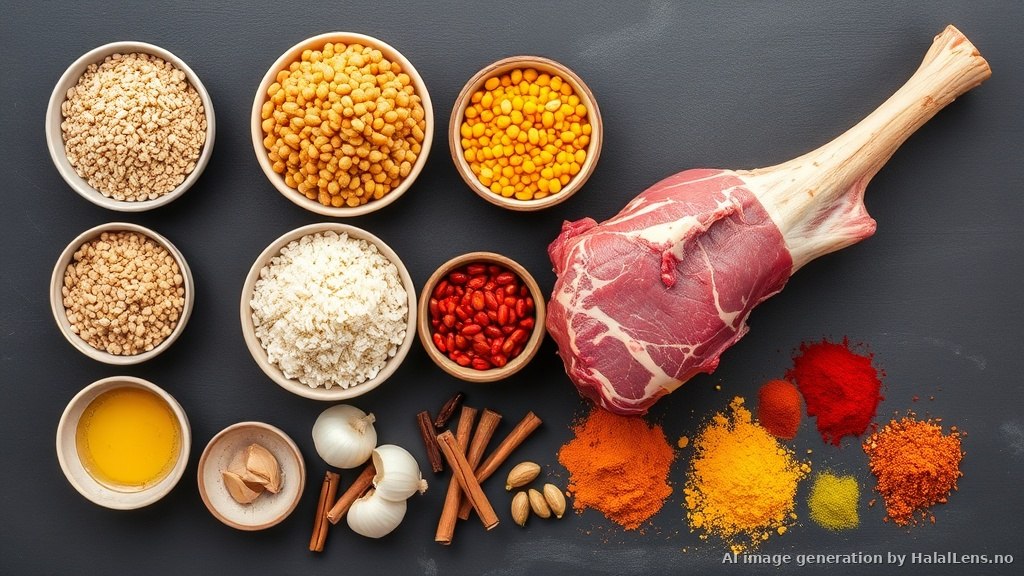
Lahori haleem differs from its Hyderabadi cousin in several fundamental ways. First, the grain blend: Lahori cooks use a 7-grain mix — whole wheat, barley, split chana dal, moong dal, masoor dal, urad dal, and broken rice — creating a more complex, nuttier base than the simpler 3-grain Hyderabadi blend. Second, the meat: Lahore strongly favours beef, specifically nihari-cut beef shank with marrow, rather than the lamb that dominates Hyderabadi versions. Third, the spice profile: Lahori haleem leans heavily on garam masala, whole black pepper, and dried red chilies for a deeper, more assertive heat, while Hyderabadi haleem favors saffron and subtle floral notes.
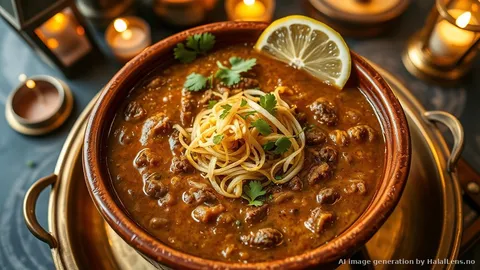
The technique also differs. Lahori haleem is stirred — literally — for hours. The ghoting (pounding) is done continuously with a large wooden paddle called a khunti, creating a texture that is cohesive but still shows the fibrous strands of shredded beef running through it. No blender touches Lahori haleem; the texture is achieved purely through patience and arm strength. The finished dish is darker — almost black-brown — from the caramelised onions, beef fat, and prolonged cooking, and considerably more flavourful than any haleem cooked in under four hours.
In Lahore, haleem is not just food — it is architecture. You build it grain by grain, spice by spice, hour by hour, until something that was once separate becomes indivisible. That is the philosophy of the walled city itself.
The 7-Grain Mix: Why It Matters
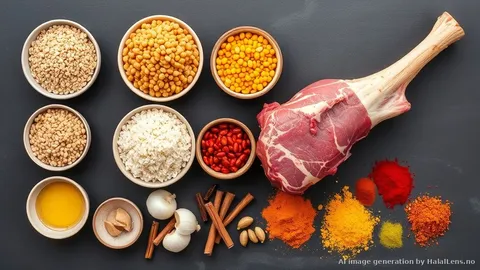
The defining feature of authentic Lahori haleem is the grain blend. Each component plays a specific role in the final texture and flavour:
- Whole wheat (gehoon): The backbone of the dish. Whole wheat berries break down slowly, releasing their starch gradually to create body and a slightly chewy, satisfying texture.
- Barley (jau): Adds a mild, nutty sweetness and a smooth, almost silky quality when fully cooked. Barley also contributes soluble fibre that helps bind the stew.
- Chana dal (split Bengal gram): The largest lentil in the blend, it provides a rich, earthy flavour and thickens the stew considerably.
- Moong dal (yellow split mung): The quickest-cooking element, moong dal dissolves early and creates the initial silkiness of the base.
- Masoor dal (red lentils): Adds colour and a subtle sweetness, breaking down completely to contribute to the stew's luxurious consistency.
- Urad dal (black gram, split): The distinctive Lahori ingredient. Urad dal has a creamy, almost sticky quality when cooked that gives Lahori haleem its characteristic body and a slightly deeper, more complex flavour than versions made without it.
- Broken rice (chawal ki tor): A uniquely Pakistani touch. Small pieces of broken basmati rice cook quickly and dissolve into the stew, contributing starch and a lightness that prevents the haleem from becoming too dense.
Recipe Snapshot
| Servings | 8–10 |
| Prep time | 20 minutes (plus overnight soaking) |
| Cook time | 5–6 hours |
| Total time | 5 hours 20 minutes |
| Difficulty | Medium-High |
Ingredients
The 7-Grain Mix (soak overnight)
- 3/4 cup (135 g) whole wheat berries (gehoon)
- 1/2 cup (100 g) pearl barley (jau)
- 1/3 cup (65 g) chana dal (split Bengal gram)
- 1/4 cup (50 g) moong dal (yellow split mung beans)
- 1/4 cup (50 g) masoor dal (red split lentils)
- 3 tablespoons urad dal (white split black gram)
- 3 tablespoons broken basmati rice (chawal ki tor)
Meat
- 800 g (1.75 lb) bone-in beef shank (nihari cut), cut into large pieces
- 2 marrow bones (optional but highly recommended)
- 3 tablespoons ghee
Aromatic Base
- 3 large onions — 2 finely sliced (for frying), 1 roughly chopped (for the pot)
- 8 cloves garlic, minced
- 3-inch piece fresh ginger, grated
- 3 tablespoons vegetable oil (for frying onions)
Spice Blend (Lahori Masala)
- 2 teaspoons garam masala
- 1.5 teaspoons turmeric
- 1.5 teaspoons cumin powder
- 1 teaspoon coriander powder
- 1 teaspoon Kashmiri red chili powder
- 1 teaspoon freshly ground black pepper
- 6 green cardamom pods
- 4 cloves
- 1 black cardamom pod
- 2 bay leaves
- 1-inch piece cinnamon stick
- Salt to taste (about 2.5 teaspoons)
For Cooking
- 1/3 cup plain yogurt, whisked
- 2.5 litres (10 cups) water
Garnish (Essential in Lahore)
- Reserved crispy fried onions
- Julienned fresh ginger (generous handful)
- Thinly sliced green chilies (2–3, adjust to heat preference)
- Fresh cilantro leaves, chopped
- Fresh mint leaves
- Lemon wedges
- A drizzle of warm ghee (never skip this)
Method
Step 1 — Soak the Grains (Night Before)
Rinse all seven grains and lentils thoroughly. Combine the whole wheat, barley, chana dal, moong dal, masoor dal, urad dal, and broken rice in a large bowl. Cover with plenty of cold water and soak overnight (minimum 8 hours). The longer soak allows even the hard wheat berries to absorb water fully, which means they cook evenly with the softer lentils rather than requiring extra time.
Step 2 — Fry the Onions
Heat the vegetable oil in a wide, deep frying pan over medium-high heat. Add the 2 thinly sliced onions in a single layer and fry, stirring frequently, for 15–18 minutes until they are deep mahogany-brown and crispy. The colour matters here — in Lahori haleem, the fried onions go darker than you might think is safe, and that extra caramelisation contributes to the stew's characteristic deep, dark flavour. Drain on kitchen paper. Reserve half for the garnish; half will go into the pot.
Step 3 — Brown the Beef
In a large, heavy-bottomed pot (5+ litre capacity), heat the ghee over high heat until it shimmers. Working in batches, sear the beef shank pieces on all sides for 3–4 minutes per batch until deep brown. Do not crowd the pot — proper searing requires contact with hot metal. The brown crust formed in this step is what gives Lahori haleem its characteristic dark, meaty depth that paler, quicker versions simply cannot replicate. Remove the meat and set aside. If using marrow bones, sear those briefly too.
Step 4 — Build the Spice Base
Reduce the heat to medium. In the same pot, add the roughly chopped onion and cook for 6–7 minutes until softened and golden. Add the minced garlic and grated ginger, stirring for 2 minutes. Add all the ground spices — garam masala, turmeric, cumin, coriander, chili powder, and black pepper — and stir constantly for 90 seconds to bloom. Add the whole spices: green cardamom, cloves, black cardamom, bay leaves, and cinnamon. Add the whisked yogurt and cook, stirring, for 3 minutes until the fat separates from the masala.
Step 5 — Combine and Slow Cook
Return the seared beef and marrow bones to the pot. Drain the soaked grains and lentils and add them too. Pour in 2.5 litres of water and add half the crispy fried onions. Season generously with salt. Bring to a rolling boil, skimming any foam from the surface, then reduce heat to the very lowest setting. Cover the pot and cook for 4 to 5 hours, stirring thoroughly every 30 minutes — this is non-negotiable. As the stew thickens, stir more frequently to prevent the grain sediment from catching on the bottom. Add hot water in 250 ml additions if the level drops below the grain. By the end of 4 hours, the wheat berries should be completely soft and disintegrating, the lentils fully dissolved, and the beef fall-apart tender.
Step 6 — Shred the Meat
Lift the beef pieces from the pot using tongs. Shred the meat into fine threads using two forks — at this stage it will fall apart almost at a touch. Remove and discard all bones, cartilage, and any large pieces of fat you prefer to remove. Scoop out the marrow from the bones if using, and stir it back into the pot. Return all the shredded beef to the pot.
Step 7 — The Lahori Ghoting (Continuous Stirring)
This is where Lahori haleem becomes Lahori haleem. Using a large, heavy wooden spoon or a traditional flat-ended wooden paddle (khunti), stir and press the mixture vigorously and continuously for 20–25 minutes over low heat. Work the spoon in wide circles, pressing the grains against the sides of the pot. You are not blending — you are using mechanical action to break down the remaining wheat berries while preserving the texture of the beef threads. The final haleem should be thick enough that a spoon dragged through it leaves a channel that closes slowly. It should be dark amber-brown, heavily fragrant, and visibly textured with fine meat fibres throughout. Taste and adjust the salt.
Step 8 — Serve the Lahori Way
Ladle the haleem into deep bowls or onto flat plates if you prefer the traditional dhabba style. In Lahore, haleem is served slightly drier and flatter than in Hyderabad — more like a thick savoury porridge that can be scooped with naan. Top with the reserved crispy fried onions, generous juliennes of fresh ginger, sliced green chilies, chopped cilantro, and a few mint leaves. Squeeze a lemon wedge over the bowl and finish with a drizzle of warm ghee. Serve immediately with warm naan or kulcha bread.
Haleem Lahori During Ramadan
In Lahore's walled city, Ramadan and haleem are inseparable. The rhythm of the holy month is marked, in part, by haleem. Families who cannot cook their own visit the legendary shops of the old city — stalls in Anarkali, shops near Data Darbar, and the famous Lakshmi Chowk food street — where pots of haleem have been simmering since before midnight. The queues begin forming an hour before iftar, with people carrying their own containers to be filled directly from the cauldron.
Lahori haleem is also a significant suhoor food. The combination of slow-digesting whole grain carbohydrates, high-quality protein from the beef, and the sustained energy from the lentils makes it ideal for sustaining a fast of 14 to 16 hours. Many families in Lahore serve haleem at both iftar and suhoor throughout Ramadan, and large batches are commonly prepared on Friday evenings and delivered to neighbours, mosques, and the poor — an act of sadaqah (charity) that is deeply embedded in the city's culture.
Tips and Variations
- Pressure cooker shortcut: Pressure-cook the soaked grains and the meat together (with 1.5 litres water and all spices) for 45–55 minutes. Then transfer to a large pot for the ghoting and finishing steps on the stovetop. You sacrifice some of the depth of flavour but save 3 hours.
- Slow cooker method: After searing the beef and building the spice base on the stovetop, combine everything in a slow cooker on low for 9–10 hours. The long, gentle heat produces a beautifully silky haleem with minimal stirring.
- Lamb Lahori haleem: While beef is traditional in Lahore, bone-in lamb shoulder makes an excellent substitute. Use the same recipe and reduce the total cooking time by about 45 minutes.
- Adjusting grain ratios: The 7-grain blend above represents a balanced version. For a thicker, starchier haleem, increase the broken rice. For a nuttier, chewier result, increase the wheat and barley and reduce the lentils.
- The consistency question: Lahori haleem should be thicker and drier than Hyderabadi haleem. It should hold its shape when served on a flat plate and only spread slowly. If yours is too thin, cook uncovered over medium heat for 15–20 minutes, stirring constantly.
- Make-ahead and storage: Lahori haleem improves dramatically after resting. Cook it a day ahead, refrigerate, and reheat the next day for a noticeably deeper, more unified flavour. Add a splash of water when reheating. It freezes well for up to 3 months.
- The ghee drizzle: In Lahore, no bowl of haleem is considered complete without the final drizzle of warm ghee. This is not optional — the fat carries the spice aromas and creates a silky sheen on the surface that is both beautiful and delicious. Use the best ghee you can find.
- Haleem vs nihari for suhoor: Both are Ramadan suhoor classics in Lahore. Haleem is generally considered gentler on the stomach and more sustaining over a long fast because of its high complex carbohydrate content from the grains, whereas nihari is richer and higher in fat.
Halal Considerations
Lahori haleem was born in the Muslim kitchens of the Mughal-era walled city and has been a halal dish since its inception. All the traditional ingredients are inherently permissible. A few practical points when sourcing:
- Beef: Ensure the beef shank is halal-certified or from a trusted halal butcher. In Lahore, this is assumed — but outside Pakistan and other Muslim-majority countries, always verify. The bone-in shank with marrow is the authentic Lahori choice and produces the best flavour
- Ghee: Pure ghee (clarified butter) is halal. Check commercial brands for non-halal emulsifiers or additives, or use the HalalLens scanner to verify packaged products
- Yogurt: Plain natural yogurt is halal. Avoid flavoured varieties that may contain gelatin (often pork-derived)
- Garam masala: If using a pre-mixed garam masala blend, check that it contains only spices with no fillers or artificial flavourings. Making your own from whole spices is the most reliable approach
- All other ingredients — grains, lentils, rice, whole and ground spices, herbs, onions, garlic, ginger, lemon — are naturally halal
This recipe was developed with AI assistance and reviewed by the HalalLens team for halal compliance and culinary accuracy. All ingredient halal statuses were verified against the HalalLens database. Always check individual product labels, as formulations may vary by brand and region.