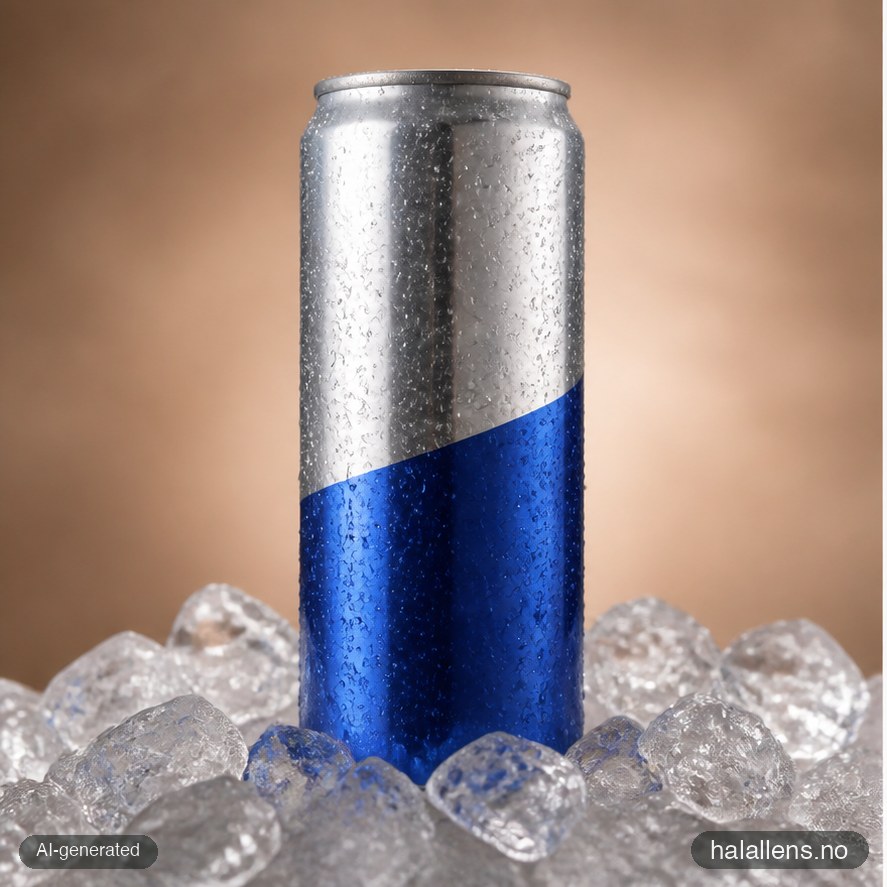
Yes, Red Bull can be halal, and the familiar taurine story is not a reason to avoid it. Red Bull’s own ingredient information says its taurine is synthetic, not taken from bulls or any other animal. The more useful question is which can you have: a Malaysian or Singaporean pack with a halal certification history, or an imported variant whose local certification and flavour formula still need checking?
Quick answer: Red Bull’s taurine is synthetic, and Red Bull’s official pages say the drink contains no animal-derived substances. Red Bull Energy Drink distributed in Malaysia has been certified halal since 1993, and Singapore’s official product page gives a similar certification statement. For other markets, including imported Sugarfree, Zero and Editions, check the can for a halal mark and current formula.
The taurine myth corrected
The name “Red Bull” has created a persistent rumour that taurine comes from bulls, or even from an animal body part. Red Bull’s official FAQ answers this directly: the taurine in Red Bull is not derived from bulls or any other animal. It is produced synthetically by pharmaceutical companies.
That statement applies to the Red Bull products covered by the company’s FAQ, including Original, Sugarfree, Zero and Editions. Red Bull also says these drinks contain no products or substances derived from animals and are suitable for vegetarians. Taurine is a compound that occurs naturally in the human body, but the source used in the beverage is synthetic.
This removes the main animal-source concern. It does not, by itself, prove that every can sold worldwide has the same certification, manufacturing controls or recipe. Those questions are answered by the market-specific pack and the certifier named on it.
What is actually in the can?
Red Bull’s official ingredient FAQ identifies the familiar core as water, sugar, caffeine, taurine and B-group vitamins. Regional labels also list glucuronolactone, inositol, acidity regulators, carbon dioxide and flavourings. The Malaysian ingredient page names sugar, caffeine, taurine, glucuronolactone, citric acid or citrate, flavourings and colours including caramel and riboflavin.
Caffeine and B vitamins do not create a halal ingredient problem. Glucuronolactone is a compound used in energy drinks, not an animal ingredient. The name can sound unfamiliar, but HalalLens’s verification rule asks for the source and processing of an ingredient rather than treating a scientific-sounding name as haram. Red Bull’s official FAQ places taurine, caffeine and vitamins among its synthetically produced ingredients.
Caramel colour is a colouring ingredient, not caramel dessert sauce. If your local label identifies it as E150d, you can read the HalalLens explanation of caramel colour E150d. Citric acid, often shown as E330, is used for acidity and taste; see the ingredient entry for citric acid if that code appears on your can.
Sugarfree formulations replace sucrose and glucose with high-intensity sweeteners. Red Bull’s US FAQ identifies sucralose and acesulfame potassium for Sugarfree. Older or different regional labels may list aspartame instead, while Zero recipes can use a different sweetener combination. Treat the current ingredient panel as the authority for an imported can.
The alcohol-trace question and published rulings
Red Bull Malaysia’s official ingredient page states that the drink distributed in Malaysia does not contain drugs or alcohol. Red Bull Singapore’s official product page makes the same statement for its market. I found no current official Red Bull page in the sources reviewed that lists added ethanol as an ingredient in Original, Sugarfree, Zero or Editions.
Flavourings can be declared collectively, so a consumer who follows a strict no-ethanol policy may still want to inspect the local label or ask the manufacturer about a particular Edition. The ingredient entry for ethanol explains why a named alcohol ingredient is treated differently from a vague flavour declaration. If a can explicitly declares alcohol or ethanol, do not rely on a general statement about another market.
Two published Islamic guidance answers illustrate the cautious approach. Darul Ifta Deoband’s answer on Red Bull treats the drink as permissible when no impure or haram ingredient is known, while advising caution where doubt remains. An older Islamweb answer says the label or a trusted analysis should be checked when alcohol is suspected. These are religious guidance responses, not halal certificates, and neither substitutes for the current can.
Certification by market
The clearest official certification statement comes from Red Bull Malaysia. Its ingredient page says Red Bull Energy Drink distributed in Malaysia has been certified halal since distribution began in 1993. The page is a Red Bull source, not a reseller claim. JAKIM’s halal-status portal is the appropriate place to verify a Malaysian product listing, certificate reference or current scope.
Red Bull Singapore’s official product information says its drink has been certified halal since distribution began in 1985. A Malaysian or Singaporean pack with the relevant halal mark gives a stronger answer than a generic internet list because certification attaches to a defined product, market and supply chain.
For the Gulf, a current market audit by HalalSpy reports halal certification for Red Bull in the UAE, Saudi Arabia and Indonesia. I did not locate a public Red Bull certificate in the sources reviewed that names the exact Gulf factory, product code and certifier, so that report should be treated as supporting market information rather than a substitute for the mark on the can. UAE’s Ministry of Industry and Advanced Technology and Saudi Arabia’s SFDA both describe official halal-certification systems for food and beverages. Imported stock should carry the evidence relevant to the market where it is sold.
Red Bull’s main global production sites listed in its official FAQ are in Austria, Switzerland and the United States. Production location alone does not decide halal status. The can’s country of distribution, recipe, certification mark and date are the useful details.
Variant-by-variant verdict
| Variant | Verdict | Deciding factor |
|---|---|---|
| Original, Malaysia distribution | HALAL | Red Bull Malaysia states halal certification since 1993; confirm the mark and product details. |
| Original, Singapore distribution | HALAL | Red Bull Singapore states halal certification since 1985; check the local pack. |
| Sugarfree, Malaysia or Singapore | HALAL | The official FAQ covers Sugarfree as animal-free; the market certification mark remains decisive. |
| Original, UK/EU/US imported stock | MUSHBOOH | The published formula has no animal-derived substances, but local certification and flavour declarations must be checked. |
| Zero, any market | MUSHBOOH | Red Bull describes the variant’s functional ingredients, but sweeteners and certification can vary by market. |
| Editions with a recognised halal mark | HALAL | The mark and certifier apply to that flavour and market, not automatically to every Edition. |
| Editions imported without a halal mark | Check label | Review the flavour declaration, country of distribution and any certification reference. |
“HALAL” in this table means the evidence identified for that market supports a halal verdict. “MUSHBOOH” flags a product that may have a clean published formula but lacks enough market-specific certification or recipe information for a firm certificate-based answer. That distinction matters when a familiar can is bought abroad.
Holding an unfamiliar can? Scan it with the free HalalLens scanner for an ingredient-by-ingredient verdict before you drink it.
Scholarly caution notes
The taurine rumour should not be confused with a genuine certification question. Red Bull’s official answer settles the source of taurine: synthetic. Its official regional pages also give direct no-alcohol and halal statements for Malaysia and Singapore. What remains for a shopper is traceability: does the can belong to the certified market, and does its current label match the product that was reviewed?
Some shoppers accept a manufacturer’s ingredient statement when no haram substance is present. Others require a recognised halal logo for every packaged drink. Both positions are addressed more honestly by showing the evidence and its limits. A halal certificate is product- and market-specific; vegetarian suitability is useful evidence about animal ingredients, but it is not the same thing as halal certification.
Energy drinks also raise a separate health question because of caffeine and sugar. The halal verdict does not turn a high-caffeine drink into a recommendation for children, pregnant consumers or anyone advised to limit caffeine. Follow the nutrition panel and local health guidance as well as the ingredient panel.
How to check your can
Start with the front and back of the exact can in your hand. Look for a halal logo, the certifier’s name or registration reference, the importer and the country of distribution. A can manufactured in Austria can be sold into several markets with different certification markings, and an Edition can have a different ingredient panel from Original.
Then read the ingredients. Confirm that taurine is present without assuming an animal source: Red Bull’s official FAQ says its taurine is synthetic. Check the sweeteners on Sugarfree or Zero, the flavour declaration on Editions, the colour wording, and any explicit reference to alcohol or ethanol. If the flavour system is only described broadly and your standard requires complete certainty about carriers, contact Red Bull or choose a can carrying a recognised halal mark.
For Malaysian stock, compare the pack with the current JAKIM verification record. For Gulf stock, use the local certification reference or the market’s official system where available. The manufacturing country is helpful context, but the certification mark and exact product identity are the final checks.
Frequently asked questions
Is Red Bull halal? Red Bull is halal-certified in Malaysia and Singapore according to the manufacturers’ official regional pages. In other markets, Red Bull’s official FAQ says the drink contains no animal-derived substances, but shoppers who require certification should check the can for a local halal mark.
Is taurine in Red Bull from bulls? No. Red Bull states that its taurine is not derived from bulls or any other animal and is produced synthetically by pharmaceutical companies.
Does Red Bull contain alcohol? Red Bull Malaysia and Red Bull Singapore state on their official regional pages that the drink does not contain alcohol. Because recipes and flavour declarations can vary by market, inspect an imported Edition and avoid it if the can explicitly lists alcohol or ethanol.
Is Red Bull Sugarfree halal? The official FAQ describes Sugarfree as containing no animal-derived substances, and Malaysian and Singaporean certified packs provide the strongest market-specific answer. For Sugarfree bought elsewhere, check the current sweetener, flavouring and certification details on that can.
Is Red Bull halal-certified anywhere? Yes. Red Bull’s official Malaysia page says its drink has been certified halal since 1993, and the official Singapore page says certification dates to 1985. Current market reporting also identifies certification in several Muslim-majority markets, but the local logo and product reference should decide the imported-can verdict.
This analysis was AI-assisted and reviewed against manufacturer statements and halal certification-body records. Last verified: August 2026.
Before opening a can from a new market, use the free HalalLens scanner to check the label and see which ingredients drive the verdict.