Halal Cheesecake — New York Style Without Gelatin
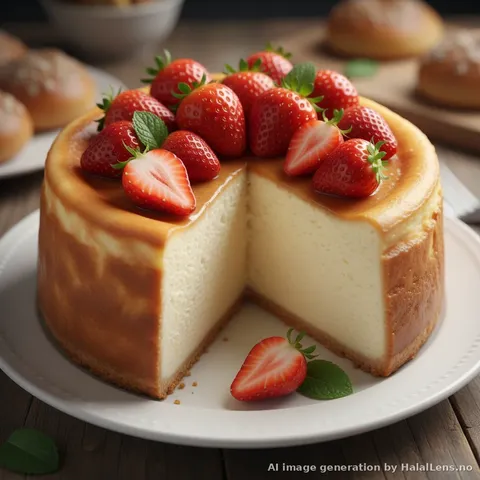
A tall, dense, and impossibly creamy New York style halal cheesecake — made entirely without gelatin. Pure egg-set baking, halal-certified ingredients, and a foolproof water bath method for a flawless crack-free top.
A halal cheesecake that rivals the finest New York delis — tall, dense, and impossibly creamy — is fully within reach in your home kitchen. The secret? You do not need gelatin. This recipe uses the eggs and fat in the batter itself as the natural setting agents, the same technique that has made New York cheesecake the gold standard of the dessert world since the 1900s.
For Muslim households, the gelatin question in cheesecake is a real one. Most commercial cheesecakes and many restaurant versions use pork-derived gelatin for stability. This recipe sidesteps the issue entirely: it is a fully baked cheesecake that sets through the coagulation of egg proteins — no gelatin required, no agar-agar needed, 100% halal.
Why Gelatin-Free Is the Right Choice for Halal Cheesecake
Gelatin is a protein derived from animal collagen — most commonly from pork bones and skin. In the United States and Europe, the default source in commercial food production is pork, which makes it haram (forbidden) for Muslims. Even halal-certified beef gelatin, while permissible, is difficult to source and verify in packaged goods.
The authentic New York cheesecake tradition solves this problem organically. The original recipe, developed by Jewish dairy producers in New York in the early 20th century, has always been gelatin-free. The batter — with its high cream cheese content, multiple whole eggs plus yolks, and small amount of flour — sets firm and sliceable through baking alone. When properly made, it is denser and more flavourful than any gelatin-set version.
For the Muslim baker, this is ideal: you get the best version of cheesecake while staying within halal guidelines without any compromise.
Choosing Halal-Certified Ingredients
Cream Cheese
This is the most critical ingredient. In most Western countries, cream cheese brands like Philadelphia, Arla, and President are vegetarian-rennet or acid-set, making them suitable for halal diets. However, always check the label for your local variant. Look for "suitable for vegetarians" as a proxy when a halal logo is absent — it confirms no animal rennet from non-halal slaughter was used.
In Muslim-majority countries, look for explicitly halal-certified cream cheese. In the UK, brands like KiriArabia and Puck are widely available with halal certification.
Butter and Sour Cream
Standard dairy butter and sour cream are generally considered halal as they are milk derivatives, but check for added emulsifiers. Ingredients like E471 (mono- and diglycerides) can be animal-derived. Choose brands that list their emulsifiers as plant-derived or are certified halal.
Vanilla Extract vs. Vanilla Paste
Traditional vanilla extract is made with alcohol, which is contentious for some Muslim scholars. For a fully halal cheesecake, use alcohol-free vanilla extract (widely available at halal grocery stores) or pure vanilla paste — the alcohol evaporates during baking but using an alcohol-free product removes any doubt entirely.
Eggs and Sugar
Free-range eggs and granulated cane sugar are inherently halal. No certification is typically needed, though organic, free-range eggs are preferred for flavour and welfare reasons.
Ingredients (Serves 12–14 Slices)
For the Graham Cracker Crust
- 250g (about 2 cups) digestive biscuits or halal graham crackers, crushed to fine crumbs
- 80g (5½ tbsp) unsalted butter, melted and cooled
- 2 tbsp granulated cane sugar
- ¼ tsp fine sea salt
For the Cheesecake Filling
- 900g (32 oz / 4 blocks) full-fat cream cheese, room temperature
- 300g (1½ cups) granulated cane sugar
- 3 tbsp all-purpose flour, sifted
- ½ tsp fine sea salt
- 240ml (1 cup) full-fat sour cream, room temperature
- 2 tsp alcohol-free vanilla extract or pure vanilla paste
- 1 tsp finely grated lemon zest
- 1 tbsp fresh lemon juice
- 4 large eggs, room temperature
- 2 large egg yolks, room temperature
Optional Strawberry Topping
- 400g (14 oz) fresh strawberries, hulled and halved
- 3 tbsp granulated cane sugar
- 1 tbsp fresh lemon juice
Step-by-Step Instructions
Phase 1: Prepare the Crust (20 minutes)
- Preheat your oven to 175°C (350°F). Position the rack in the centre of the oven.
- Wrap your 23cm (9-inch) springform pan with two layers of heavy-duty aluminium foil on the outside, covering the base and coming at least 5cm up the sides. This prevents water from the bain-marie (water bath) seeping in.
- Mix the crust ingredients in a bowl: combine crushed biscuit crumbs, melted butter, sugar, and salt until the mixture resembles wet sand and holds together when pressed.
- Press the crust firmly and evenly into the bottom of the springform pan, using the flat bottom of a glass to compact it. Press slightly up the sides (about 1–2cm).
- Pre-bake the crust for 12–14 minutes until lightly golden and fragrant. Remove and let it cool completely while you prepare the filling. Do not skip this step — a pre-baked crust resists sogginess from the filling.
Phase 2: Make the Cheesecake Batter (15 minutes)
- Reduce oven temperature to 160°C (325°F).
- Beat the cream cheese on medium speed in a stand mixer (or with a hand mixer) for 2–3 minutes until completely smooth and no lumps remain. Scrape down the sides frequently. This is the most important step — any lumps in the cream cheese will remain in the final cake.
- Add the sugar, flour, and salt. Beat on medium-low for 1 minute until just combined. Over-mixing at this stage incorporates too much air.
- Add sour cream, vanilla extract, lemon zest, and lemon juice. Mix on low until just incorporated.
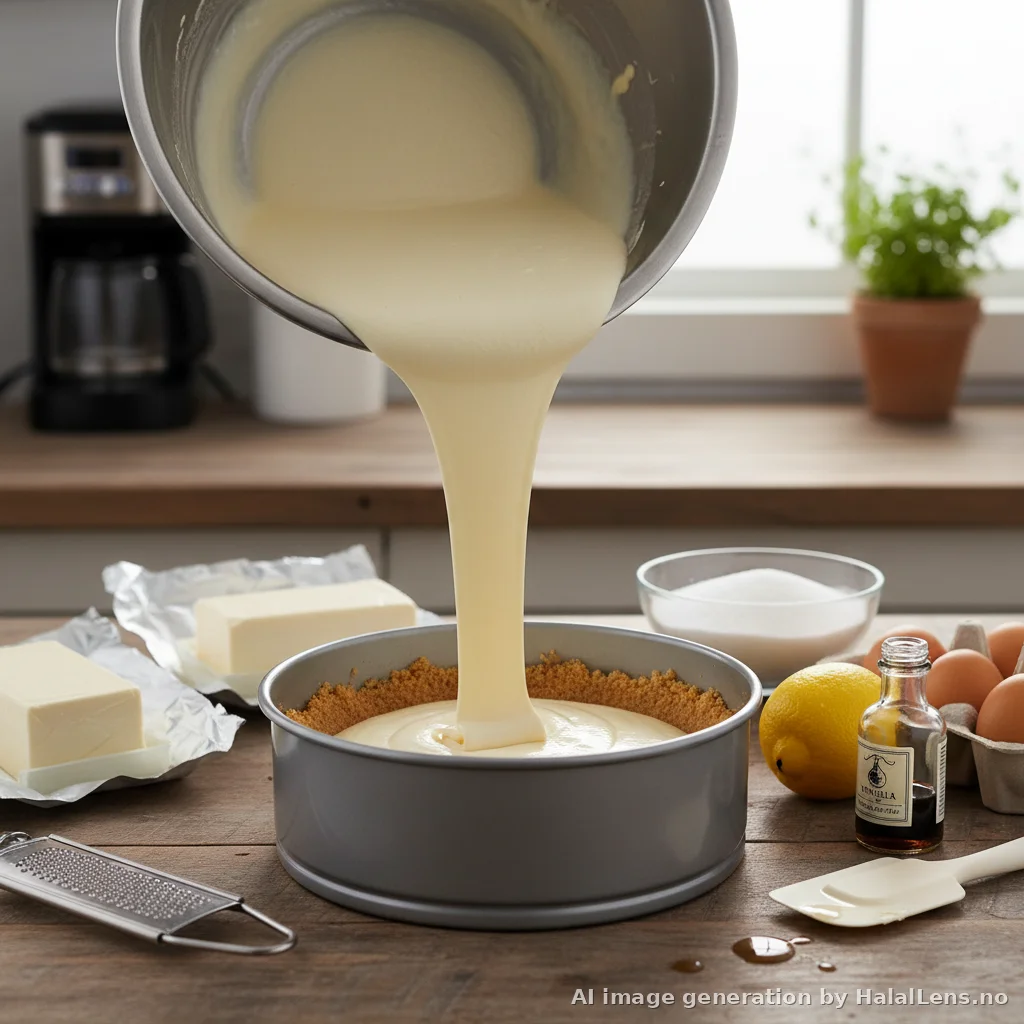
- Add the eggs and yolks one at a time on the lowest speed, mixing briefly after each addition. Stop as soon as each egg disappears into the batter. Over-mixing after adding eggs is the number one cause of cracked cheesecakes.
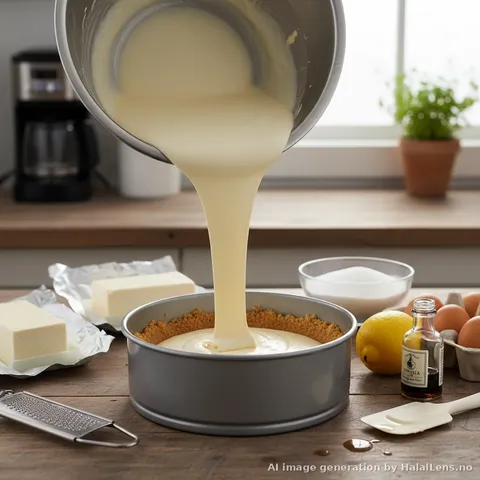
- Check the batter: it should be smooth, thick, and pourable — like a very thick cream. Tap the bowl on the counter a few times to release any trapped air bubbles.
Phase 3: Bake Using the Water Bath Method (90 minutes + cooling)
- Place your foil-wrapped springform pan inside a larger roasting pan. Pour the cheesecake batter over the cooled crust and smooth the top.
- Create the water bath: pour boiling water into the roasting pan until it reaches halfway up the sides of the springform pan. The water bath regulates oven temperature and adds steam, keeping the cheesecake moist and crack-free.
- Bake for 75–85 minutes. The cheesecake is done when the edges are firmly set (no jiggle) but the centre 8–10cm still wobbles like softly set jelly when you nudge the pan. It will look underdone — this is correct.
- Turn off the oven. Crack the oven door open by about 5cm (use a wooden spoon to prop it). Let the cheesecake cool in the oven for 1 hour. This gradual cooling prevents the dramatic temperature change that causes cracking and sinking.
- Remove the cheesecake from the water bath. Remove the foil. Run a thin knife around the inside edge of the pan to loosen the cheesecake before it fully sets (this prevents the top from cracking as it contracts).
- Cool to room temperature on a wire rack (about 1 hour), then refrigerate uncovered for at least 6 hours, preferably overnight. The chilling time is not optional — the cheesecake continues to set and develop flavour as it cools.
Phase 4: Optional Strawberry Topping (10 minutes)
- Combine strawberries, sugar, and lemon juice in a small saucepan over medium heat. Cook, stirring occasionally, for 5–7 minutes until the strawberries have softened and released their juice but still hold their shape.
- Cool completely before spooning over the cheesecake. Add the topping just before serving, not before refrigerating, to keep the crust crisp.
The Baking Process
Pro Tips for the Perfect Halal New York Cheesecake
Room Temperature Is Non-Negotiable
Cold cream cheese lumps badly and creates an uneven texture. Cold eggs deflate the batter. Take every refrigerated ingredient out at least 2 hours before you begin — in a warm kitchen, 1 hour is sufficient. This is the single most impactful preparation step.
Patience Over Speed
The whole point of New York cheesecake is density. That means no rushing — no shortcuts with the oven temperature, no skipping the water bath, no cutting into the cake before it has chilled for at least 6 hours. A cheesecake pulled from the fridge too soon will be gummy and underset in the centre.
The Jiggle Test
When you nudge the pan and the centre of the cheesecake wobbles like firm jelly (not liquid), the cake is done. A completely still centre means it is overbaked and will be dry and eggy. Trust the wobble — it finishes cooking from residual heat as it cools.
Choosing the Right Pan
Use a good quality springform pan with a tight-fitting base. Cheaper pans often leak badly in the water bath even when well wrapped. If you bake cheesecakes frequently, invest in a pan with a silicone seal at the base, or use a cake pan with a removable base placed inside a slightly larger springform for double protection.
Cutting Perfect Slices
Dip a long sharp knife in hot water, wipe dry, and cut. Repeat between each slice. Cold cheesecake slices beautifully with a hot, clean blade — rough cuts drag the filling.
Common Mistakes and How to Avoid Them
Mistake 1: Cracks on the Surface
Cause: Over-mixing (too much air in batter), overbaking, or cooling too fast.
Fix: Mix on the lowest speed after adding eggs, remove from oven while the centre still wobbles, and cool slowly in the oven with the door cracked.
Mistake 2: Soggy or Wet Crust
Cause: Foil not well sealed, or skipping the crust pre-bake.
Fix: Use double layers of heavy-duty aluminium foil, extending at least 10cm up all sides. Pre-bake the crust before adding filling.
Mistake 3: Dense, Rubbery Texture
Cause: Overbaking or oven temperature too high.
Fix: Use an oven thermometer — domestic oven thermostats are notoriously inaccurate. Bake at true 160°C with a water bath. The cake is done well before it looks done.
Mistake 4: Gummy, Underset Centre
Cause: Not enough chilling time.
Fix: 6 hours minimum refrigeration, overnight is ideal. Never slice a cheesecake that has been in the fridge for less than 6 hours.
Mistake 5: Grey or Yellow Tinge on Top
Cause: Overbaked or too-high oven heat.
Fix: A pale golden to ivory top is the goal. If the top is browning too fast, tent loosely with foil in the final 20 minutes of baking.
Halal Cheesecake Variations
Lemon Cheesecake
Increase lemon zest to 2 tablespoons and lemon juice to 3 tablespoons. Add a lemon curd drizzle at serving. This creates a bright, citrusy finish that cuts through the richness of the cream cheese perfectly.
Oreo Crust Cheesecake
Replace digestive biscuits with 250g of halal-certified Oreo-style sandwich cookies (including the filling). The dark chocolate crust adds a beautiful contrast to the pale creamy filling — no additional sugar or butter needed in the crust.
Chocolate Swirl Cheesecake
Melt 100g of halal-certified dark chocolate with 2 tablespoons of neutral oil. Reserve 200g of the cheesecake batter, mix in the chocolate, then dollop alternating spoonfuls of plain and chocolate batter over the crust. Swirl gently with a skewer for a marbled effect.
Date and Cardamom Cheesecake
A Middle Eastern-inspired variation: replace the graham cracker crust with a medjool date and walnut crust (200g pitted dates + 100g walnuts blended until they clump — press directly into the pan without baking). Add 1 teaspoon ground cardamom to the batter. Top with a date caramel drizzle.
Individual Mini Cheesecakes
Use a 12-hole standard muffin tin lined with paper cases. Fill each three-quarters full with the crust and batter. Bake at 160°C for 22–25 minutes. No water bath needed for the individual portions. Chill for 3 hours before serving.
Storage and Make-Ahead Tips
Cheesecake is an excellent make-ahead dessert — it actually improves with time in the fridge as the flavour develops and the texture firms up.
- Refrigerator: Store covered (not airtight — use a loose foil tent) for up to 5 days.
- Freezer: Freeze whole or in pre-sliced wedges wrapped tightly in cling film then foil for up to 2 months. Thaw overnight in the refrigerator. Frozen cheesecake can taste just as good as fresh-made.
- Make-ahead strategy: Bake up to 3 days before your event. The crust stays crisp, the filling sets fully, and you have nothing to do on the day except add the topping.
Frequently Asked Questions
Is cheesecake halal?
Cheesecake can absolutely be halal. The key concerns are: (1) gelatin — pork-derived gelatin is haram; use a gelatin-free recipe like this one; (2) the rennet in cream cheese — choose vegetarian-rennet or halal-certified cream cheese; (3) vanilla extract — use alcohol-free vanilla for strict compliance. When you control these three ingredients, cheesecake is completely permissible.
What can I use instead of gelatin in cheesecake?
For a baked New York style cheesecake, you need nothing — the eggs set the batter completely without any setting agent. For no-bake cheesecakes, agar-agar (derived from red seaweed) is the halal-friendly substitute: use ¾–1 teaspoon of powdered agar-agar dissolved in hot liquid as a direct replacement for 2 teaspoons of gelatin powder.
Why does my cheesecake crack?
Cracking is almost always caused by one of three things: over-mixing after adding eggs (which traps air), overbaking (remove when the centre still wobbles), or cooling too rapidly (cool in the oven with the door cracked for 1 hour). Follow the water bath method and these three cracks will not appear.
Can I make this cheesecake without a water bath?
Yes, but it is riskier. Without a water bath: reduce the oven temperature to 150°C, place a large oven-safe pan of boiling water on the rack directly below the cheesecake to add steam, and bake for the same time. The result is slightly more likely to crack but still delicious. The water bath is strongly recommended for a flawless top.
Is Philadelphia cream cheese halal?
Philadelphia cream cheese in most countries does not carry a halal certification logo, but it is made with vegetable rennet in most Western markets, making it generally accepted by many Muslims. For certainty, look for halal-certified cream cheese in Middle Eastern grocery stores, or check the current label of your regional Philadelphia variant — the ingredients and production methods vary by country.
How long does halal cheesecake keep?
Covered in the refrigerator: up to 5 days. In the freezer (tightly wrapped): up to 2 months. For best texture, add any fresh fruit topping only on the day of serving, not before storing.
Can I use low-fat cream cheese?
Technically yes, but the result will be noticeably less rich and creamy. Full-fat cream cheese provides the fat content that gives New York cheesecake its characteristic dense texture and mouth-feel. Low-fat versions are higher in water content, which can make the baked cheesecake watery and less set. Use full-fat for best results.
Nutritional Information (Per Slice, 1/12 of Cake)
Approximate values based on the full recipe with no topping:
- Calories: 485 kcal
- Total Fat: 35g (Saturated Fat: 20g)
- Carbohydrates: 34g (Sugars: 26g)
- Protein: 9g
- Sodium: 310mg
This is an indulgent dessert best enjoyed in moderation as part of a balanced diet.