Kacchi Biryani: Dhaka-Style Raw-Marinated Mutton Biryani
Dhaka's wedding-table classic: raw, yogurt-marinated mutton layered under parboiled rice with potato and boiled egg, sealed and slow-cooked dum-style.
Kacchi biryani is Bangladesh's most celebrated dish — a Dhaka wedding-table centerpiece built on a technique its name announces outright: kacchi means "raw." Unlike biryanis where the meat is pre-cooked before it meets the rice, kacchi biryani layers raw, yogurt-marinated mutton directly beneath parboiled basmati rice, then seals the whole pot with a dough collar and lets slow steam finish both at once. The result is mutton that has spent hours absorbing rice starch and spice oil while it cooks, rice that has drawn up meat juices instead of just broth, and a dish so intertwined with Dhaka's identity that in much of Bangladesh, "biryani" without qualification simply means this one.
The story of how a raw-meat cooking method from Central Asia became the signature dish of Old Dhaka runs through empire, migration, and a very particular relationship with a New World vegetable. According to The Business Standard, some food historians push kacchi's roots back before the Mughals altogether, to the Chagatai peoples of what is now Tajikistan and Uzbekistan, who favored red meat and built dishes around mutton, rice, butter, and warming spices like cardamom and nutmeg. That base technique traveled south with Central Asian and Persian courts, was refined in Mughal kitchens, and eventually took hold in Awadh — the Lucknow region long credited as biryani's most influential home in the subcontinent.
How Kacchi Biryani Came to Dhaka
Dhaka's particular claim on kacchi biryani begins with a change of address for the Mughal empire's regional government. In 1610, Dhaka was designated the provincial capital of Mughal Bengal, and with that status came a wave of Subahdars, court officials, and administrators — many of them originally from Lucknow and the wider Awadh region, according to GetBengal's history of biryani's arrival in Bengal. They brought their kitchens with them, and the raw-marinated, dum-sealed method of cooking mutton and rice together took root in the city's elite households.
What followed was a slow, centuries-long democratization. Global Voices' reporting on Dhaka's biryani culture traces how a dish once reserved for nawabs and their guests gradually spread outward from palace kitchens to the merchant families of Old Dhaka, and eventually to the street stalls and wedding halls that serve it today. The Dhaka Tribune's history of kacchi biryani notes that within Bangladesh specifically, the dish's modern commercial identity in Puran Dhaka (Old Dhaka) took shape around 1939, when the first dedicated kacchi houses began drawing crowds — a tradition that has barely slowed in the eight decades since.
One detail sharpens the picture of just how old this tradition is. The potato — now inseparable from any bowl of kacchi biryani — did not reach Bengal until the late 1700s. By the time it arrived, Dhaka's kacchi-cooking culture was already roughly two centuries old. The potato was folded into an existing, well-established method rather than defining it from the start, which is part of why the tuber sits underneath the meat in the pot rather than mixed through the rice: it was engineered into a technique that predates it.
Not Chicken Biryani, Not Sindhi Biryani, Not a Generic Eid Platter
It is worth being precise about what kacchi biryani is not, because the word "biryani" covers an enormous amount of regional ground. This is not a chicken biryani, where boneless or bone-in chicken is typically par-cooked in a gravy before it ever touches the rice pot — kacchi's defining feature is that the mutton goes in raw, marinated but uncooked, and only reaches doneness through the shared dum-steam with the rice above it. It is also a different animal from Sindhi biryani, the tangy, tomato-forward, layered biryani associated with Pakistan's Sindh province, which leans on a distinctly sour-spiced masala and is almost always built with pre-cooked meat (a "pakki," or cooked, method). And while kacchi biryani is absolutely served at Eid gatherings across Bangladesh, it is not simply "the Eid biryani" — it is a specific, technically distinct raw-marinated preparation that happens to show up at Eid because it shows up at every major celebration in Bangladeshi life, most of all weddings.
That wedding association is not incidental — it is close to definitional. In Bangladesh, kacchi biryani is the centerpiece of wedding feasts and major family celebrations to such a degree that "biryani" at a wedding almost always means kacchi specifically, with no further explanation needed. Hosting a wedding without it would be unusual enough to draw comment. The dish's scale, richness, and the labor it demands — an overnight marinade, a sealed pot, hours of careful low heat — are part of what signal a wedding-level occasion rather than an everyday meal.
What "Kacchi" Actually Means in the Pot
The defining technical move of kacchi biryani is the dum method: mutton is marinated overnight in yogurt, ginger, garlic, and a warming spice blend, then placed raw at the very bottom of a heavy pot (traditionally a copper or aluminum handi). Parboiled basmati rice goes on top of the meat, often with a layer of fried potatoes and, in many Dhaka households, hard-boiled eggs nestled into the rice as well. The pot's lid is sealed with a rope of dough pressed around the rim, making it essentially airtight, and the whole assembly then cooks over very low heat — sometimes with hot coals placed on the lid too, so the pot is heated from above and below.
"Dum" itself refers to that sealed, steam-driven cooking: the rice finishes as much from the trapped steam rising off the marinating, slowly cooking meat as it does from the pot's direct heat. Because the mutton was never pre-cooked, the marination has hours to keep working even after the pot goes on the fire, and the meat's juices rise directly into the rice above it rather than being left behind in a separate cooking vessel. This is the mechanical reason kacchi biryani tastes the way it does: every grain of rice has had contact with meat-infused steam, not meat-infused broth added afterward.
Halal Adaptation Notes
Mutton, yogurt, ghee, and the full spice list used in traditional kacchi biryani are inherently halal-compatible ingredients, so no substitution is required for the dish's core structure. The only ingredient that needs a deliberate, explicit choice by the cook is the yogurt: dairy yogurt itself is not automatically halal-certified in every market, since some commercial yogurts use gelatin-based stabilizers or rennet of uncertain origin. HalalLens classifies plain yogurt in general as requiring verification rather than a blanket "halal" label for exactly this reason — always check the label of your specific yogurt brand, or use a certified-halal or gelatin-free yogurt, before marinating the mutton. Beyond that single checkpoint, this recipe uses no wine, no non-halal stock, and no alcohol-based flavorings; rose water and kewra water, if you choose to use them for aromatic finishing, should be confirmed alcohol-free, as some commercial bottlings use trace ethanol as a carrier.
Recipe Snapshot
| Yield | 6 servings |
|---|---|
| Prep time | 40 minutes (plus overnight marination) |
| Cook/Bake time | 1 hour 30 minutes |
| Total time | 14 hours (including marination) |
| Cuisine | Bangladeshi (Dhaka-style) |
Ingredients
This list covers the mutton marinade, the rice layer, and the fried potato and egg layer that Dhaka households traditionally nestle into the pot.
Mutton Marinade
| Mutton, bone-in, cut into large pieces 1 kg |
— |
 |
Plain yogurt 1 cup, whisked (verify halal-certified or gelatin-free) |
MUSHBOOH |
| Ginger paste 2 tbsp |
— |
 |
Garlic paste 1 tbsp |
HALAL |
 |
Onions, thinly sliced and fried crisp 3 large |
HALAL |
| Whole spices: cardamom, cloves, bay leaf 4 pods, 4 cloves, 2 leaves |
— |
| Cinnamon stick 1-inch piece |
HALAL |
 |
Ghee, melted 4 tbsp, divided |
HALAL |
| Red chili powder, ground cumin, ground coriander 1 tsp each |
— |
Rice, Potato and Egg Layer
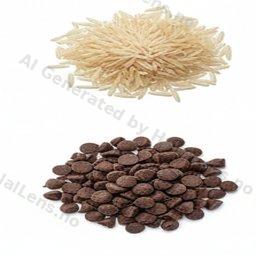 |
Basmati rice, soaked 30 minutes 3 cups |
HALAL |
 |
Potatoes, peeled, halved, and fried golden 4 medium |
HALAL |
| Eggs, hard-boiled and peeled 4 |
HALAL |
 |
Saffron strands, soaked in 2 tbsp warm milk 1/2 tsp |
HALAL |
| Plain flour, for the dough seal 1/2 cup, mixed with water into a firm dough |
— |
Method
- The night before cooking, combine the mutton pieces with the whisked yogurt, ginger paste, garlic paste, red chili powder, ground cumin, ground coriander, and half the fried onions in a large bowl. Massage the marinade into the meat thoroughly, cover, and refrigerate overnight (at least 8 hours, ideally 12). This overnight rest is what allows the "raw" cooking method to work: the yogurt's acidity and the spice paste need real time to penetrate the mutton before it ever meets heat.
- On cooking day, soak the basmati rice in water for 30 minutes, then drain. Bring a large pot of well-salted water to a rolling boil with the cardamom pods, cloves, bay leaf, and cinnamon stick. Add the drained rice and parboil it for 5-6 minutes only — it should still have a firm, undercooked bite at the center, since it will finish cooking later inside the sealed pot. Drain the rice immediately and spread it on a tray to stop the cooking.
- While the rice parboils, heat a few tablespoons of ghee in a wide pan and fry the halved potatoes until golden on all sides. Set them aside. If you have not already fried the sliced onions for the marinade, fry a second batch now until deep golden and crisp; these go on top as garnish.
- Take a heavy-bottomed pot (a Dutch oven works well outside Bangladesh, in place of a traditional handi). Spread the marinated raw mutton and all of its marinade evenly across the bottom of the pot — this is the layer that never gets pre-cooked. Arrange the fried potatoes and the hard-boiled eggs over the meat.
- Spread the parboiled rice in an even layer over the mutton, potatoes, and eggs, mounding it slightly toward the center. Drizzle the remaining melted ghee evenly over the rice, then spoon the saffron-infused milk over the top in streaks so the rice will finish with mottled golden color rather than a flat, uniform tint. Scatter the reserved fried onions over everything.
- Seal the pot: press a rope of the flour-and-water dough firmly around the rim where the lid meets the pot, then set the lid in place so the seal traps the steam completely. If your lid does not seal tightly enough with dough alone, wrap the rim in foil before setting the lid, then press dough around the outer edge as a second seal.
- Set the sealed pot over very low heat. Traditionally, a metal griddle (tawa) is placed underneath the pot first to diffuse the direct flame, since kacchi biryani is unforgiving of scorched heat — this is dum cooking, driven by trapped steam rather than direct contact with fire. Cook undisturbed for 60-75 minutes.
- Turn off the heat and let the pot rest, still sealed, for at least 10 minutes before breaking the dough seal. This rest lets the steam finish any remaining raw spots in the mutton and lets the rice grains settle so they hold their shape when served rather than collapsing into mush.
- Break the seal, lift the lid away from you to avoid the initial rush of steam, and check a piece of mutton near the center of the pot for doneness — it should be fully cooked through and tender, having finished entirely inside the pot rather than on a stovetop beforehand.
- Serve directly from the pot or transfer carefully to a large platter, keeping the rice, meat, potato, and egg layers as intact as possible rather than stirring them together, which is the traditional presentation for kacchi biryani at Dhaka tables.
Tips & Variations
- The parboiling step is the single most common place home cooks go wrong: rice that is boiled too far before it enters the sealed pot will turn to mush by the time the dum cooking finishes, since it is essentially being cooked twice.
- If you cannot get a tight enough dough or foil seal on your pot, place a folded kitchen towel between the pot and the lid before pressing down, which helps compensate for a slightly uneven rim.
- Traditional recipes often call for a few drops of kewra (screw pine) water or rose water added with the saffron milk for a floral aroma associated with old Dhaka biryani houses — confirm any bottle you use is alcohol-free before adding it.
- Goat meat is a common and fully traditional substitute for mutton in home kitchens across Bangladesh and works with the exact same method and timing.
- Leftover kacchi biryani reheats best in a covered pan over low heat with a splash of water, rather than in a microwave, to keep the rice from drying out.
AI disclosure: This recipe article was drafted with AI assistance and reviewed by HalalLens for accuracy and halal compliance.