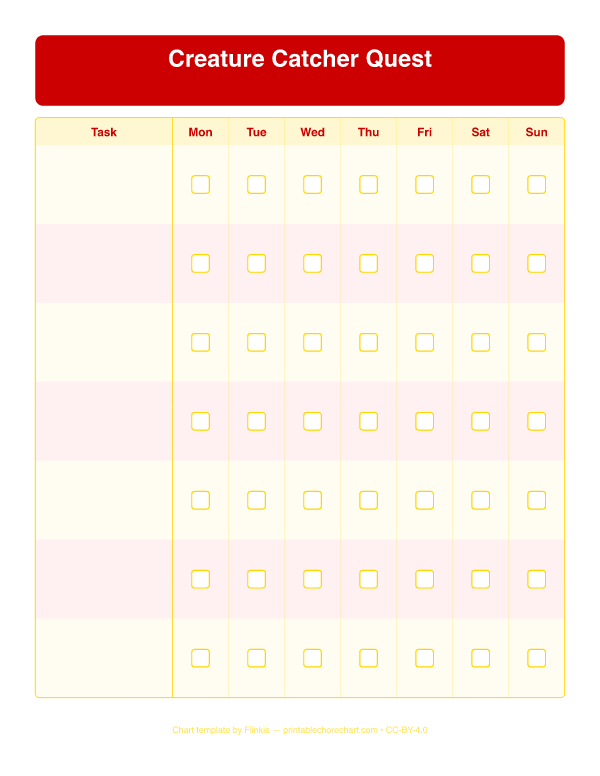
There's a moment in every parent's life where you reach for the visual chart. The pediatrician suggests it. A teacher mentions it. A friend swears their three-year-old finally stopped biting after a sticker chart. You buy or print one, stick it on the fridge, hand your kid a marker, and brace for transformation.
Sometimes it works. Sometimes it does the opposite of what you expected. Understanding the difference matters more than the chart itself.
What behavior charts actually do
A behavior chart externalizes a specific behavior — "putting shoes on the rack" or "no hitting" or "asked nicely without whining" — onto a visible scoreboard. The child marks the chart when they succeed; the chart accumulates progress over a defined window (a day, a week, ten earned stars).
That mechanic borrows from a research tradition called behavior modification, which originated with operant conditioning experiments in the mid-20th century. In clinical contexts, the approach is well-validated for narrow, measurable behaviors with consistent feedback. In home use, the results are wildly mixed — not because the technique is wrong, but because parents apply it to situations where it's the wrong tool.
The honest answer is: a behavior chart is a great tool for ONE specific behavior at a time, and a terrible tool for the broader question of "how do I get my kid to behave better."
When charts work well
One specific behavior, clearly defined
Charts work when the target is small, observable, and frequent. "Brushing teeth without a fight in the morning" is good. "Being kind to your sister" is bad — too abstract, no clear marker. If you can't define the success condition in seven words, the chart will fail before week two.
Examples that tend to work:
- Putting on pajamas independently
- Bringing the laundry basket to the hamper
- Saying "please" without prompting
- Stopping a tantrum within five minutes of starting
- One specific bedtime routine step that's a consistent friction point
If your list is more than three items, you don't need a behavior chart. You need a chore chart by age, which is a different tool with a different psychology.
The feedback loop is immediate
A chart only motivates a kid under about seven if the reward (mark on chart, sticker, parent's pleased smile) is immediate — within a minute or two of the behavior. If you say "you'll get to mark the chart at bedtime," the connection is lost. Use the chart in the moment, every time.
For older kids (8+), delayed reinforcement starts working — they can hold a goal in mind for a day or a week. Below that, immediacy is non-negotiable.
The behavior is a skill, not a virtue
This is the part most resources skip. Charts work for skill acquisition — teaching a child a behavior they didn't have. They fail for character development — getting a child to internalize a value they don't yet feel.
"Always tell the truth" is a virtue. A behavior chart for honesty turns the question into "did I get caught lying or not" rather than "is lying the right thing to do." This is documented in developmental psychology and is the single most common reason behavior charts cause more problems than they solve.
Use a chart when the behavior is mechanical (brush teeth, hang up coat, eat your vegetables). Skip the chart when the behavior is moral (be kind, be honest, share).
When charts backfire
Surveillance creep
A chart on the fridge means everyone — siblings, grandparents, dinner guests — sees the running tally. For toddlers and preschoolers this is fine; they don't yet perceive the audience. For school-age kids it's increasingly humiliating, and the chart becomes a tool of shame, not motivation.
If you're using a chart with a kid over six, put it somewhere only they and you can see — inside their bedroom, on the back of their door. The privacy matters.
Reward dependency
The classic finding from self-determination theory research: extrinsic rewards (stickers, prizes) for behaviors that have any intrinsic value will erode the intrinsic motivation. A kid who would naturally enjoy reading less once they're being paid in stars per page completed.
This is why "behavior charts for being kind" or "reading charts" tend to undo the very behavior they're meant to encourage. If the behavior is something the child might come to enjoy on its own, don't reward it externally. Use a chart only for behaviors the child has no intrinsic interest in but you need them to do anyway.
The "good kid / bad kid" trap
Charts that track misbehavior — every time you hit your sister, you lose a sticker — create an identity narrative the child internalizes. They become the "kid who hits" in their own head, and the behavior gets more sticky, not less.
Track only the desired behavior, never the absence of an undesired one. "Used kind words" yes. "Didn't hit" no. The framing matters more than the mechanism.
Sibling comparison
A two-kid household where both have visible behavior charts will, within weeks, become a competition or a hierarchy. The "winning" kid feels superior, the "losing" kid feels broken. Even if the charts measure different things, kids find a way to compare.
If you have multiple kids, either give them all the SAME chart (and don't tally side by side) or use separate charts that live in separate rooms. Don't make charting a family scoreboard.
The chart outlives its purpose
A chart that worked great for two weeks usually stops working in week three. The kid has internalized the routine and the chart has become noise. Continuing to use it past that point produces resentment ("why do I still have to mark this") and learned helplessness ("I can't do this without the chart").
Two-week rule: any behavior chart that works should be retired two weeks after the behavior becomes consistent. The chart is scaffolding, not architecture. Take it down.
Designing a chart that won't backfire
If you've decided a chart is right for your situation, the design itself matters:
| Design choice | Good | Bad |
|---|---|---|
| Target behavior | One specific action | Multiple behaviors at once |
| Reward type | Verbal + visual (sticker) | Cash, screen time, candy |
| Tracking window | 5–10 successes total | "Forever" / open-ended |
| Visibility | Private to child + parent | Shared family fridge |
| Failure handling | Just don't mark | Mark a "bad" sticker / take one away |
| Format choice | Daily checklist or simple star chart | Complex tables with multiple metrics |
For format specifically, daily checklists work for younger kids who need immediate visual feedback. Star charts work for slightly older kids who can hold a goal of "10 stars to earn the reward" in mind. Reward trackers (progress-bar style) only work for kids 8+ who understand cumulative time-windows.
Printable templates in any of these formats are easy to find — free behavior chart templates cover most of the common shapes if you don't want to design your own. There's also an open template gallery with downloadable JSON/PDF designs if you want to remix one for a specific situation.
A realistic example: the bedtime stalling problem
Six-year-old who endlessly stalls bedtime — bathroom trip, water, one more story, scared of the dark, suddenly desperately needs to tell you something. You're exhausted. You've tried explaining; it hasn't worked.
A good behavior chart here:
- Target: "Stayed in bed without calling out, after lights out at 8:00 PM."
- Reward: 1 sticker per night earned, 10 stickers = 1 special weekend morning (movie + pancakes, or a half-hour later wake-up — pick what motivates THIS kid).
- Location: in their bedroom, on the wall next to the bed. Not on the fridge.
- Tracking: you go in at 8:30 PM, see if they're asleep or awake but in bed, mark the chart wordlessly. Don't announce it.
- Retirement: after 10 successful nights in a row (typically 3–4 weeks), the chart comes down. The routine is now the routine.
If it works, you'll see the behavior shift starting day 4. If it doesn't work by day 10, the chart isn't the problem — there's something else going on (sleep anxiety, an actual physical issue, room too hot or cold). Try investigating the root cause before throwing more reward weight at the chart.
What about behavior charts for older kids?
For tweens and teens, traditional behavior charts almost never work — they're old enough to feel patronized by the structure. What does sometimes work at that age:
- Self-tracking: hand them the template and have them maintain their own chart. The shift from "the chart parents make me follow" to "the chart I made for myself" changes the psychology completely.
- Contract-based goals: agreement on specific outcomes (passing a class, finishing a project) with mutually-set rewards. Looks less like a chart, more like a deal.
- Skip charts entirely: most teenage behavior is about identity formation, not skill acquisition. Charts apply the wrong framework.
The bigger picture
Behavior charts are a small, useful tool for a narrow set of problems. They're not a parenting philosophy. They're not a substitute for the harder work of teaching values, modeling behavior, and being present for your kid's emotional development.
If you find yourself reaching for a chart because you're at the end of your rope with a behavior pattern, take a breath first. Ask: is this a skill problem (chart helps) or a relationship problem (chart makes it worse)? Most parenting problems that feel like the second category actually are.
When in doubt: try the simplest possible chart for two weeks. If it works, retire it. If it doesn't, scrap it and look elsewhere.
Tools that build on this approach: behavior chart templates for the specific designs mentioned above, and the chore-chart-kit on GitHub repository if you want to remix or build on the designs (CC-BY-4.0 licensed). Pick whichever format fits the behavior you're targeting, not the other way around.