Suya Chicken — Nigerian Spiced Peanut Grilled Skewers
Authentic Nigerian suya chicken: tender chicken strips marinated in yaji — the iconic Hausa peanut-spice blend — then grilled over charcoal. A halal street food classic from northern Nigeria with full ingredient halal guide, yaji spice science, and serving tips.
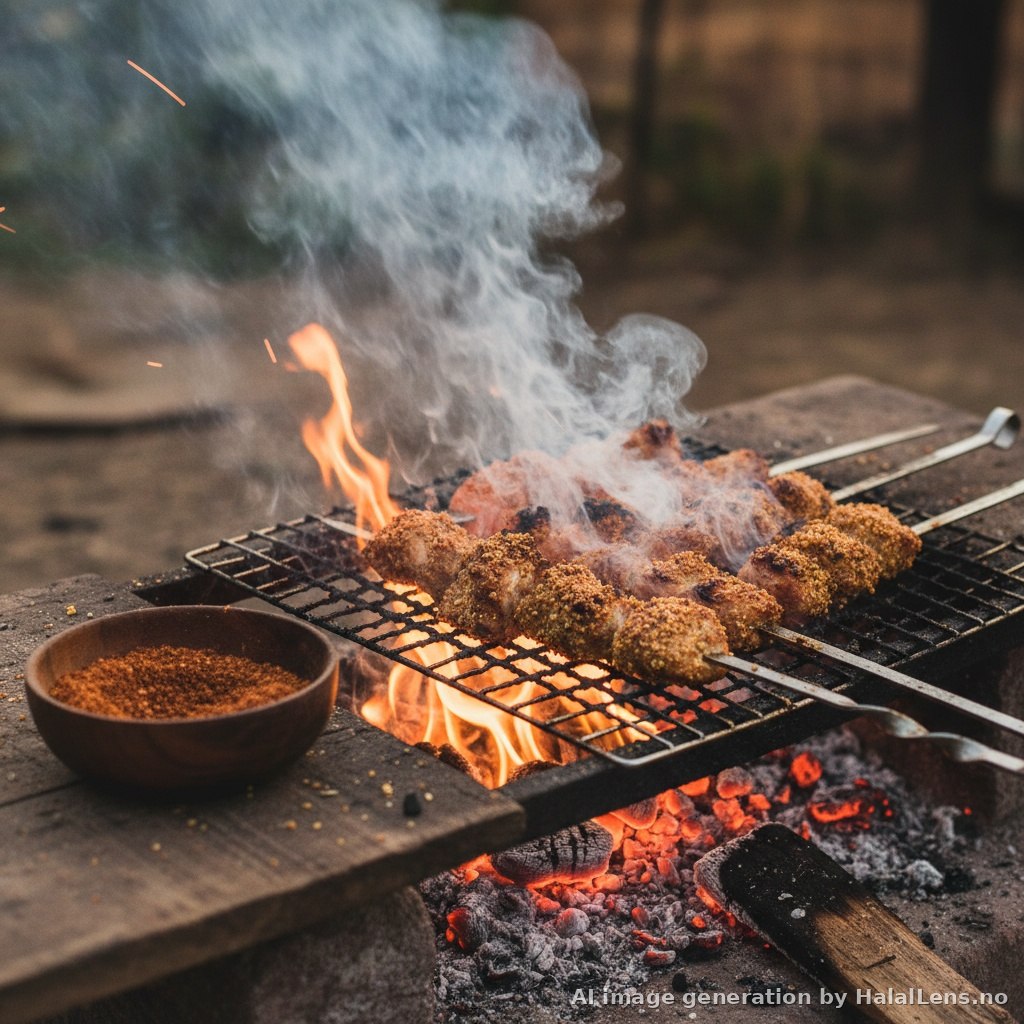
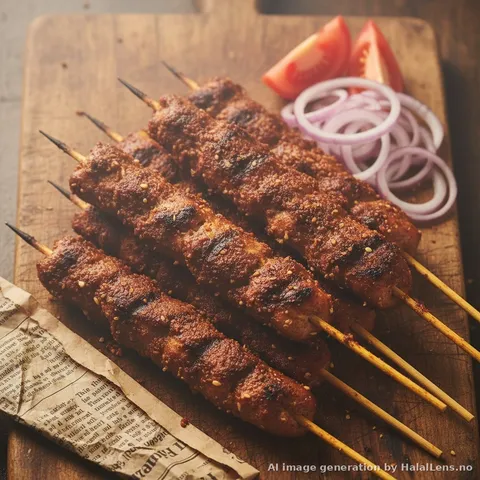
Suya (pronounced SOO-yah) is Nigeria’s most beloved street food: thin strips of meat threaded onto metal skewers, coated in yaji — a fiery, earthy peanut-spice paste unique to the Hausa people of northern Nigeria — and grilled over glowing charcoal until the crust chars and crackles. It is sold at night from roadside stalls called suya spots, wrapped in newspaper, eaten with raw onion and the kind of chili heat that demands ice-cold malt drink alongside. This is a dish that is halal by origin, halal by community, and halal by practice across the Muslim-majority north of Nigeria and the entire diaspora from Lagos to London to Houston.
Suya: Hausa Origin and the Street-Food Night Economy
The origins of suya lie in the Hausa and Fulani culinary tradition of northern Nigeria and the Lake Chad Basin, a vast semi-arid region that stretches across present-day Nigeria, Niger, Chad, and Cameroon. The Hausa people — one of the largest ethnic groups in West Africa and predominantly Muslim — have a centuries-long tradition of meat preparation and preservation suited to a hot, dry climate where refrigeration was historically unavailable.
The precursor to suya is kilishi, the Hausa dried meat product that predates suya by several centuries. Kilishi is made by sun-drying thin slices of beef, then coating them in a spiced groundnut paste and drying further — a protein-dense, shelf-stable food that sustained Hausa traders and warriors crossing the Sahel. Suya evolved from this tradition: instead of drying, the spiced meat is grilled fresh over fire, preserving the moist interior while charring the spiced exterior.
By the mid-20th century, suya had become the defining street food of northern Nigerian cities like Kano, Kaduna, Maiduguri, and Sokoto. The mai suya (suya seller) became a fixture of urban life: setting up charcoal grills at nightfall, fanning coals with palm-leaf fans, threading skewers with practiced speed. The smell of yaji hitting hot charcoal — toasty peanut, cayenne heat, and woodsmoke — became the smell of Nigerian night life.
The 1970s oil boom accelerated suya’s reach dramatically. As Hausa northerners migrated to Lagos and other southern cities for work, they brought suya with them. Southern Nigerians, initially skeptical of the northern Muslim street food, became devotees. By the 1980s, suya spots operated in every major city in Nigeria regardless of region or religion. Today, suya is the single dish that most Nigerians — across 250 ethnic groups and three major religions — can point to as their shared national food.
The dish has now followed the Nigerian diaspora worldwide. You will find suya in London’s Peckham and Brixton, in Houston’s southwest, in Calgary, in Dubai, in Johannesburg. Every suya spot in the diaspora is, in some sense, a Hausa cultural outpost — a place where the smell of yaji and charcoal makes northern Nigeria suddenly present wherever in the world you happen to be standing.
Yaji: The Science and Tradition of the Spice Blend
Yaji (also spelled yaggi or simply called suya spice) is the non-negotiable soul of suya. Without yaji, grilled chicken on a stick is just grilled chicken on a stick. With yaji, it becomes suya. The blend is built on a foundation of ground roasted peanuts (groundnuts), which serve three essential functions: flavour carrier, binder, and crust-former.
The Role of Groundnuts
Roasted and finely ground groundnuts are not merely a flavouring ingredient in yaji — they are the structural matrix. When the paste is applied to meat and subjected to grill heat, the ground nut proteins and oils undergo the Maillard reaction on the meat surface, creating hundreds of aromatic compounds responsible for the characteristic suya smell and taste. The oils in the peanuts also act as a basting medium, self-basting the meat during grilling and preventing the spice crust from burning prematurely. The ground peanuts also create a physical barrier that slows moisture loss from the meat.
The Spice Architecture
Traditional yaji recipes vary by family, city, and generation. The core structure, however, is consistent:
- Cayenne pepper — the primary heat source. Authentic suya is genuinely hot, not mild. Northern Nigerian heat tolerance is high; do not reduce the cayenne for authenticity.
- Paprika (sweet or smoked) — adds colour depth and mild pepper sweetness. Smoked paprika introduces a layer of wood smoke that complements charcoal grilling.
- Garlic powder — provides allium depth without the moisture of fresh garlic, which would prevent the crust from setting properly.
- Ginger (ground) — adds aromatic warmth. Dried ginger behaves differently from fresh ginger: it is more resinous and penetrating, contributing a camphor-like heat distinct from cayenne.
- Onion powder — sweetness and savoury depth.
- Coriander and cumin — the Hausa connection to trans-Saharan spice trade. Both arrived in northern Nigeria via North African and Arab traders centuries ago and have been naturalised into local spice culture.
- Bouillon cube (halal) — the contested ingredient. Purists argue it does not belong; pragmatists note that virtually every suya seller in Nigeria includes it, and it provides glutamates that dramatically amplify the meat’s savoury depth. We include it as authentic.
Commercial Yaji vs. Homemade
Commercial yaji spice packets are sold across West Africa and in African grocery stores worldwide. They work well as a shortcut but generally have lower peanut content and heavier cayenne. For the recipe here, we provide a homemade yaji that prioritises balance and full peanut coverage. If using commercial yaji, reduce the cayenne quantity and add ground peanuts separately to achieve the correct crust texture.
Why the Meat Must Be Sliced Thin
Authentic suya uses meat sliced very thin — approximately 1 cm — because thin slices mean maximum surface area to yaji ratio. Every bite is primarily crust. The entire eating experience of suya is the contrast between the charred, spiced exterior and the juicy, barely-cooked interior. Thick cubes of meat cannot achieve this. The thin slice also allows the meat to cook through quickly over fierce heat without the exterior over-charring before the centre is cooked.
Suya as Halal Identity in Nigerian Culture
Suya’s halal status is not incidental — it is foundational. The Hausa and Fulani people who created suya are overwhelmingly Muslim; the Islamic dietary code is woven into suya’s DNA. The mai suya traditionally uses only halal-slaughtered beef, ram, or chicken, and the entire preparation method has always been alcohol-free and pork-free. For northern Nigerians, suya is not a food that happens to be halal — it is a food that cannot be suya if it is not halal.
This creates an interesting dynamic as suya has globalised. In Nigeria’s south and in the diaspora, non-Muslim cooks and restaurants have adopted suya. Some have deviated from the halal preparation. This is why, when purchasing suya outside Nigeria or outside Hausa-Muslim communities, verification of the halal status of the meat source matters. The recipe in this article is fully halal by specification: halal-certified chicken, no alcohol in the marinade, and a halal bouillon cube.
The Ramadan suya economy deserves special mention. During Ramadan, suya spots near mosques in northern Nigeria operate around the clock. After Iftar (the breaking of the fast), suya is among the first foods consumed — the smoky, high-protein skewers are perfectly suited to restoring energy after a day’s fasting. During the nights of Ramadan, the glow of suya coals and the smell of yaji in the air are among the defining sensory signatures of Muslim community life in Nigeria.
Halal Status of Every Ingredient
Every ingredient in this suya recipe is halal. Here is a full breakdown:
| Ingredient | Halal Status | Notes |
|---|---|---|
| Chicken (halal-certified) | HALAL | Must be halal-certified or hand-slaughtered per Islamic rite. Uncertified chicken is MUSHBOOH in our database due to slaughter method uncertainty. Always verify the source. |
| Roasted groundnuts / peanuts | HALAL | Plain roasted peanuts are halal. Avoid flavoured peanuts that may contain additives or alcohol-based flavourings. |
| Cayenne pepper | HALAL | Plain ground cayenne pepper is halal. Check blended chili powders for non-halal additives. |
| Paprika (smoked or sweet) | HALAL | Halal. Plain paprika contains no additives of concern. |
| Garlic powder | HALAL | Halal. Pure dried garlic with no additives. |
| Onion powder | HALAL | Halal. |
| Ground ginger | HALAL | Halal. |
| Ground coriander | HALAL | Halal. |
| Ground cumin | HALAL | Halal. |
| Halal chicken bouillon cube | HALAL | Must be verified halal. Many standard bouillon cubes contain non-halal flavour enhancers or animal derivatives. Use explicitly halal-certified brands (widely available in African and Middle Eastern grocery stores). Beef bouillon from non-halal sources is HARAM. |
| Salt | HALAL | Halal. |
| Vegetable oil | HALAL | Halal. Use neutral oil: sunflower, canola, or groundnut oil. |
| Raw onion, tomato, green chili (to serve) | HALAL | All fresh vegetables and fruits are halal. |
Critical note on the bouillon cube: This is the ingredient most likely to have a hidden halal issue. Many popular bouillon brands use animal-derived flavour extracts from non-halal sources, or include monosodium glutamate from uncertain fermentation substrates. In Nigerian markets, brands such as Maggi and Knorr have specific halal-certified product lines — check for the halal logo explicitly on the packaging, not just the flavour description. When in doubt, omit the bouillon cube and add an extra quarter teaspoon of salt and a pinch more garlic powder.
Full Ingredients List
For the Yaji Spice Blend
- 100 g roasted groundnuts (peanuts), skins removed, finely ground to a coarse powder (not paste)
- 1 tablespoon cayenne pepper (reduce to 1 teaspoon for mild heat)
- 1 tablespoon smoked paprika
- 1 teaspoon garlic powder
- 1 teaspoon onion powder
- 1 teaspoon ground ginger
- 1 teaspoon ground coriander
- 1 teaspoon ground cumin
- 1 halal chicken bouillon cube, crushed to a fine powder
- 1 teaspoon fine salt
For the Suya Chicken
- 700 g boneless halal chicken breast or thighs
- 2 tablespoons vegetable oil (to bind the yaji to the chicken)
- Metal skewers (or bamboo skewers pre-soaked 30 min in water)
To Serve (Traditional)
- 1 large white onion, thinly sliced into rings
- 2 ripe tomatoes, sliced
- 2 green chilies, sliced (optional)
- Reserved yaji spice for dusting
- Newspaper sheets (optional, for authentic wrapping)
Step-by-Step Instructions
Step 1: Make the Yaji Spice Blend
Dry-roast the peanuts in a pan over medium heat for 3 to 4 minutes if not already roasted, shaking constantly, until golden and fragrant. Remove skins by rubbing in a clean towel. Using a spice grinder, blender, or mortar and pestle, grind the peanuts to a coarse powder — not a paste. The texture should resemble coarse breadcrumbs. Combine the ground peanuts with all the spices and crushed bouillon cube in a dry bowl. Mix thoroughly until evenly combined. Reserve 2 tablespoons of the yaji for finishing at serving.
Step 2: Prepare and Marinate the Chicken
Slice the chicken across the grain into strips approximately 1 cm thick and 6 to 8 cm long. For chicken breast: cut into thin horizontal steaks first, then into strips. For thighs: open out flat and slice similarly. The strips must be thin — this is non-negotiable for authentic suya texture. Add the vegetable oil to the yaji spice blend and mix to form a thick, crumbly paste. Coat the chicken strips thoroughly in the yaji, pressing the spice mixture firmly onto all surfaces. Every millimetre of chicken should be spice-covered. Place in a bowl, cover with cling film, and refrigerate for minimum 4 hours, ideally overnight (8 to 12 hours). Longer marination means deeper penetration of the spices into the meat.
Step 3: Skewer the Chicken
Remove the chicken from the refrigerator 30 minutes before grilling to bring it closer to room temperature. Thread 3 to 4 strips onto each skewer. The strips should lie flat and pressed close together along the skewer, not bunched up or folded. The goal is a flat profile that maximises direct contact with the grill grate. If using bamboo skewers, ensure they were soaked in water for at least 30 minutes to prevent burning.
Step 4: Prepare the Grill
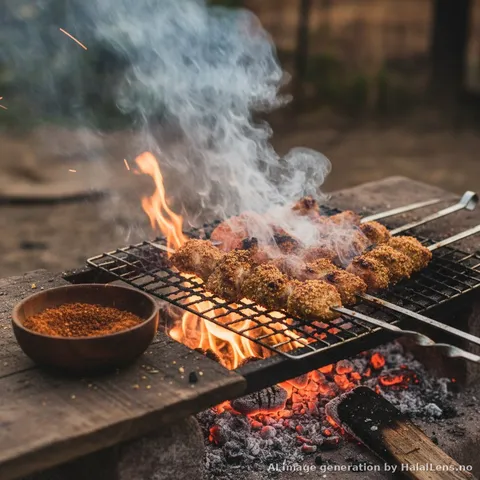
Charcoal is the authentic fuel for suya and gives the best result. Build a medium-high charcoal fire and let the coals reach a white ash stage before grilling — this means they are at their hottest. If using a gas grill, preheat on high for 10 minutes. If cooking indoors, a cast-iron griddle pan over high heat is the best alternative, though the smoke profile will be absent.
Do not oil the grill grate. The fat and oil in the yaji is sufficient to prevent sticking and adds to the char development.
Step 5: Grill the Suya
Place the skewers on the hot grill. Do not move them for the first 3 to 4 minutes. The peanut crust needs to set and char before the skewers are turned, otherwise the crust will tear away from the meat. When you can see clear char marks on the underside and the edges of the crust have darkened and set, turn the skewers over. Cook for another 4 to 5 minutes on the second side. Total cooking time is 8 to 12 minutes depending on grill temperature and chicken thickness. The chicken is done when the thickest part reads 74°C (165°F) on a probe thermometer and the crust is dark, charred, and crispy.
Some charring on the crust is not only acceptable — it is desirable. Authentic suya has black edges on the peanut crust. This is not burning; this is the Maillard reaction and caramelisation doing their work. A pale, uncharred suya is an undercooked suya.
Step 6: Dust and Serve
Transfer the hot skewers to a board or serving plate. Immediately dust the skewers with the reserved yaji spice powder while the meat is still hot and slightly moist — the heat will lightly toast the fresh yaji, amplifying its aroma. Arrange sliced raw onion rings and tomato alongside. Serve with sliced green chili if desired. In the traditional street-food style, pile everything onto a piece of newspaper and fold it around the skewers for your guests. The newspaper absorbs excess oil and keeps the suya warm — and there is something deeply right about eating suya from newspaper with bare hands.
Suya Variations: Beef, Ram, and Beyond
While chicken suya (suya kaji in Hausa, kaji meaning chicken) is globally popular and accessible, the canonical suya is made with beef. Understanding the full suya family:
- Beef suya (suya nama): The original and most common. Uses thin-sliced beef round, sirloin, or topside. The beef’s higher fat content interacts differently with the yaji, creating a richer, more savoury crust. Marinating time should be increased to 12 to 24 hours for beef.
- Ram suya (suya rago): Considered a delicacy, particularly popular during Eid al-Adha when rams are slaughtered. The slightly gamey flavour of ram pairs extraordinarily well with the earthy yaji spice. Often reserved for celebrations.
- Offal suya (suya hanta/tsirya): Liver (hanta), kidney (koda), and tripe (tsirya) suya are popular in northern Nigeria. The organ meats absorb yaji intensely and cook very quickly over high heat. A connoisseur’s choice.
- Fish suya (suya kifi): Less common but found in riverine areas of northern Nigeria. Large freshwater fish fillets are coated in a lighter yaji and grilled whole or in portions. Particularly common around Lake Chad and the Niger River banks.
- Vegetarian yaji roasted vegetables: While not traditional suya, the yaji spice blend is exceptional on halal-compatible proteins like firm tofu or portobello mushrooms for those not eating meat. The technique is identical.
Pro Tips for Suya at Home
- Grind your own peanuts. Pre-ground peanut powder sold commercially is often too fine and too oily. Grinding whole roasted peanuts yourself in a spice grinder for 10 to 15 seconds gives the correct coarse, dry texture that forms the ideal suya crust.
- The longer the marination, the better. Four hours is the minimum. Overnight is significantly better. Forty-eight hours in a sealed container in the refrigerator produces suya with yaji flavour that has penetrated deep into the meat fibres, not just sitting on the surface.
- Room temperature before grilling. Cold chicken from the refrigerator placed directly on a hot grill will cook unevenly — charred exterior with a raw centre. Always rest the marinated chicken at room temperature for 20 to 30 minutes before grilling.
- Fan your coals. Traditional mai suya constantly fans the charcoal with a hand fan or palm frond to maintain fierce heat. If your charcoal fire is dying, fan it vigorously before placing the next batch of skewers. Low-heat suya is stewed, not grilled, and will never develop the proper crust.
- Metal skewers are better than bamboo. Metal conducts heat and cooks the meat from the inside as well as the outside. They are also reusable and do not require soaking. Flat metal skewers prevent the strips from spinning when turned, keeping the flat profile stable on the grill.
- Serve immediately. Suya waits for no one. The crust softens within minutes of leaving the grill. In Nigeria, suya is eaten standing at the suya spot, seconds after it comes off the grill, for good reason. If catering, grill in small batches throughout service rather than all at once.
- Raw onion is not optional. The sharp bite of raw onion is a functional counterpoint to the fat and heat of the yaji crust. It cleanses the palate between bites and provides crunch that the tender chicken lacks. Do not substitute with cooked onion or omit it.
Frequently Asked Questions
Is suya always halal?
Traditional suya, made by Hausa-Fulani vendors following their Islamic cultural practice, is always prepared with halal-slaughtered meat and no alcohol in the preparation. However, as suya has spread globally and been adopted by non-Muslim cooks, some preparations may not meet halal standards. When buying suya outside Nigeria or from vendors who are not from the Hausa Muslim community, always ask about the meat source and preparation. Homemade suya following this recipe is fully halal by specification.
What is yaji made of?
Yaji is the Hausa term for the spice blend used in suya. Its core components are ground roasted peanuts (groundnuts), cayenne pepper, paprika, garlic powder, onion powder, ground ginger, coriander, cumin, and salt. A halal bouillon cube is widely used in modern yaji. Recipes vary by family and region, but peanuts and cayenne are universal constants.
Can I use chicken thighs instead of breast?
Yes — and many suya lovers prefer thighs for their higher fat content and more forgiving texture on the grill. Boneless, skinless thighs should be opened flat and sliced the same way as breast. They have slightly more marbling, which interacts beautifully with the yaji spice crust. Cooking time may be slightly shorter as thighs are thinner when butterflied.
I don’t have a charcoal grill. Can I use an oven?
Yes, though you will sacrifice the smoky charcoal flavour. Preheat your oven to 230°C (450°F) fan-forced and place the skewers on a wire rack over a foil-lined baking tray. Grill/broil on high for 10 to 12 minutes, turning once halfway, until the crust is well charred. For the last 2 minutes, switch to the top broiler element to crisp and char the crust surface. The result will be excellent, though authentically different from charcoal-grilled suya. A few drops of liquid smoke added to the marinade can partially compensate for the missing charcoal note.
How spicy is this recipe?
As written, this recipe is moderately hot — appropriate for Nigerian taste levels. If you are not accustomed to significant heat, reduce the cayenne to 1 teaspoon rather than 1 tablespoon. You can always serve extra yaji on the side for heat-seekers at the table to add themselves. Authentic mai suya in northern Nigeria uses considerably more cayenne than this recipe; the 1 tablespoon version is a respectful reduction for international audiences.
What does suya taste like?
Suya tastes like a textural paradox: the exterior is intensely spiced, nutty, slightly smoky, charred, and fiery from the cayenne; the interior is tender, juicy, and relatively mild. The raw onion cuts through the richness. The combination is simultaneously simple and complex — a dish that is immediately understandable as great food from the first bite, regardless of whether you have ever encountered West African cuisine before.
Can I freeze the yaji spice blend?
Yes. Dry yaji (without the oil mixed in) keeps for up to 3 months in an airtight jar in a cool, dark place. With the oil mixed in, use within 2 weeks refrigerated. Many Nigerian cooks make large batches of yaji and store it for on-demand suya preparation throughout the year. The spices remain potent and the peanut component does not go rancid within this window if properly sealed.
The images in this article were generated using artificial intelligence (fal.ai Nano Banana). They are illustrative representations of the dish, not photographs.