Dalgona Coffee — Whipped Korean Coffee for Suhoor or Iftar
The viral TikTok dalgona coffee recipe made halal-friendly for Ramadan. Thick, creamy whipped coffee foam over cold milk — perfect as a suhoor energizer or iftar treat. Ready in 5 minutes with just 3 verified halal ingredients.
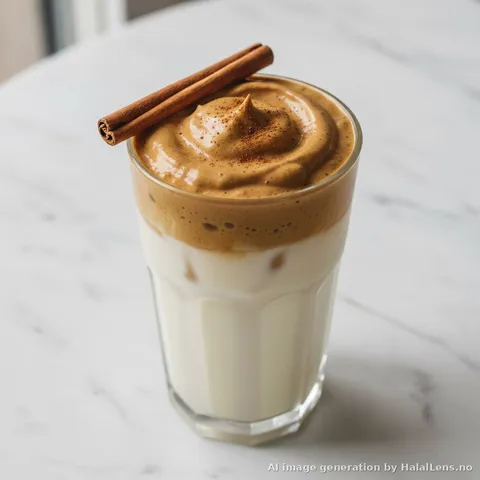
Dalgona Coffee — Whipped Korean Coffee for Suhoor or Iftar
In early 2020, a peculiar Korean street food turned into a global obsession overnight. Dalgona coffee — named after a Korean honeycomb candy — became the defining drink of pandemic lockdowns: three pantry staples, one bowl, and five minutes of whipping to produce the most photogenic coffee drink the internet had ever seen. Over 2.6 billion views accumulated on TikTok before the world even knew which direction the year was heading.
Now it's Ramadan season, and dalgona coffee is reclaiming its moment. As a suhoor drink, it delivers a focused caffeine lift without a heavy stomach — essential when you're eating before the Fajr prayer and need to stay alert through the morning fast. As an iftar treat, it's the luxurious, indulgent pick-me-up that breaks the energy slump of the afternoon. And because it requires zero cooking, zero special equipment, and three ingredients every Muslim household already stocks, it fits Ramadan rhythms perfectly.
This is the authentic dalgona coffee recipe — the 1:1:1 ratio that actually works — plus everything you need to know about the Korean origin story, halal verification of every ingredient, and the Ramadan context that makes this drink more than just a trend.
The Story Behind Dalgona Coffee
From Korean Street Candy to Global Phenomenon
The name "dalgona" (달고나) comes from a Korean street food: thin discs of caramelized sugar and baking soda, pressed into shapes, and sold as candy by street vendors since the 1970s. The candy has a distinctive honeycomb-like texture and a bittersweet caramel flavor — and crucially, its color is almost identical to perfectly whipped instant coffee foam.
The drink itself traces back further. In Macau, a café called "The Coffee Shop" served a drink called "beaten coffee" — espresso whipped with sugar — for decades. Similar whipped coffee traditions exist in India (where it's called phenti hui coffee) and in parts of Greece (the freddo cappuccino). But none of these versions went viral.
That changed in January 2020, when Korean actor Jung Il-woo appeared on a TV show eating dalgona candy in Macau and remarked that the local "whipped coffee" reminded him of it. The clip was brief. The internet was not busy yet. Within weeks, however, South Korea was in lockdown — and the rest of the world followed. Home cooks suddenly had time, minimal ingredients, and an enormous craving for novelty.
The dalgona coffee recipe spread first through Korean platforms, then through Instagram, then through TikTok — where the satisfying ASMR of the whipping process and the stunning visual of foam spooned over white milk created a format that was almost algorithmically perfect. By April 2020, virtually every food creator on earth had posted their version. By May, the trend had spawned dozens of variations: matcha dalgona, strawberry dalgona, Nutella dalgona, brown sugar dalgona.
Why It Works (The Science)
The magic of dalgona coffee is not complicated, but it is real chemistry. Instant coffee contains compounds that act as surfactants — they reduce the surface tension of the liquid and allow air bubbles to form and stabilize. When you whip the 1:1:1 mixture at high speed, you're incorporating millions of tiny air bubbles into a supersaturated solution of coffee, sugar, and water. The sugar increases viscosity, making the foam stable. The result is a meringue-like structure: glossy, stiff, and persistent.
This does not work with brewed espresso or filter coffee. The concentration of soluble solids in instant coffee — typically 25–30% by weight in the powder — is what creates the stable foam. Regular coffee is too dilute. This is why the recipe is almost embarrassingly simple, yet almost impossible to get wrong with the right coffee.
Ingredients
The classic dalgona coffee recipe uses only 3 ingredients for the foam, plus cold milk. Every ingredient below has been verified in the HalalLens database — click any ingredient to see its full halal analysis.
For the Whipped Coffee Foam
- 2 tablespoons instant coffee ✓ Halal (any brand — Nescafé Classic or Gold work best; avoid flavored coffees)
- 2 tablespoons white sugar ✓ Halal (granulated; caster sugar dissolves faster)
- 2 tablespoons hot water ✓ Halal (just-boiled; helps dissolve sugar and coffee faster)
For the Milk Base
Optional Garnish
- Pinch cocoa powder ✓ Halal (dusted on top of the foam)
- ¼ teaspoon vanilla extract ✓ Halal (add to milk for depth — check label; use alcohol-free vanilla for strict halal)
Halal Verification Summary
All primary ingredients — instant coffee, sugar, water, milk, ice — are verified HALAL in the HalalLens database. No animal-derived additives, no alcohol, no ambiguous emulsifiers. This recipe is suitable for all Muslims observing halal dietary guidelines.
Note on vanilla extract: Commercial vanilla extract may contain alcohol as a solvent. If strict halal is required, use vanilla powder or alcohol-free vanilla flavoring instead. See our vanilla ingredient page for details.
How to Make Dalgona Coffee — Step by Step
-
1
Measure the foam ingredients
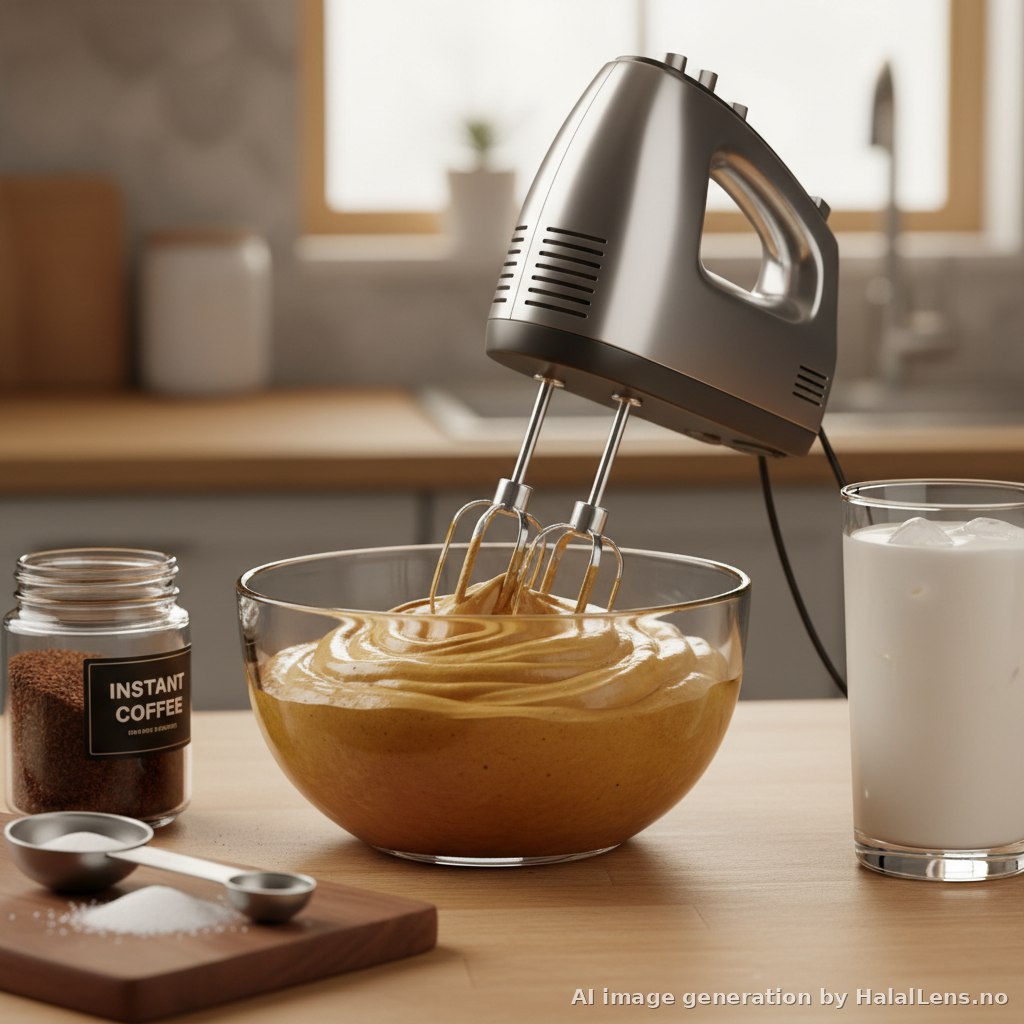
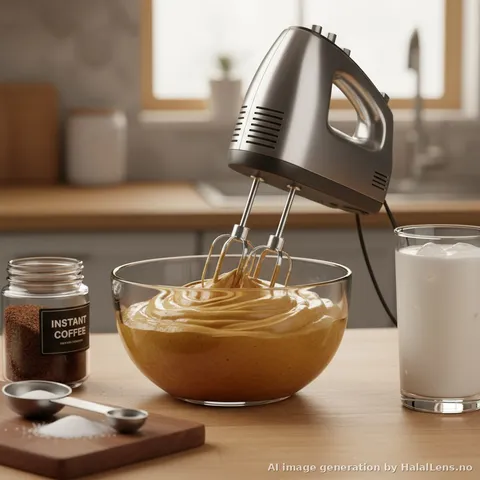
Add exactly 2 tablespoons of instant coffee, 2 tablespoons of sugar, and 2 tablespoons of hot water to a medium bowl. The equal 1:1:1 ratio is non-negotiable — deviating from it will result in foam that either collapses or won't form at all. Use a proper tablespoon measure, not a dinner spoon.
Ramadan tip: Measure everything before Fajr so you can start whipping immediately after suhoor. The foam keeps at room temperature for about 30 minutes before it starts to deflate. -
2
Whip to stiff peaks
Using a hand mixer or electric whisk on high speed, beat the mixture continuously. The transformation happens in stages: first it darkens and becomes liquid (30 seconds), then it lightens and thickens (1–2 minutes), then it becomes a pale caramel color with visible foam (3 minutes), then it suddenly tightens into a thick, glossy, almost meringue-like consistency that holds its shape when you lift the beaters (4–5 minutes total).
You're done when the foam holds stiff, billowing peaks that don't droop. If you tilt the bowl, the foam should not slide.
No electric mixer? You can do this by hand with a fork or balloon whisk — it will take 10–15 minutes of vigorous beating. Do it in shifts: 3 minutes on, 1 minute rest. It works, but your forearm will not forgive you easily. -
3
Prepare the milk base
Fill a tall glass (a 350–400ml capacity works perfectly) with a generous amount of ice cubes. Pour in 200ml of cold milk, leaving about 3–4cm of space at the top for the foam. Cold milk is essential — warm milk will cause the foam to melt on contact and you'll lose the visual layering effect.
Dairy-free options: Oat milk is the best substitute — its natural sweetness and thicker body complement the bitter coffee foam beautifully. Almond milk works but is thinner. Full-fat coconut milk creates a rich, almost dessert-like version that's excellent for iftar. -
4
Spoon the foam on top
Use a large spoon to gently scoop the whipped coffee foam and place it on top of the milk. Don't stir — the foam should float on the surface of the milk, creating the distinctive two-tone layered effect that made this drink famous. Use as much or as little foam as you like, but the full amount from one batch is typically the right quantity for one glass.
-
5
Garnish and serve
For the finishing touch, use a small sieve to dust a pinch of cocoa powder over the foam. A cinnamon stick placed in the glass adds warmth and aroma. Serve immediately — or refrigerate for up to 20 minutes if making ahead.
Before drinking, stir the foam into the milk with a long spoon or straw. The coffee flavor intensifies as the foam incorporates. Alternatively, drink it layered: sip through the foam first, then mix as you go. Both experiences are valid.
Dalgona Coffee for Ramadan: Suhoor and Iftar
Why Dalgona Coffee Works for Suhoor
Suhoor — the pre-dawn meal before the fast begins — is one of the most nutritionally important meals of the Ramadan day. It needs to sustain energy through hours without food or water, often in physically demanding conditions. Coffee has a well-established role in suhoor: caffeine provides a slow-release energy boost, improving alertness and reducing the perception of fatigue during the fasting hours.
But not all coffee is equal for suhoor purposes. Heavy, cream-laden coffee drinks can feel burdensome on an empty stomach early in the morning. Dalgona coffee offers a compelling balance: the milk base provides protein and slow-release carbohydrates, while the concentrated coffee foam delivers intense flavor with relatively little volume. The cold temperature is invigorating, the sweetness is controlled, and the whole drink takes less than 5 minutes to prepare — critical when suhoor time is already compressed.
For suhoor, consider using slightly less sugar in the foam (1.5 tbsp instead of 2) and using full-fat milk for the base to maximize satiety. Adding a small amount of protein powder to the milk is a popular modification among athletes fasting during Ramadan.
Dalgona Coffee as an Iftar Treat
Iftar — breaking the fast at sunset — typically begins with dates and water, followed by a proper meal. Dalgona coffee finds its natural place in the hour after the main iftar meal, as a dessert-adjacent drink that provides both caffeine (helpful for the energy slump after breaking a long fast) and visual pleasure.
The photogenic nature of dalgona coffee makes it perfect for the communal, celebratory atmosphere of iftar tables. Its preparation is itself a small spectacle — the whipping, the spooning, the layered reveal — that can be done at the table as a shared experience. For families with children, making the foam together is a beloved Ramadan ritual in households that have adopted the drink.
For a more indulgent iftar version, try swirling a teaspoon of honey into the milk base and using coconut milk instead of regular milk. A sprinkle of ground cardamom on top of the cocoa powder adds a distinctly Middle Eastern warmth.
Dalgona Coffee Variations to Try This Ramadan
Brown Sugar Dalgona
Replace white sugar with dark brown sugar or coconut sugar. The foam becomes deeper in color — almost caramel — with a more complex, molasses-like flavor. Pairs exceptionally well with oat milk.
Dalgona Matcha
Replace the instant coffee with matcha powder (ceremonial grade). The foam is harder to achieve without the natural surfactants in coffee — add a pinch of cream of tartar to help stabilize it. The result is earthy, grassy, and beautiful over whole milk.
Warm Dalgona (Hot Version)
Instead of iced milk, use warm steamed milk. Spoon the foam on top — it will hold for about 2 minutes before slowly melting in. This creates an effect similar to a latte with a concentrated coffee float. Perfect for cold Ramadan nights.
Dalgona with Date Syrup
Swirl a tablespoon of date syrup (dibs al-tamr) into the milk base before adding the foam. The caramel sweetness of dates complements the bitterness of the coffee foam in a combination that feels distinctly Ramadan. A nod to the traditional iftar date.
Cardamom Dalgona
Add ½ teaspoon of freshly ground cardamom to the coffee-sugar-water mixture before whipping. The cardamom incorporates into the foam, giving the finished drink an aromatic, chai-like warmth. Classic in Gulf-region Ramadan beverage culture.
Dalgona Coffee Milkshake
Blend cold milk with two scoops of vanilla ice cream and a handful of ice before adding the foam on top. This is strictly an iftar indulgence — rich, sweet, and luxurious. The foam sits beautifully on top of the blended base.
Troubleshooting Your Dalgona Coffee
My foam won't form or keeps collapsing — what's wrong?
Almost always one of three causes: (1) You used regular brewed coffee instead of instant coffee powder — this never works; (2) Your ratio is off — must be exactly equal parts by volume; (3) You didn't whip long enough — keep going until the foam is clearly stiff and doesn't droop. Make sure your bowl and beaters are completely dry (water kills foam).
Can I make dalgona coffee without a mixer?
Yes — use a hand whisk or fork. It will take 10–15 minutes of vigorous beating. A balloon whisk is faster than a fork. Some people find it helpful to beat in circular motions rather than back-and-forth. It's tiring but absolutely achievable.
Can I make the foam ahead of time?
Yes — the foam keeps well in the refrigerator in a sealed container for up to 2 days. It may deflate slightly but can be re-whipped for 30–60 seconds with a mixer to restore its texture. This is ideal for suhoor: make a large batch in the evening and keep it refrigerated.
Is dalgona coffee suitable for children during Ramadan?
The recipe contains caffeine from instant coffee, so it's not recommended for young children. For children who want to participate in the dalgona coffee experience, use instant decaf coffee — it will still whip into foam — or try the dalgona matcha variation with a mild matcha that's lower in caffeine.
Which instant coffee brand works best for dalgona?
Most standard instant coffee granules work well — Nescafé Classic, Nescafé Gold, and Maxwell House all produce reliable foam. Specialty instant coffees (third-wave brands) sometimes contain fewer soluble solids and may produce less stable foam. Avoid flavored instant coffees as the added ingredients interfere with foam formation.
Is dalgona coffee halal?
Yes — the classic dalgona coffee recipe is fully halal. Instant coffee, sugar, water, and milk are all permissible (halal) ingredients. The only potential concern is vanilla extract if used, as some commercial vanilla extracts contain alcohol as a solvent. To ensure complete halal compliance, use vanilla powder or alcohol-free vanilla flavoring. All ingredients in this recipe have been verified in the HalalLens ingredient database.
Nutritional Information
| Per Serving (1 glass with whole milk) | |
|---|---|
| Calories | ~120 kcal |
| Protein | 6g |
| Carbohydrates | 20g |
| of which sugars | 18g |
| Fat | 3g |
| Caffeine | ~60–90mg |
Values are approximate and vary by milk type and coffee brand used.
Make It, Share It, Scan It
Dalgona coffee is one of those rare recipes where the process is as satisfying as the result. The transformation from thin liquid to thick, glossy foam feels almost magical every time — which is partly why it became one of the most-shared food trends of the decade. In a Ramadan context, that transformation takes on extra meaning: effort, patience, and the reward of something beautiful at the end.
If you're making dalgona coffee for suhoor or iftar this Ramadan, a few final notes: whip right before serving for the freshest foam, use the best quality instant coffee you can find for a richer flavor, and don't skip the ice in the milk base — the temperature contrast between cold milk and room-temperature foam is part of what makes it work.
And if you're ever uncertain about any ingredient in this or any other recipe, HalalLens lets you scan product labels and check ingredient lists instantly against our verified halal database. All the ingredients in this recipe — instant coffee, sugar, water, milk, ice — are confirmed halal. Cook confidently.
Ramadan Kareem.