Halal Carrot Cake Recipe with Cream Cheese Frosting
A moist, warmly spiced two-layer halal carrot cake topped with rich cream cheese frosting. Every ingredient verified halal — no alcohol, no questionable additives. Perfect for Eid celebrations, iftar dessert tables, and everyday baking.
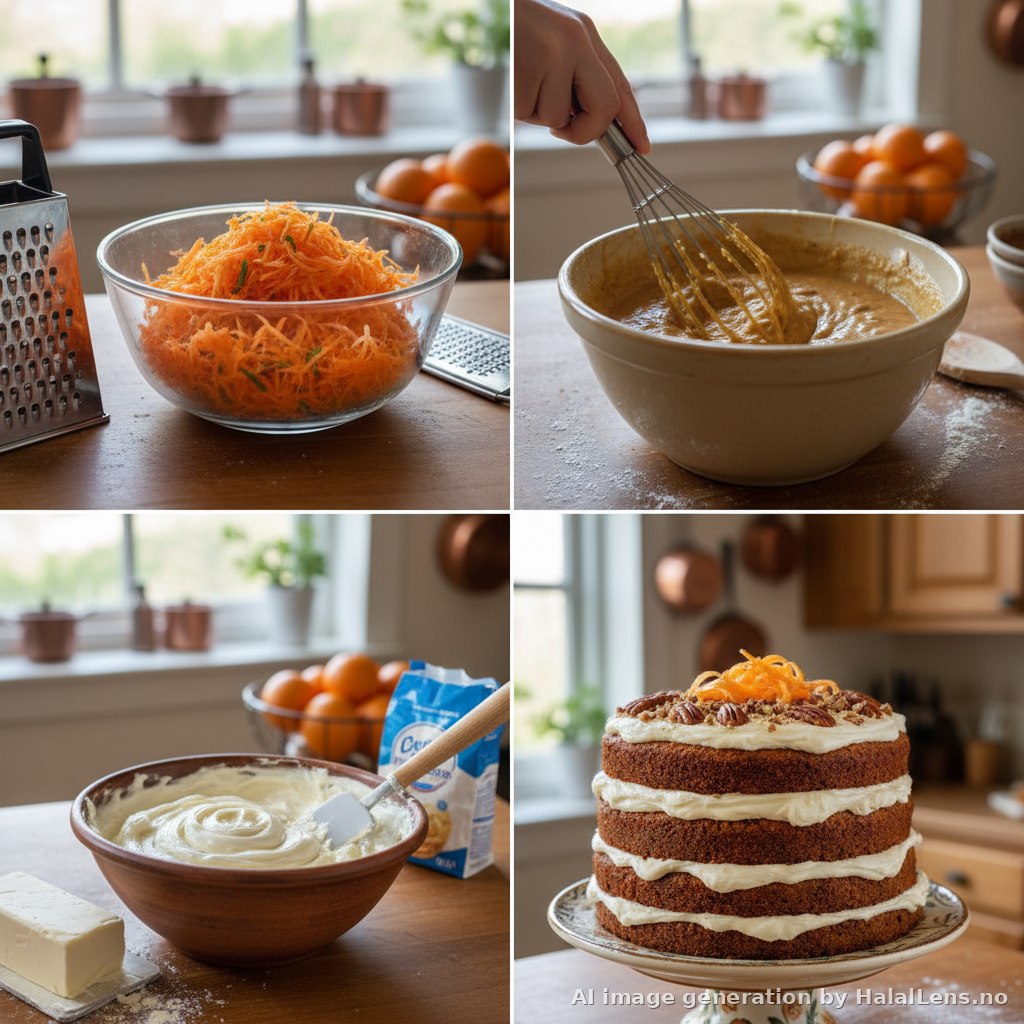
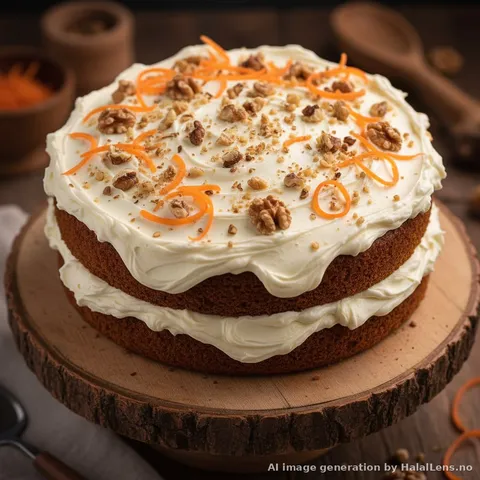
Carrot cake is one of the world's most beloved bakes — moist, warmly spiced, and crowned with a luscious cream cheese frosting. But for Muslims navigating the dessert aisle, the classic recipe often hides pitfalls: vanilla extracts with alcohol, cream cheese from non-halal dairy sources, or emulsifiers of uncertain origin. This halal carrot cake recipe resolves every one of those concerns, delivering a deeply flavourful cake that is 100% permissible and worthy of any celebration, from Eid gatherings to everyday indulgence.
Why a Dedicated Halal Carrot Cake Recipe?
At first glance, carrot cake sounds inherently halal — it is mostly vegetables, flour, and sugar. Yet a closer read of most bakery ingredients reveals three common problem areas:
- Vanilla extract: The standard grocery-store bottle is made by macerating vanilla beans in ethanol. That alcohol content — typically 35% — makes conventional vanilla extract haram. The solution is pure alcohol-free vanilla extract or ground vanilla bean powder, both widely available at halal grocers and online.
- Cream cheese: Many commercial cream cheeses contain enzymes derived from pork rennet or unspecified animal sources. Look for brands labelled halal-certified or those that list microbial/vegetable rennet explicitly. In most Western markets, brands such as Philadelphia (check local certification) or specialist halal dairy brands are safe bets — always verify the current label.
- Emulsifiers and additives: Ingredients like E471 (mono- and diglycerides) can be animal-derived. When buying pre-mixed spice blends or ready-made frostings, scan each E-number with the HalalLens scanner for instant verification.
With those substitutions in place, every component of this carrot cake is firmly in the halal column, and the result tastes better than any conventional version because you are using the best-quality ingredients from scratch.
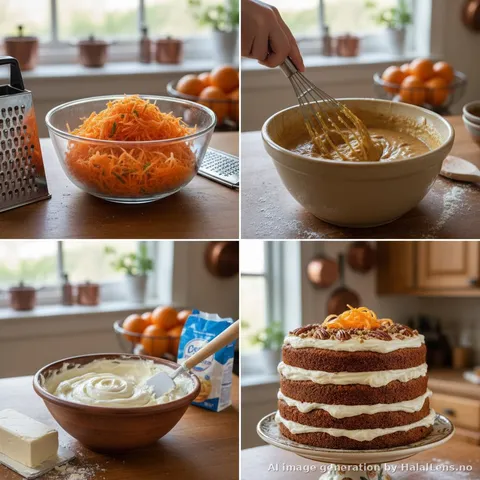
Ingredients & Halal Status
Below is the complete ingredient list for a two-layer 9-inch cake serving 12. Each item is annotated with its halal consideration.
For the Cake
| Ingredient | Amount | Halal Note |
|---|---|---|
| All-purpose flour | 2 cups (250 g) | Inherently halal — plain wheat flour |
| Baking powder | 2 tsp | Halal; choose aluminium-free for best taste |
| Baking soda | 1 tsp | Halal — pure sodium bicarbonate |
| Ground cinnamon | 2 tsp | Halal; buy single-origin ground cinnamon, not blends |
| Ground nutmeg | ½ tsp | Halal in culinary quantities |
| Ground ginger | ¼ tsp | Halal; certified organic preferred |
| Fine salt | ½ tsp | Halal |
| Granulated white sugar | 1 cup (200 g) | Halal; use cane sugar labelled halal to avoid bone-char filtering concerns |
| Light brown sugar | ½ cup (100 g) | Halal — same cane sugar note applies |
| Eggs (large) | 3 | Halal — free-range eggs need no special certification |
| Vegetable oil (sunflower or canola) | 1 cup (240 ml) | Halal; check no animal-derived additives |
| Alcohol-free vanilla extract | 1 tsp | Critical swap — must be alcohol-free or vanilla bean powder |
| Freshly grated carrots | 3 cups (330 g) | Halal — about 4 medium carrots |
| Walnuts, roughly chopped | 1 cup (120 g) | Halal; toast lightly for deeper flavour |
| Raisins (optional) | ½ cup (75 g) | Halal; adds natural sweetness |
For the Cream Cheese Frosting
| Ingredient | Amount | Halal Note |
|---|---|---|
| Halal-certified cream cheese, full-fat | 250 g | Verify certification — look for microbial or vegetable rennet |
| Unsalted butter, softened | ½ cup (115 g) | Halal; confirm dairy source if stricter interpretation required |
| Powdered (icing) sugar, sifted | 2 cups (240 g) | Halal |
| Alcohol-free vanilla extract | 1 tsp | Same critical swap as cake |
| Pinch of salt | ⅛ tsp | Halal — balances sweetness |
Step-by-Step Instructions
Step 1 — Prepare Your Equipment
Preheat your oven to 175°C (350°F). Grease two 9-inch (23 cm) round cake pans with a thin layer of butter or cooking spray, then line the bottoms with parchment paper. Dust the sides lightly with flour and tap out any excess. Proper pan preparation ensures the cake releases cleanly and develops an even crust on all sides.
Step 2 — Grate the Carrots
Peel 4 medium carrots and grate them on the fine or medium side of a box grater — you need 3 cups (330 g) loosely packed. Freshly grated carrots release just enough moisture to keep the cake lusciously moist without making it soggy. Avoid pre-packaged shredded carrots, which are too dry and coarsely shredded.
Step 3 — Mix the Dry Ingredients
In a large mixing bowl, whisk together:
- 2 cups all-purpose flour
- 2 tsp baking powder
- 1 tsp baking soda
- 2 tsp ground cinnamon
- ½ tsp ground nutmeg
- ¼ tsp ground ginger
- ½ tsp salt
Whisking for a full 30 seconds ensures the leavening agents are evenly distributed — this is what gives the cake a uniform, tender crumb rather than dense pockets.
Step 4 — Mix the Wet Ingredients
In a separate large bowl, whisk together the granulated sugar, brown sugar, eggs, vegetable oil, and alcohol-free vanilla extract until fully combined. The mixture should look glossy and slightly thickened. Using oil instead of melted butter is the traditional American carrot cake technique and is what keeps every slice moist for days.
Step 5 — Combine, Fold In Add-ins
Pour the wet mixture into the dry ingredients and fold together with a spatula until just combined — a few flour streaks are fine. Do not overmix, which develops gluten and makes the cake tough. Fold in the grated carrots, chopped walnuts, and raisins (if using). The batter will be thick.
Step 6 — Bake
Divide the batter evenly between the prepared pans. Smooth the tops with a spatula. Bake for 30–35 minutes, rotating the pans once halfway through. The cakes are done when:
- A toothpick inserted in the centre comes out clean or with a few moist crumbs (no wet batter)
- The edges pull slightly away from the pans
- The tops feel springy when lightly pressed
Cool in the pans for 10 minutes, then invert onto wire racks. Allow to cool completely — at least 1 hour — before frosting. Frosting a warm cake melts the cream cheese and creates a mess.
Cream Cheese Frosting — The Halal Guide
Cream cheese frosting is the crowning glory of any carrot cake. Getting it right requires attention to both technique and ingredient sourcing.
Making the Frosting
- Bring dairy to room temperature: Both the cream cheese and butter must be fully softened (around 20°C / 68°F). Cold cream cheese creates a lumpy frosting that never smooths out.
- Beat cream cheese first: Using a stand mixer or hand mixer fitted with the paddle attachment, beat the cream cheese on medium speed for 1–2 minutes until smooth and creamy.
- Add butter: Add the softened butter and beat for another 1–2 minutes until the mixture is light and fluffy.
- Add powdered sugar gradually: Add the sifted powdered sugar 1 cup at a time, mixing on low speed to avoid a sugar cloud. Once incorporated, beat on medium for 1 minute.
- Flavour and balance: Beat in the alcohol-free vanilla extract and a pinch of salt. Taste and adjust — more sugar for sweetness, more salt to cut richness.
- Chill briefly if needed: If the frosting seems too soft (especially in warm kitchens), refrigerate for 20–30 minutes before spreading.
Sourcing Halal Cream Cheese
The key concern with cream cheese is the coagulant used in production. Most commercial cream cheeses use one of three types:
- Pork rennet — Haram. Avoid.
- Microbial rennet (fermentation-produced) — Halal. Widely used in modern dairy production.
- Vegetable rennet — Halal. Less common but used in some organic brands.
In practice, many global brands (including Philadelphia in several markets) use microbial rennet. However, formulations vary by country. The safest approach is to look for an explicit halal certification logo, or contact the manufacturer directly to confirm their current rennet source.
Expert Baking Tips for the Perfect Halal Carrot Cake
Moisture Management
The reason carrot cake stays moist for days — unlike a butter-based cake that stales quickly — is the oil. Vegetable oil remains liquid at room temperature, whereas butter solidifies in the fridge and makes slices feel dense and dry when chilled. Do not substitute butter for oil in the batter; you will lose the signature moist crumb.
Spice Ratios Matter
Cinnamon dominates the spice profile, with nutmeg and ginger playing supporting roles. If you enjoy a more complex warmth, add ¼ teaspoon of ground allspice or cardamom. Avoid pre-mixed "pumpkin spice" blends — they often contain artificial flavourings or anti-caking agents that may need halal verification.
Toast the Walnuts
Spread the chopped walnuts in a single layer on a dry baking sheet. Toast in the preheated oven for 8 minutes before making the batter. Toasted walnuts develop a richer, nuttier flavour and a better texture in the finished cake. Cool completely before adding to the batter.
Grate Carrots Just Before Mixing
Pre-grated or packaged shredded carrots lose moisture and can make the cake drier. Grate fresh carrots immediately before incorporating them into the batter to capture all that natural juice and sweetness.
Even Layers
If your cake layers dome in the centre (common with home ovens), use a long serrated knife to level them once fully cooled. This ensures a beautiful flat stack and more even frosting coverage. Save the off-cuts — they make excellent cake crumbles sprinkled over the frosted top as decoration.
Variations & Substitutions
Nut-Free Version
Simply omit the walnuts. You can add ½ cup of desiccated coconut for texture and flavour instead, or keep the batter plain — the cake is just as moist and delicious without nuts.
Gluten-Free Adaptation
Substitute the all-purpose flour with a 1:1 gluten-free flour blend. Results vary by brand; choose a blend that contains xanthan gum (or add 1 tsp separately) for proper structure. Reduce bake time by 5 minutes and check for doneness earlier.
Dairy-Free Cream Cheese Frosting
Use a plant-based cream cheese (check for halal certification) and dairy-free butter. The texture is slightly softer, so add 2–3 extra tablespoons of powdered sugar to stabilise it. Refrigerate the frosted cake until ready to serve.
Cupcake Version
This batter makes approximately 24 standard cupcakes. Fill cupcake liners two-thirds full and bake at 175°C (350°F) for 18–22 minutes. Perfect for Eid cookie tables, school bake sales, or iftar dessert platters.
Mini Loaf Cakes
Divide the batter between four small loaf pans (5×3 inch) and bake for 25–30 minutes. These make excellent gifts during Ramadan or Eid.
Pineapple Addition
A classic Southern US variation adds ½ cup of crushed, well-drained pineapple to the batter. This intensifies the moisture and adds a subtle tropical sweetness that pairs beautifully with the warm spices. Completely halal — just use tinned pineapple in juice (not syrup).
Storage & Make-Ahead
Unfrosted Cake Layers
Wrap cooled, unfrosted cake layers tightly in cling film. They keep at room temperature for up to 2 days, in the refrigerator for up to 5 days, or in the freezer for up to 3 months. Freeze layers flat on a baking sheet first, then wrap in cling film and place in a freezer bag.
Frosted Cake
Because of the cream cheese frosting, the assembled cake must be refrigerated. Cover loosely with a cake dome or cling film and refrigerate for up to 5 days. Remove from the fridge 30 minutes before serving to let the cake return to room temperature — this significantly improves the texture and flavour of each slice.
Leftover Frosting
Store leftover frosting in an airtight container in the refrigerator for up to 1 week. Re-whip briefly with a mixer before using. It also freezes well for up to 3 months.
Make-Ahead Timeline
- 3 days ahead: Bake layers, wrap, and refrigerate.
- 2 days ahead: Make frosting, cover, and refrigerate.
- Day of serving: Remove frosting from fridge 20 minutes before use, re-whip, assemble, and refrigerate assembled cake. Remove 30 minutes before serving.
Frequently Asked Questions
Is carrot cake generally halal?
Plain carrot cake made with standard ingredients (flour, sugar, eggs, oil, carrots, spices) is halal. The main issues arise from vanilla extract with alcohol and cream cheese with pork rennet. This recipe addresses both with verified substitutes.
How do I know if my vanilla extract is alcohol-free?
Read the ingredient label. Standard vanilla extract will list "alcohol" or "ethanol" as an ingredient. Halal alternatives include: alcohol-free vanilla extract (often sold at Islamic stores or health food shops), vanilla bean paste made without alcohol, or pure ground vanilla bean powder. Some brands specifically label their product as "halal-certified" or "alcohol-free."
Can I use imitation vanilla instead?
Imitation vanilla (vanillin) is synthesised from wood pulp or petrochemicals — it is alcohol-free and halal, but the flavour profile is one-dimensional compared to real vanilla. Use it if you cannot find halal vanilla extract, but reduce the quantity slightly as it can taste synthetic in large amounts.
What can I substitute for cream cheese?
If you cannot find halal-certified cream cheese in your area, you can frost the cake with a simple butter-and-powdered-sugar buttercream (just swap out the cream cheese). Another option is labneh (strained yoghurt) from a halal dairy brand — the flavour is tangier and lighter, but works well in a 1:1 replacement.
Why is my carrot cake dense?
Dense carrot cake is almost always caused by overmixing the batter (which develops gluten), too much flour (always measure by weight or use the spoon-and-level method), or baking from cold ingredients. Ensure your eggs are at room temperature and avoid stirring the batter more than necessary once the flour is added.
Can I use self-raising flour?
Yes. If using self-raising flour, omit the baking powder and baking soda from the recipe. The results will be slightly different — self-raising flour has a fixed leavening ratio that may not perfectly match this recipe's original balance, so expect a slightly different rise and crumb texture.
Is carrot cake suitable for Ramadan iftar?
Absolutely. This halal carrot cake is an excellent iftar dessert — it is rich in natural sugars from carrots for energy, substantial enough to satisfy after fasting, and can be made ahead so there is no last-minute baking rush during the busy iftar preparation window.
What is the best way to grate carrots?
A standard box grater on the medium-size holes gives the best results — fine enough to disappear into the cake but coarse enough to release moisture during baking. A food processor with a grating disk also works well for large batches. Avoid julienning or cutting carrots by hand; the pieces will be too large and create uneven moisture pockets.
Scan Your Ingredients with HalalLens
Before you start baking, take a minute to scan your cream cheese, vanilla extract, and any spice blends you plan to use. The HalalLens app uses AI to analyse every ingredient and E-number in seconds, flagging haram or mushbooh components so you can bake with complete confidence. Available for both web and mobile — your halal kitchen assistant for every recipe.